
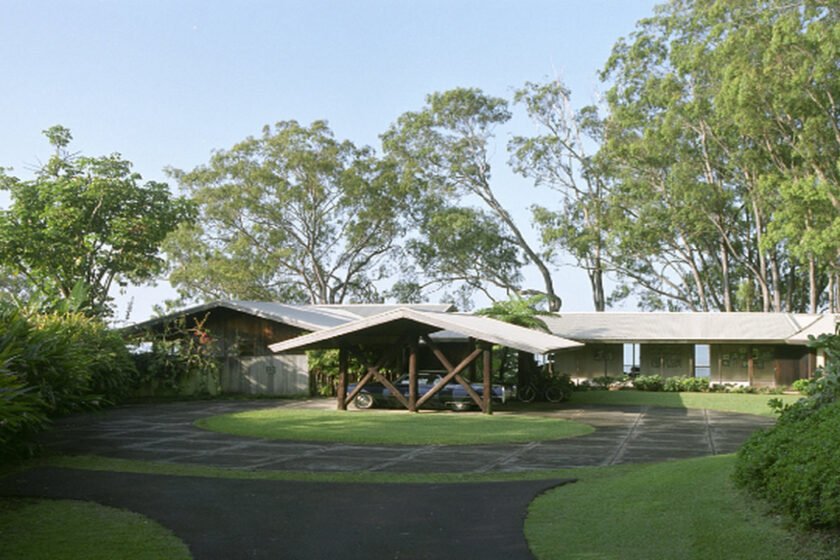

The story of Hawaii’s plantations is one of sugar, sweat, and survival. Scattered across the islands, these plantation homes once anchored vast estates and served as the center of island life for generations. Some were the residences of powerful families; others became community hubs or quiet retreats. Many have been restored or repurposed, but others have faded into memory. Together, they capture a unique chapter of Hawaii’s architectural and social past—one shaped by migration, industry, and the changing tide of history.
1. Koloa Sugar Plantation (1835, Kauai)

As Hawaii’s first commercially successful sugar plantation, Koloa Sugar Plantation marked the beginning of a new economic era in the islands. Founded in 1835, it pioneered the mass cultivation of sugarcane. Though most of its buildings have deteriorated, remnants like stone chimneys and mill foundations remain. These ruins stand as silent monuments to an enterprise that reshaped the island’s landscape and brought waves of immigrant labor that still define Hawaii’s cultural identity today.
2. Grove Farm (1854, Kauai)

Established in the mid-19th century, Grove Farm began as a sugarcane plantation and grew under the stewardship of George Norton Wilcox. Unlike many plantation homes, the Grove Farm estate has been carefully preserved and now functions as a museum. The home’s wide lanais, period furnishings, and agricultural outbuildings offer a rare, immersive look into plantation life. It’s one of the few intact sugar-era estates that remain open to the public, holding fast to a piece of Kauai’s past.
3. Kilauea Plantation (1931, Kauai)

Once a vital part of Kauai’s sugar economy, the Kilauea Sugar Plantation operated for nearly a century. Its manager’s house and stone administrative buildings are listed on the National Register of Historic Places, and while many other structures are gone, these surviving relics showcase plantation-era craftsmanship and scale. Today, the site reflects the industry’s influence on Hawaii’s small towns, where commerce, culture, and community were tied to the rhythms of the cane fields.
4. Waimea Plantation Cottages (Early 1900s, Kauai)

These authentic cottages were once the homes of sugar plantation workers. Rather than being demolished, they’ve been relocated and restored on a lush oceanfront property. Each cottage features vintage architecture with modern comforts, allowing guests to experience Hawaii’s plantation past firsthand. Waimea Plantation Cottages stand as a model for adaptive reuse—preserving historic buildings by giving them new life and purpose while honoring the legacy of the people who once lived in them.
5. Queen Emma Summer Palace (1857, Honolulu)

Also known as Hānaiakamalama, this residence served as a seasonal retreat for Queen Emma, consort of King Kamehameha IV. While not a plantation house in the commercial sense, its architecture reflects the transitional period of Hawaiian design. Today, the home operates as a museum, preserving royal artifacts and furnishings. The palace connects plantation-era Hawaii with its monarchical roots and showcases how influences from Europe and local materials blended to create something distinctively island-born.
6. Alexander & Baldwin Sugar Museum (Early 1900s, Maui)

Housed in the former manager’s residence of the Puunene Mill, this plantation-style home now serves as the Alexander & Baldwin Sugar Museum. Inside, exhibits share the history of Maui’s sugarcane industry, the workers who powered it, and the communities that formed around it. While the home has been repurposed, it retains its original character, reminding visitors of the days when these buildings represented both status and functionality in plantation society.
7. Paauhau Plantation House (Early 1900s, Honokaa)

Overlooking the Hamakua coast, the Paauhau Plantation House once served as the home of a plantation manager. The house is an archetype of early 20th-century island architecture, with a large lanai, wood framing, and expansive views of the ocean and sugar fields. Though no longer in use as a plantation residence, the structure remains intact—a rare survivor of Hawaii Island’s sugar legacy and a visual link to its agricultural heyday.
8. Shangri La (1936, Honolulu)

While not a plantation home, Shangri La reflects the wealth and eclecticism of 20th-century Hawaii. Built by tobacco heiress Doris Duke, this estate merges Islamic architecture with Hawaiian influences, including lush gardens and oceanfront lanais. Now a museum, it stands as a unique chapter in Hawaii’s residential architecture—illustrating how affluence, art, and culture coexisted with the island’s agricultural labor force during the plantation era.
9. Hawaiian Mission Houses (1821, Honolulu)

These are the oldest Western-style houses in Hawaii, built by early missionaries who introduced new agricultural practices and educational systems. Though missionary homes differ from commercial plantation houses, their influence on local architecture and settlement patterns was profound. Preserved today as part of a museum, these buildings highlight how plantation and mission histories are deeply intertwined in the shaping of modern Hawaii.
10. Waioli Mission House (1837, Hanalei)

The Waioli Mission House offers a beautifully restored look into the lives of early Christian missionaries on Kauai. Built in the New England style but adapted for island living, the house later stood near plantation lands and became part of the broader historical fabric. Today, it functions as a museum, showcasing period furnishings and a quiet reverence for the past—a legacy not of sugar, but of shared roots in Hawaii’s transformative 19th century.