
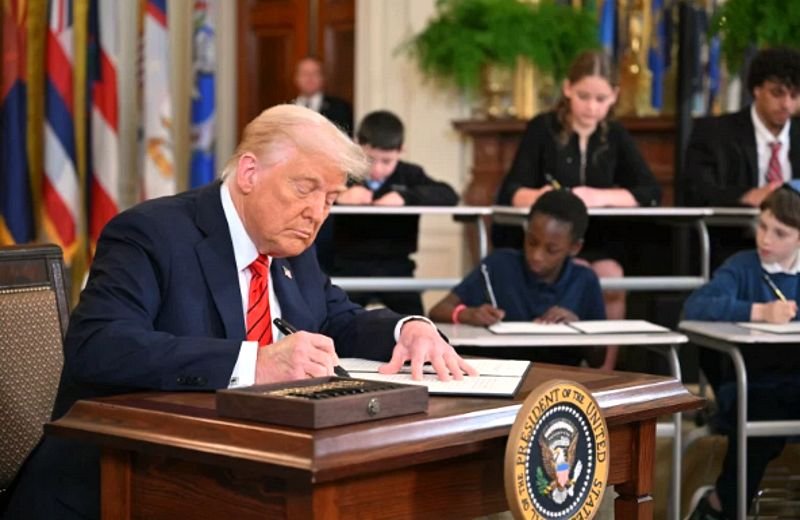
In a move set to reshape the H-1B visa program, President Donald Trump has signed an executive order imposing a $100,000 annual fee on applicants seeking skilled worker visas. The decision, effective from September 21, has sparked debate, with critics arguing it will hurt American businesses and workers, while supporters say it addresses perceived abuses of the program.
Trump’s New H-1B Visa Fee
Starting September 21, a new executive order signed by President Trump will require companies to pay an annual $100,000 fee for each H-1B visa applicant they sponsor. The order, which targets skilled foreign workers in high-demand sectors such as tech, aims to limit entry to the program unless the fee is paid. Critics argue this fee will disproportionately impact smaller businesses and tech startups that rely on foreign talent, while supporters believe it will help reduce program abuse.
The $100,000 Fee: A New Barrier
The new fee, which would apply to all new H-1B visa applications, is set to increase significantly from the previous administrative fees, which amounted to about $1,500. The move is expected to deter many companies, particularly smaller ones, from hiring foreign workers. U.S. Commerce Secretary Howard Lutnick stated that businesses would need to assess whether the cost of sponsoring foreign workers outweighs the benefit, urging companies to consider hiring American workers instead.
Impact on Tech Giants and Small Businesses
The H-1B visa program has been essential for tech companies such as Amazon, Microsoft, Google, and Meta, which are among the largest beneficiaries. However, the new fee could significantly alter the landscape. While large corporations might absorb the costs, smaller businesses, particularly startups, are expected to be hit hardest. Immigration attorney Tahmina Watson warned that the fee could “devastate” small businesses, many of which rely on H-1B workers to fill positions they are unable to staff locally.
India’s Concerns Over the New Rule
India, which accounted for 71% of all approved H-1B visa applications last year, has expressed concern over the sudden imposition of the new fee. The tight deadline for foreign workers to return to the U.S. before the fee kicks in has created “considerable uncertainty” for businesses, professionals, and students, according to India’s trade body Nasscom. India’s significant reliance on the H-1B program makes this move particularly contentious for both Indian workers and the companies that depend on them.
A Long-Standing Debate on H-1B Visas
The debate over the H-1B visa program has divided U.S. policymakers for years. Critics, including former Trump strategist Steve Bannon, have argued that the program undercuts American workers and drives down wages. On the other hand, tech industry leaders, including Elon Musk, assert that the U.S. needs to attract global talent to remain competitive. Trump has previously signaled support for making it easier to recruit foreign workers, but has simultaneously cracked down on perceived abuses within the system.
Previous Efforts to Limit H-1B Applications
This new executive order builds on previous actions taken by the Trump administration to tighten scrutiny of H-1B applications. In 2017, Trump signed an executive order aimed at improving fraud detection in the visa process, leading to a rise in rejection rates. The rate of denials for H-1B applications reached an all-time high of 24% in 2018, compared to a much lower rate under the Obama administration. The latest fee is expected to further reduce the number of foreign workers entering the U.S. through the program.
Possible Effects on U.S. Competitiveness
Experts warn that the new fee could have long-term consequences for American competitiveness, particularly in the tech industry. Jorge Lopez, chair of immigration and global mobility at Littler Mendelson PC, stated that the $100,000 fee could “put the brakes on American competitiveness” by making it more expensive for companies to recruit top talent. Some companies might even consider shifting operations overseas, though doing so can be challenging.