

Vermont’s rolling Green Mountains have long been a haven for those seeking solace in nature. Throughout the late 19th and early 20th centuries, grand mountain lodges welcomed visitors to experience the state’s rugged beauty. Today, many of these historic structures stand abandoned, silent witnesses to Vermont’s rich tourism history. These 12 remarkable lodges, now in various states of disrepair, offer glimpses into a bygone era of mountain hospitality.
1. Hyde’s Hotel (1865) – Rutland County

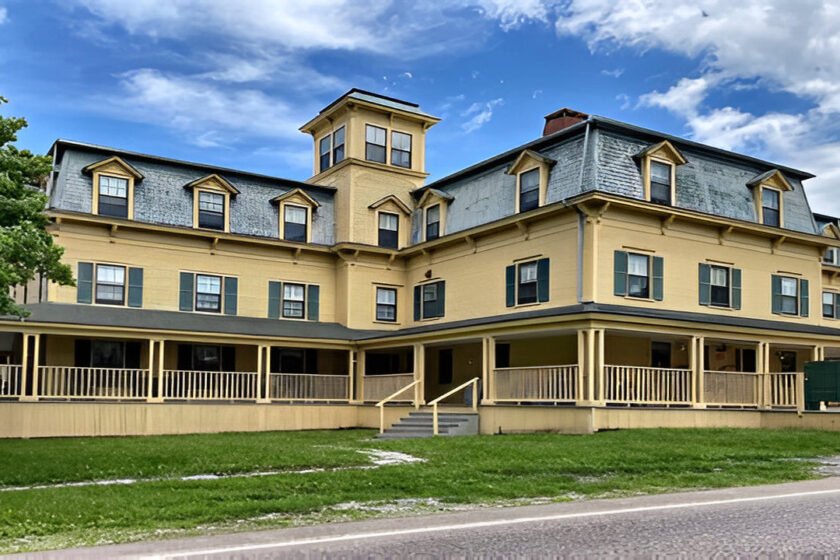
Hyde’s Hotel, also known as Hyde Manor, was a prominent summer resort built in 1865. The main house, a four-story Italianate structure, featured a distinctive five-story tower that made it a landmark visible from miles around. Once a bustling retreat for wealthy vacationers from New York and Boston, the hotel gradually declined after the world wars as automobile tourism changed vacation patterns.
The once-grand establishment finally closed its doors in 1973 after over a century of operation. The property was listed on the National Register of Historic Places in 1980, but now stands in a deteriorated state, a haunting reminder of Vermont’s golden age of resort tourism.
2. Clarendon House (1835) – Rutland County

Built in 1835 and significantly enlarged in the 1850s, the Clarendon House was once a celebrated mineral spring resort hotel. The impressive three-story brick building featured a distinctive three-story porch supported by elegant Doric columns, creating a striking facade that welcomed visitors seeking the curative properties of the local springs.
Despite its initial success and popularity among health-conscious Victorian travelers, the resort’s fortunes declined precipitously during the Civil War years. Changing tastes in travel and competition from newer resorts further eroded its business in subsequent decades. The building has been vacant for years and stands today as a testament to the area’s once-thriving tourism industry, its grand architecture still visible despite years of neglect.
3. The Summit House (1858) – Windham County

Perched atop Mount Mansfield, Vermont’s highest peak, the Summit House once stood as a testament to Victorian hospitality. Built in 1858 by local entrepreneur Henry Stiles, this three-story wooden structure welcomed guests who made the arduous journey up the mountain seeking fresh air and spectacular views. The lodge featured 50 guest rooms, a grand dining hall, and an observation deck that offered panoramic vistas of the surrounding Green Mountains and Lake Champlain.
The Summit House operated successfully for nearly a century before falling victim to changing vacation trends and the advent of modern hotels. The lodge closed permanently in 1954 and was partially dismantled. Today, only the stone foundation and scattered artifacts remain, silently guarding the summit as hikers pass by on the Long Trail.
4. Bromley Lodge (1924) – Bennington County

Once the crown jewel of southern Vermont’s ski industry, Bromley Lodge was constructed in 1924 by local lumber baron Frederick Pabst. The rustic yet elegant structure was built entirely from local timber, featuring massive exposed beams, stone fireplaces, and a distinctive green slate roof. With accommodations for up to 75 guests, Bromley Lodge became a popular winter destination during the early days of recreational skiing in Vermont.
The lodge’s fortunes declined in the late 1960s as newer, more modern ski resorts emerged. After a devastating fire damaged much of the main building in 1976, the remaining structure was abandoned. Today, overgrown ruins can be found just off the Appalachian Trail, including stone staircases, foundation walls, and the massive central fireplace that once warmed generations of skiers.
5. Ascutney Mountain House (1859) – Windsor County

One of Vermont’s earliest mountain resorts, the Ascutney Mountain House welcomed visitors seeking health and relaxation beginning in 1859. Built by physician William Bryant, this imposing Greek Revival structure featured columned porches, 60 guest rooms, and mineral spring baths that were believed to have curative properties.
The advent of automobile tourism and changing vacation preferences led to declining visitation in the early 20th century. After closing in 1930, the abandoned structure was partially dismantled for salvage. Today, visitors to Mount Ascutney State Park can explore the extensive foundation walls and remnants of this pioneer of Vermont mountain tourism.
6. Maple Valley Ski Resort (1926) – Windham County

Operating from 1926, Maple Valley Ski Resort in Dummerston faced numerous challenges throughout its existence, including inconsistent snowfall and equipment malfunctions. Despite various efforts to attract visitors and remain competitive in Vermont’s crowded ski market, the resort was forced to close its doors in 2000 after nearly four decades of operation.
The base lodge and some trails remain standing, though the area has been largely reclaimed by nature in the years since its closure. Recent developments suggest the site may find new purpose, as plans are underway to convert the base lodge into a brewery and event center, potentially breathing new life into this once-abandoned mountain destination.
7. Haystack Mountain Lodge (1912) – Windham County

Nestled on the slopes of Haystack Mountain, this rustic lodge was constructed in 1912 by the Green Mountain Club as one of Vermont’s first hiking destinations. Built primarily from local spruce logs, the two-story structure featured sleeping quarters for 40 hikers, a communal dining hall, and a stone observation tower offering views across southern Vermont.
The lodge served hikers faithfully for decades before declining use led to its abandonment in 1963. A forest fire in 1982 destroyed much of what remained, though determined hikers can still locate the stone chimney and foundation walls amid the regrown forest. The site is now protected as part of the Green Mountain National Forest.
8. Sudbury House (Early 20th Century) – Rutland County

Nestled in the rolling hills of Sudbury in Rutland County, Sudbury House represents a distinct example of Vermont’s early 20th century mountain retreats. This lesser-known but historically significant lodge served as both a recreational retreat and a gathering place for the local community. Built in the rustic Adirondack style, the structure featured local timber construction, a prominent stone fireplace, and a wraparound porch offering views of the surrounding countryside and distant mountains.
Sudbury House operated during a time when Vermont was becoming increasingly recognized as a destination for those seeking respite from urban life. The lodge hosted everything from summer vacationers to hunting parties in the fall, providing simple but comfortable accommodations in a tranquil setting. As with many similar establishments, changing tourism patterns and economic pressures eventually led to its decline and abandonment.
9. Smugglers’ Notch Lodge (1920) – Lamoille County

Nestled in the dramatic mountain pass between Mount Mansfield and Spruce Peak, Smugglers’ Notch Lodge was built in 1920 by local businessman Thomas McAllister. The two-story lodge featured distinctive river stone construction, hand-hewn beams, and accommodations for 45 guests. During Prohibition, the remote lodge allegedly served as an occasional way station for liquor smuggled from Canada.
The lodge operated successfully until 1979, when a severe structural issue rendered it unsafe. Left abandoned, the building gradually deteriorated in the harsh mountain environment. Today, hikers in Smugglers’ Notch State Park can still find the stone walls, massive fireplace, and portions of the unique split-log staircase that once welcomed visitors to this historic mountain haven.
10. Burke Mountain Lodge (1905) – Caledonia County

The historic Burke Mountain Lodge represented Vermont’s early embrace of winter tourism. Constructed in 1905 by the Burke Mountain Club, this rustic three-story structure was built entirely from local spruce logs with a distinctive red metal roof visible for miles. The lodge could accommodate 75 guests and featured one of Vermont’s first dedicated ski instruction programs.
After enjoying decades of popularity, the lodge faced increasing competition from modern ski resorts. It closed permanently in 1984 after operating sporadically through its final years. While a modern ski center now operates nearby, the original lodge ruins can be found along the Kingdom Heritage Trail, with the massive stone fireplace and foundation walls still standing among the trees.
11. Mount Equinox Lodge (1915) – Bennington County

High on the slopes of Mount Equinox stood one of southern Vermont’s most prestigious mountain retreats. Built in 1915 by the Davidson family of New York, this Tudor-style lodge featured local stone and timber construction, stained glass windows, and luxurious accommodations for up to 60 guests. The lodge was particularly known for its extensive gardens and mountain spring-fed swimming pool.
Financial difficulties following the 1969 season led to the lodge’s closure. In 1973, after four years of abandonment, a winter storm collapsed the main roof. Today, the ruins are part of a protected ecological preserve, with stone walls, garden terraces, and the distinctive pool still visible among the returning forest.
12. Grandview Lodge (1891) – Orleans County

Offering spectacular views of Lake Memphremagog and the surrounding mountains, Grandview Lodge was a jewel of Vermont’s Northeast Kingdom. Built in 1891 by Montreal businessman Charles LeBaron, this three-story Victorian structure featured 35 guest rooms, a formal dining room, and a distinctive observation tower that became its trademark.
The lodge operated successfully for decades before a combination of economic factors and maintenance challenges forced its closure in 1964. Left abandoned, the structure gradually succumbed to harsh mountain winters. Today, the stone foundation, parts of the grand staircase, and the base of the observation tower remain visible among the trees, accessible via a moderate hiking trail from Route 5A.