
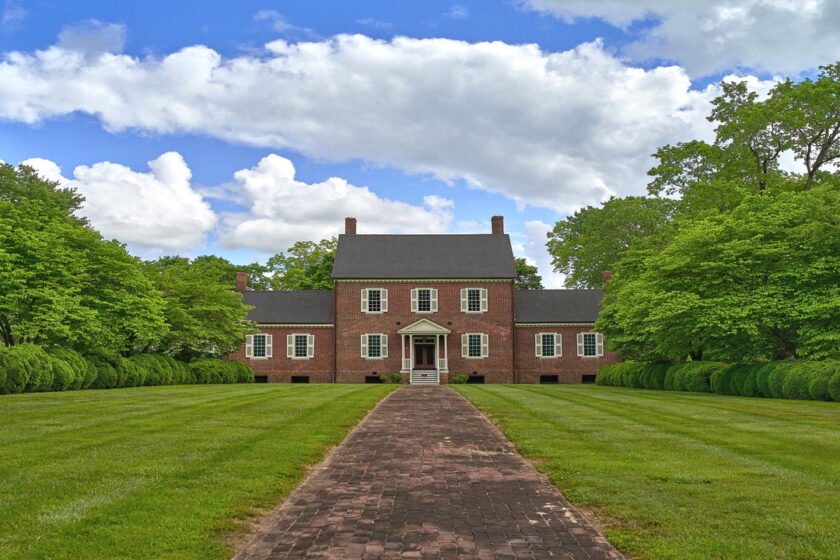

North Carolina’s Southern homesteads stand as silent witnesses to the passage of time. Many once epitomized wealth, ambition, and industrious life, yet have been left to fade away. Overgrown by nature and reclaimed by the land, these properties—though rich in history—are now remnants of a bygone era. Some structures barely stand, while others have vanished into fields and forest, leaving only echoes of their former glory. In this article, we explore 12 such Southern homesteads in North Carolina, all of which time and nature have slowly overtaken, and some have all but disappeared.
1. Joel Lane House (1769) – Raleigh

Once standing proudly as a symbol of early Raleigh, the Joel Lane House is now surrounded by urban development, its once expansive grounds overtaken by city growth. Built in 1769, it was the home of Joel Lane, considered the “Father of Raleigh,” who played a pivotal role in the founding of North Carolina’s capital city. The house, now preserved as a museum, stands isolated amidst a sea of modernity. While the house itself has been maintained, the surrounding gardens and land, once cultivated and carefully managed, have been consumed by the ever-expanding city.
2. King House (1763) – Windsor

The King House, built in 1763 by William King, was once a grand representation of early prosperity in Bertie County. The elegant Georgian home is now an abandoned structure, overshadowed by the encroachment of wild growth. The surrounding grounds, once meticulously managed for agricultural use, have long since been reclaimed by nature. The trees and shrubs now dominate the landscape, and the once vibrant boxwoods that lined the paths are now tangled and unrecognizable. Despite efforts to preserve the home, its context has been largely lost, as time and nature continue their reclamation.
3. Beaver Dam Plantation House (1829) – Davidson

Beaver Dam Plantation House, built in 1829, is an imposing example of Greek Revival architecture. The house once stood at the center of an expansive cotton-producing plantation, but today, its grandeur has been diminished by decades of neglect. The surrounding property, which was once a cultivated agricultural operation, is now a wilderness of trees and underbrush. The house’s sagging porch and weathered paint reflect the years of deterioration, while the once-cultivated fields are now overtaken by the forest. The property has become a quiet reminder of the past, gradually being reclaimed by nature.
4. Bennett Bunn Plantation (1833) – Zebulon

The Bennett Bunn Plantation, built in 1833, once stood as the center of a prosperous cotton estate. Today, the plantation’s landscape is overtaken by pine forests, with the remaining structures barely visible beneath a thick cover of vegetation. The formal gardens have been lost to nature, and the surrounding fields, once carefully worked, have returned to their wild state. The property’s historical context has been erased as the land reverts to a wilderness, with only faint traces of its former agricultural purpose left to tell the story of its past.
5. Coolmore Plantation (1858) – Tarboro

Coolmore Plantation, built between 1858 and 1861, was once one of the most impressive antebellum homes in North Carolina. However, the mansion’s grandeur has been obscured by decades of neglect, and much of the property has been swallowed by nature. The once-vibrant formal gardens, which were among the most elaborate in eastern North Carolina, have faded into wilderness. The mansion’s massive Corinthian columns now stand in contrast to the overgrown grounds that have reclaimed the estate. Though the mansion still stands, the surrounding landscape is a shadow of its former self, consumed by the forces of nature.
6. Somerset Place (1785) – Creswell

Somerset Place was once one of North Carolina’s largest and most prosperous plantations, operating from 1785 until the Civil War. The main house, rebuilt in the 1830s, now sits in ruins, and the once-cultivated fields have been overtaken by trees and shrubs. The plantation’s gardens, which were once meticulously maintained, are now little more than a tangle of wild growth. While the property has been partially restored, the surrounding landscape has returned to its natural state, with little remaining of the agricultural operations that once thrived here.
7. Midway Plantation (1848) – Knightdale

Midway Plantation, originally built in 1848, was relocated in 2005 to preserve it from the encroaching highway expansion. Despite the preservation of the buildings, the surrounding landscape, once an active farmstead, has been overtaken by suburban sprawl. The agricultural fields that once sustained the plantation are now replaced by new developments, and what was once a bustling farmstead is now isolated in a growing urban environment. The land around Midway Plantation has gradually returned to nature, with trees and underbrush consuming what was once carefully cultivated space.
8. Hope Plantation (1803) – Windsor

Hope Plantation, completed around 1803 for Governor David Stone, is now a quiet testament to the past. Though the main house has been carefully preserved as a museum, the surrounding landscape has slowly been reclaimed by nature. What were once carefully managed agricultural fields are now forests, and the plantation’s formal gardens have become overgrown. The King-Bazemore House (1763), relocated to the site, serves as a reminder of the past, but the land itself, overtaken by nature, erases much of the property’s agricultural history.
9. Hoyle Historic Homestead (1794) – Dallas

Once a thriving homestead built in 1794, the Hoyle Historic Homestead represents a mix of German-American construction and colonial architecture in Gaston County. The two-story structure, with Federal and Georgian influences, was renovated around 1810, adding a more refined architectural style. The property once stood surrounded by large walnut trees, offering a glimpse into early 19th-century life. Over time, however, nature has reclaimed much of the land, and today, the site is a quiet reflection of a bygone era, with the house itself remaining largely abandoned and overtaken by vegetation. What remains is an echo of the past, slowly fading into the overgrown landscape.
10. Miller Homestead (1905) – Lansing

Constructed in 1905, the Miller Homestead in Lansing, NC, stands as a historical marker of early 20th-century rural life. This one-story, plus attic home was built in the Hall and Parlor style and was the residence of local folk musicians Charles and Howard Miller. The property also includes a garage and mill house, each reflecting various stages of development from the 1930s to the 1950s. Today, the homestead, once a lively home, is now just a memory, overtaken by the encroaching wilderness. The house remains abandoned, its original character slipping away as nature gradually reclaims the land surrounding it.
11. Mulberry Island Plantation (1790) – Stoneville

Mulberry Island Plantation was once a thriving agricultural estate named for the mulberry trees that lined its paths. Built in 1790 by Nathaniel Scales, the plantation sought to establish a prosperous farming community, yet today, the site is nearly forgotten. Overgrown vegetation has overtaken the remains of the main house, and the fields that once supported crops are now wild. The once meticulously cultivated area is now a forest of trees, with only faint traces of the past scattered in the underbrush. The echoes of a family striving for prosperity are lost to time and nature.
12. Green Hill (1750) – Hillsborough

Green Hill, built in 1750, was once an elegant Georgian home that witnessed pivotal moments in North Carolina’s history, including Revolutionary War activity. Over time, the home’s formal gardens have been overtaken by ivy and native plants, with sections of the house crumbling due to neglect. Though partially restored in the 1950s, the surrounding landscape has become wild and untamed, reclaiming what was once orderly and cultivated. The property’s historical significance is now faint, and it stands as a fading memory of a once-prosperous era.