
Some people manage to hide the darkest parts of their lives until they’re no longer around to face judgment. Whether they were once admired public figures or already viewed with suspicion, these historical individuals were later exposed for crimes far worse than anyone imagined. After their deaths, hidden documents, whistleblowers, and declassified records revealed just how damaging their legacies truly were. From secret abuse to acts of betrayal and mass suffering, these villains proved that the truth always finds a way to surface, even from beyond the grave.
1. J. Edgar Hoover

While alive, Hoover was seen as a national protector, leading the FBI for nearly 50 years. But after his death, secret files exposed how he weaponized the FBI for personal vendettas. He spied on civil rights leaders, blackmailed politicians, and used illegal surveillance tactics to suppress dissent. Martin Luther King Jr. was a frequent target, with efforts to discredit him publicly and privately. These abuses of power were hidden under a carefully crafted public image. The man hailed as a patriotic hero left behind a legacy filled with fear, manipulation, and serious ethical violations.
2. Thomas Midgley Jr.

Midgley was once praised as a genius inventor for creating leaded gasoline and chlorofluorocarbons (CFCs). But after his death, the devastating consequences of his work became clear. Leaded fuel caused widespread neurological damage in children, while CFCs contributed to massive ozone depletion. Environmental scientists now consider him one of the most harmful individuals to the planet, despite his good intentions. He died without facing public scrutiny, but his inventions left a legacy of environmental destruction.
3. Jimmy Savile

In life, Jimmy Savile was a beloved British entertainer and philanthropist, often praised for his charity work and eccentric personality. But within months of his death in 2011, a horrifying truth emerged. Hundreds of allegations surfaced accusing him of sexual abuse, many involving children and hospital patients. Institutions that once celebrated him were found to have ignored or covered up reports. The extent of his crimes shocked the nation, revealing a serial predator who used fame and connections to avoid exposure. Savile’s posthumous downfall remains one of Britain’s most disturbing scandals.
4. Harry Dexter White

A respected U.S. Treasury official and key figure in shaping postwar global finance, White’s true loyalties came into question after his death. Documents from the Venona project, a top-secret U.S. intelligence effort, revealed he had passed information to Soviet agents during World War II. Though he denied the accusations while alive, posthumous evidence confirmed his role in Soviet espionage. His actions may have influenced major wartime decisions, raising concerns about national security. Once seen as a patriot, White’s legacy is now tainted by betrayal and questions about how deeply Soviet spies infiltrated U.S. institutions.
5. Alfred Krupp

Alfred Krupp was once revered as a titan of German industry, supplying weapons and steel that fueled Germany’s economy. However, after World War II and his death, investigators revealed that his factories used thousands of forced laborers under inhumane conditions. Many were prisoners of war or civilians abducted from occupied territories. These crimes remained buried beneath the image of industrial success. The full extent of Krupp’s involvement in Nazi war crimes came to light too late for justice. His legacy now reflects not just business power, but human suffering tied to profits and war.
6. Carl Clauberg

Dr. Carl Clauberg was considered a leading gynecologist in Nazi Germany and even ran medical clinics after the war. But after his death, documents and survivor testimonies exposed his role in horrific experiments at Auschwitz. He tested sterilization techniques on female prisoners, often without anesthesia, leading to extreme pain, disfigurement, and death. These acts were not fully known or acknowledged during his lifetime. Once seen as a medical expert, Clauberg’s legacy turned into a chilling example of scientific cruelty under the Nazi regime.
7. Reinhard Gehlen

During the Cold War, Reinhard Gehlen was celebrated for founding West Germany’s intelligence agency and cooperating with the U.S. But after his death, files showed his network was filled with former Nazis and war criminals. He protected them in exchange for intelligence, allowing many to escape justice. Gehlen’s strategies laid foundations for Western espionage, but at the cost of enabling fugitives and fostering a corrupt system. While alive, he enjoyed political support, but his true methods were far from clean. Today, his legacy is a controversial mix of effectiveness and moral compromise.
8. King Leopold II of Belgium

Known as a king who brought wealth to Belgium, Leopold’s reputation took a brutal turn after his death. Hidden reports and whistleblower accounts revealed the horrors committed under his personal rule of the Congo Free State. Millions of Congolese were mutilated, enslaved, or killed during his rubber and ivory extraction operations. Atrocities included hand amputations, mass starvation, and village burnings. Though these acts were downplayed or denied in his lifetime, history eventually caught up. Leopold’s legacy is now one of colonial cruelty, not regal success, with many viewing him as a genocidal tyrant.
9. Walter Freeman

Dr. Walter Freeman popularized the lobotomy in mid-twentieth-century America, treating thousands of patients with this radical procedure. Hailed as a mental health pioneer, he performed surgeries in offices, asylums, and even traveled across states in his “lobotomobile.” But after his death, growing research revealed how many patients were left permanently disabled, emotionally flat, or even dead. His methods were reckless and lacked ethical grounding. Freeman’s reputation shifted from respected innovator to cautionary figure in the dangers of unchecked medical enthusiasm.
10. Heinrich Himmler

Himmler, one of Hitler’s top lieutenants, was well known for his role in the Holocaust. But even after his suicide in 1945, documents continued to emerge revealing a wider scope of cruelty. Postwar investigations uncovered personal orders detailing torture programs, brutal experiments, and direct oversight of extermination camps. He was not just an administrator but an active architect of genocide. Much of this was hidden or destroyed during the war, but his own records sealed his legacy.
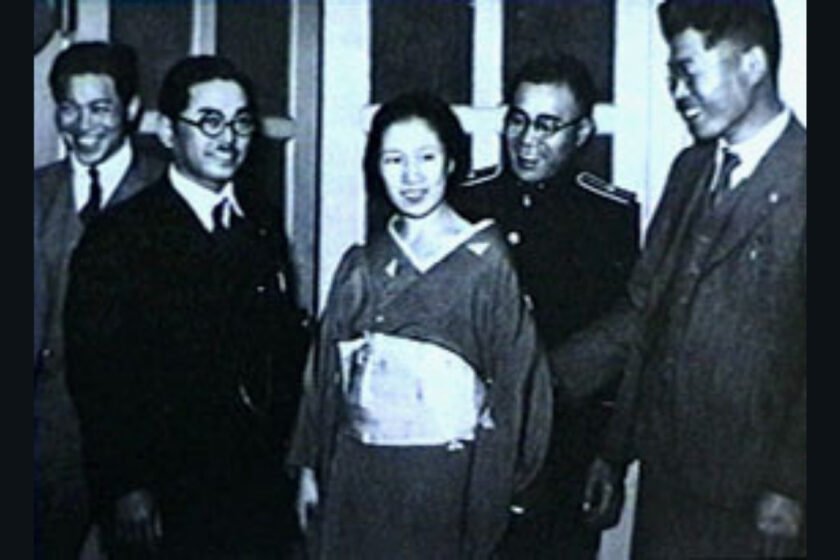
11. Sada Abe

Sada Abe became infamous in Japan for a murder that shocked the nation in 1936. Initially treated as a media spectacle, her story was portrayed as one of love gone wrong. However, after her death, deeper psychological evaluations and uncovered writings suggested a long history of manipulation, obsession, and escalating violence that had gone unnoticed. Though viewed as a tragic or even romantic figure during her trial, modern reassessments painted her actions in a more disturbing light.
12. William Calley Jr.

Lieutenant Calley was court-martialed for the My Lai Massacre during the Vietnam War, where hundreds of unarmed civilians were killed. While he was convicted, many of his actions were minimized during his lifetime. After his release and eventual death, further witness accounts and declassified reports revealed more victims, cover-ups, and decisions made with shocking brutality. He had been treated by some as a scapegoat or misunderstood soldier. But posthumous revelations confirmed deeper involvement and calculated choices.
13. William Colby

As CIA Director during the Cold War, William Colby was known as a reformer who opened the agency’s books to Congress. But years after his mysterious death in 1996, deeper files revealed his role in approving covert programs that included political assassinations, psychological experiments, and foreign coups. Though some suspected his actions during the Vietnam War were ethically questionable, it wasn’t until posthumous disclosures that the extent of his involvement in highly controversial and deadly operations became clearer.