

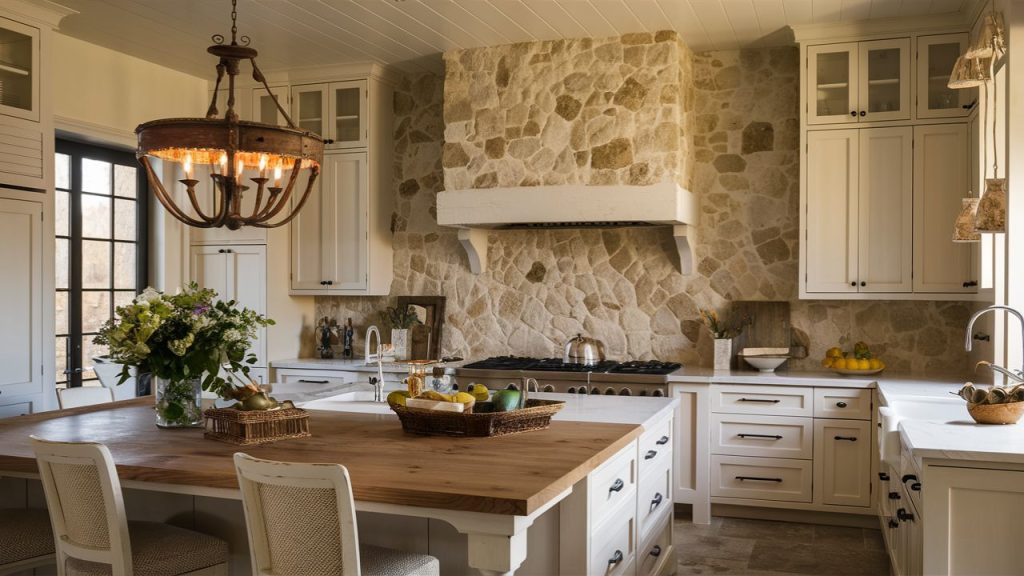
A French country-style kitchen effortlessly combines rustic charm with refined elegance, offering a warm, welcoming space that feels both lived-in and timeless. With its roots in the countryside of Provence, this design style embraces natural textures, soft colors, and antique details. Whether you’re building from the ground up or adding character to an existing kitchen, these 15 ideas will help bring authentic French charm to life.
1. Classic Ironwork for Rustic Character
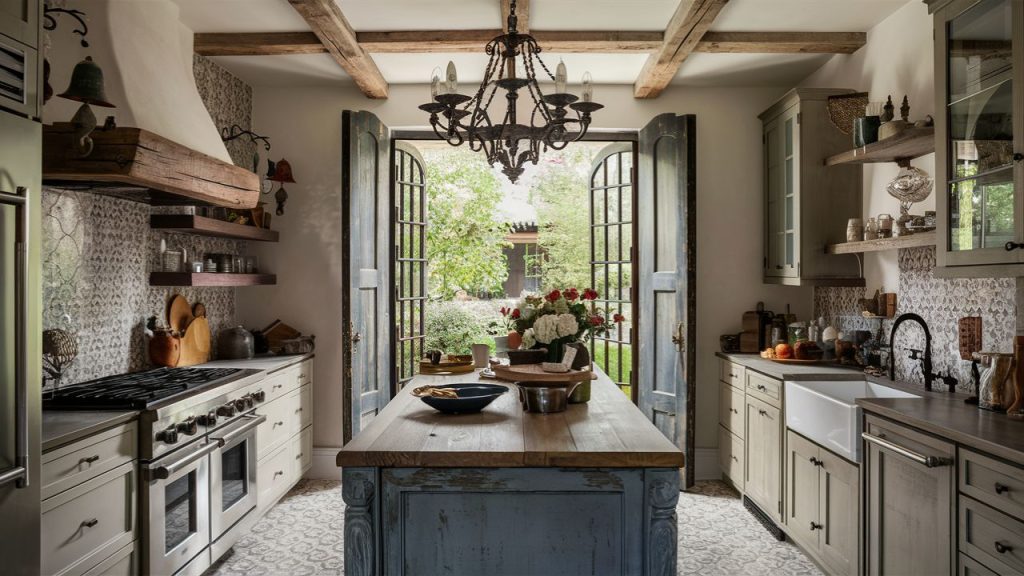
Incorporating classic ironwork is a hallmark of French country design, adding both rustic character and timeless elegance. Use wrought iron in chandeliers, pot racks, curtain rods, or cabinet hardware to infuse your kitchen with old-world charm. The aged, slightly weathered finish of iron details offers visual contrast against soft color palettes and natural materials, grounding the space in authenticity. These accents evoke the craftsmanship and warmth of traditional French farmhouses.
2. Casual Charm with Open Storage
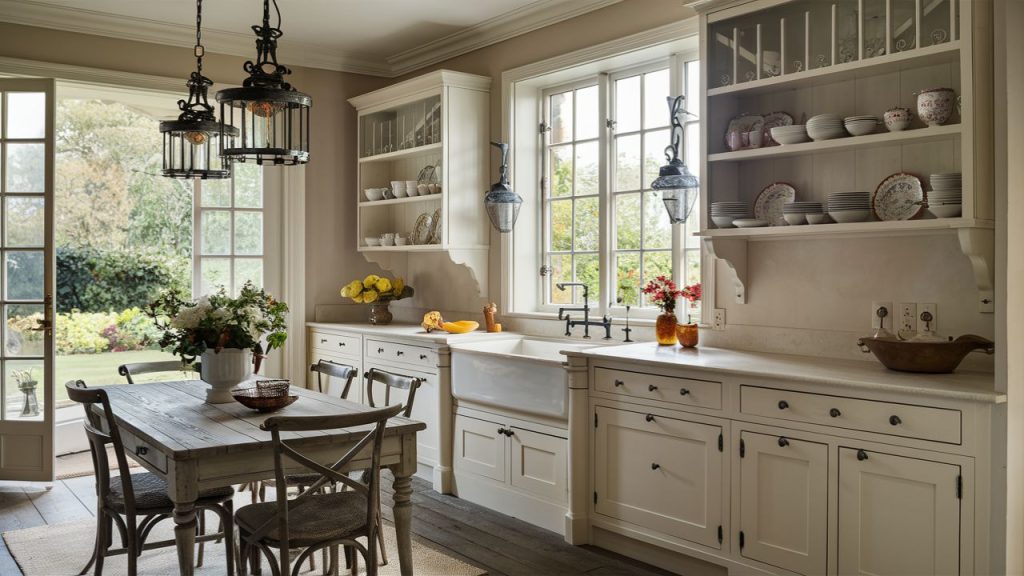
Open storage is a defining feature of French country kitchens, offering both function and casual charm. Swap out upper cabinets for open wooden shelves to showcase everyday essentials like stacked plates, vintage crockery, or glass jars. This approach creates a warm, lived-in feel and invites personalization through curated, useful displays. The exposed shelving also enhances visual openness, making the kitchen feel airy, welcoming, and effortlessly styled with French farmhouse flair.
3. Natural Stone or Brick Backsplashes
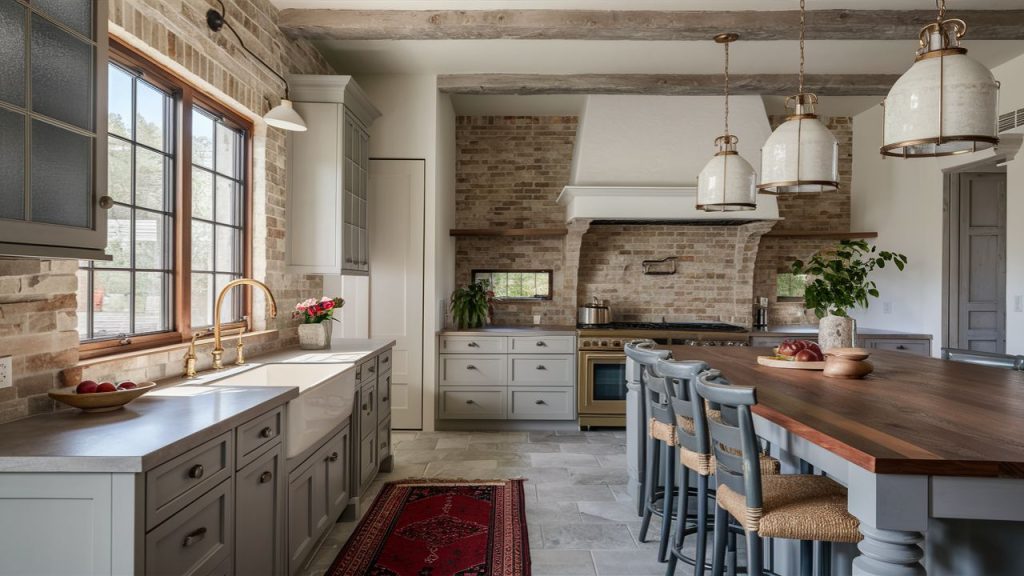
Natural stone or brick backsplashes bring earthy texture and timeless appeal to a French country kitchen. Materials like tumbled marble, limestone, or exposed brick introduce a rustic, tactile quality that adds warmth and depth. Their uneven surfaces and organic tones create a cozy, grounded backdrop that complements vintage-inspired decor and natural wood elements. These materials evoke the charm of traditional European homes and elevate the overall ambiance with authentic character.
4. Distressed Wood Finishes for Rustic Charm
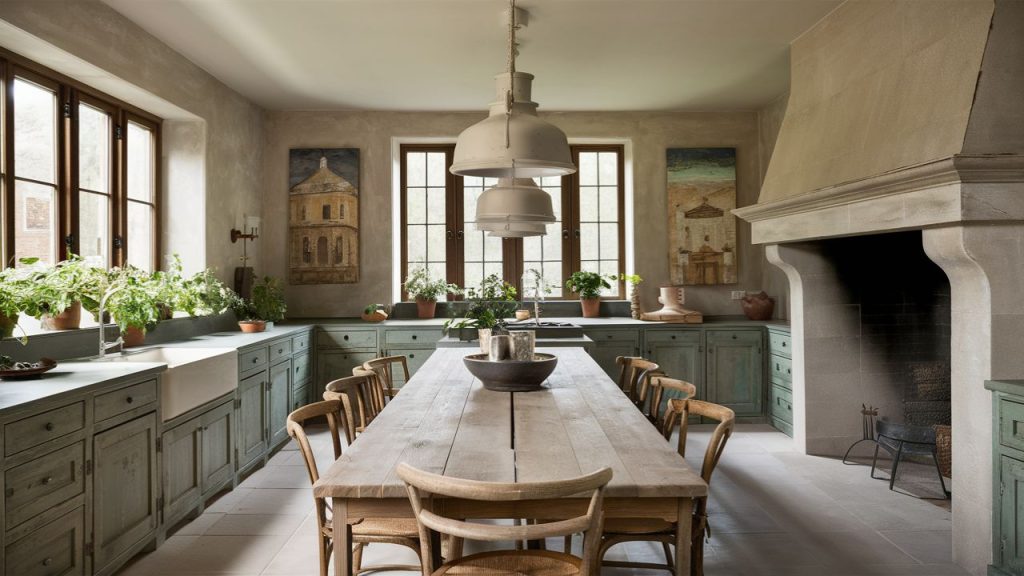
Distressed wood finishes are essential for capturing the rustic charm of a French country kitchen. Whether featured in cabinetry, ceiling beams, or freestanding furniture, weathered wood tones bring warmth, depth, and character. Lightly worn edges, visible grain, and imperfect textures mimic the look of timeworn heirlooms, giving the space a cozy, lived-in feel. These natural elements add authenticity and help create a timeless, welcoming atmosphere.
5. Copper Accents for Warmth
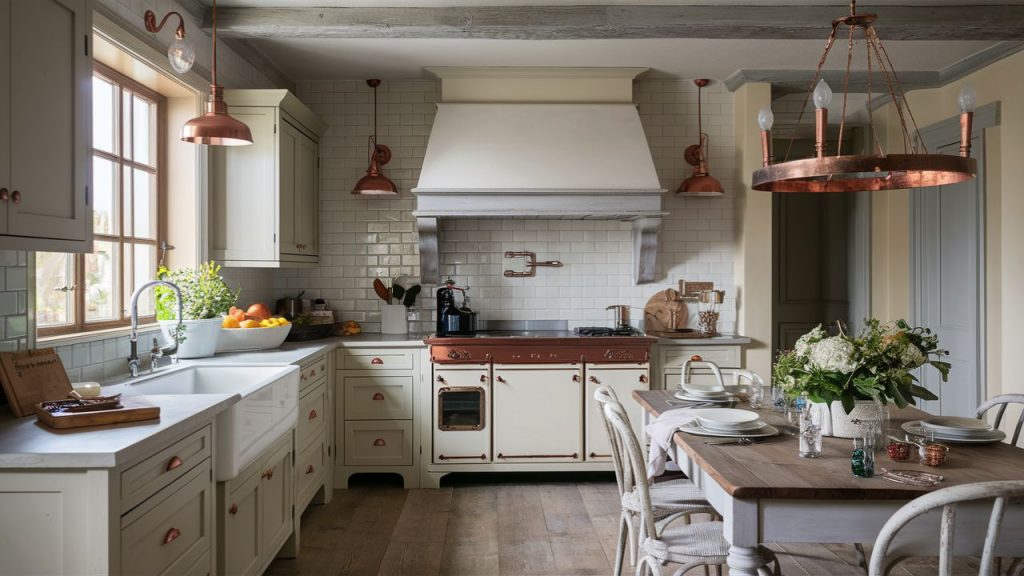
Copper accents are a hallmark of French country kitchens, offering both visual warmth and timeless appeal. Display copper pots, pans, and utensils on a hanging rack, open shelving, or above the stove to create a charming focal point. The rich, glowing patina of aged copper adds depth and character while celebrating the beauty of everyday tools. Functional yet decorative, these pieces evoke classic European kitchens and bring an artisanal, well-loved feel to the space.
6. Soft Pastel or Earth-Toned Color Palettes
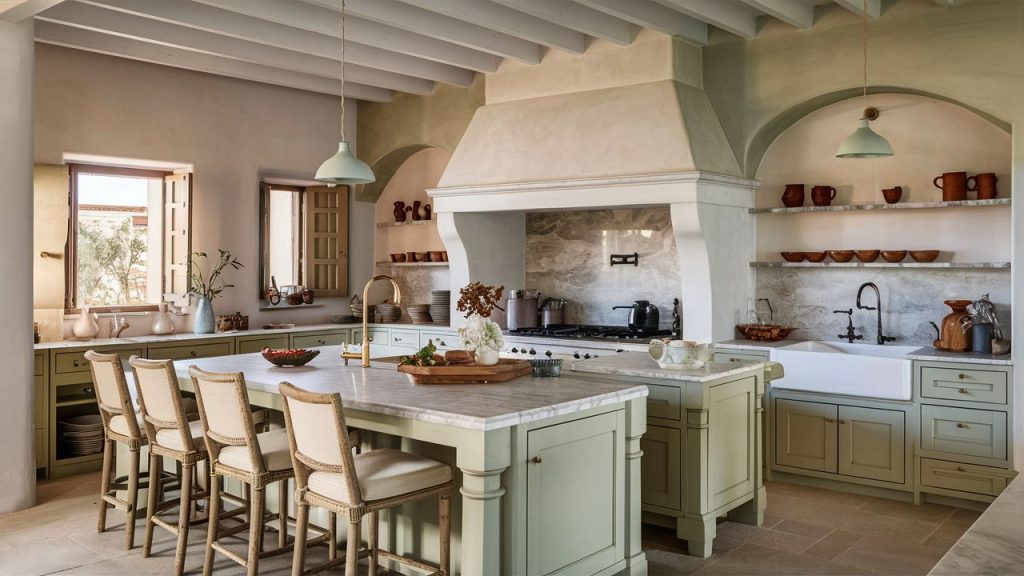
A soft pastel or earth-toned color palette is key to capturing the serene elegance of a French country kitchen. Opt for muted shades like sage green, pale blue, warm cream, or dusty rose to reflect the natural beauty of the French countryside. These gentle hues create a calming, inviting environment while pairing effortlessly with wood textures, antique finishes, and floral accents. The result is a harmonious space that feels both timeless and comfortably lived-in.
7. Farmhouse Sink for Traditional Style
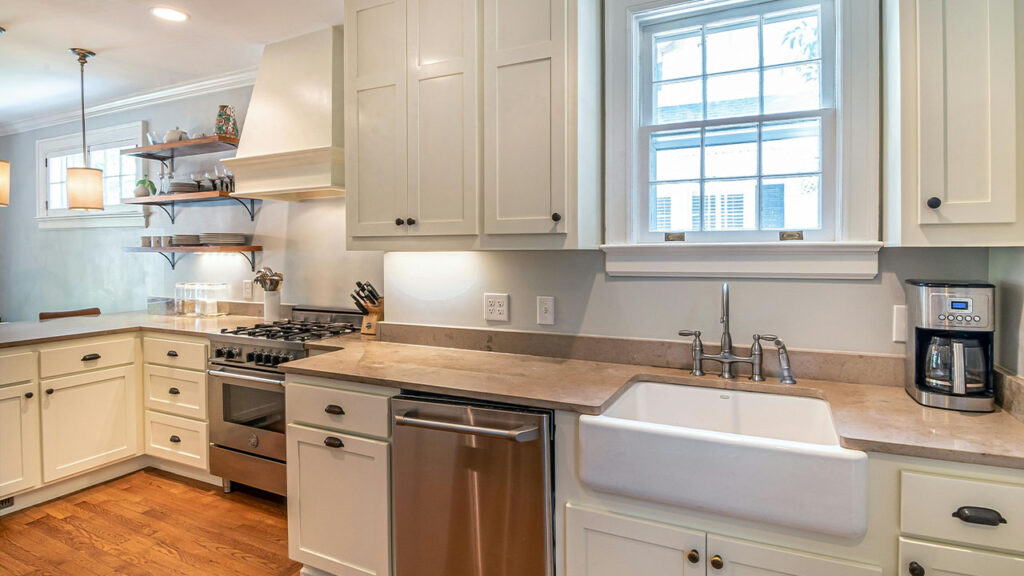
A white apron-front farmhouse sink is a quintessential element of French country kitchens, combining traditional style with everyday practicality. Its deep basin and exposed front add a sense of heritage and craftsmanship, making it both functional and visually striking. Ideal for everything from washing large pots to arranging fresh flowers, this sink design brings timeless utility while anchoring the space in classic, rustic elegance that echoes the charm of the French countryside.
8. Vintage Furniture for a Collected Look
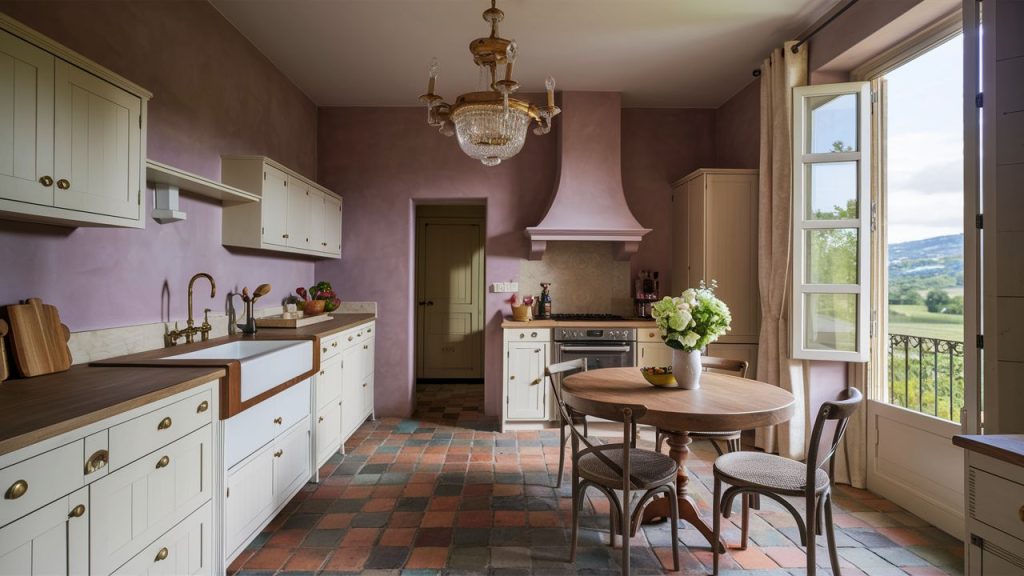
Incorporating vintage furniture is key to achieving the layered, collected look of a French country kitchen. Add charm and character with timeworn pieces like an antique table, distressed hutch, or weathered stools. These unique furnishings bring a sense of history and craftsmanship, making the space feel curated rather than styled. The mix of old and new creates a warm, inviting atmosphere that reflects the relaxed elegance and storied aesthetic of the French countryside.
9. Ornate Moldings for Elegance
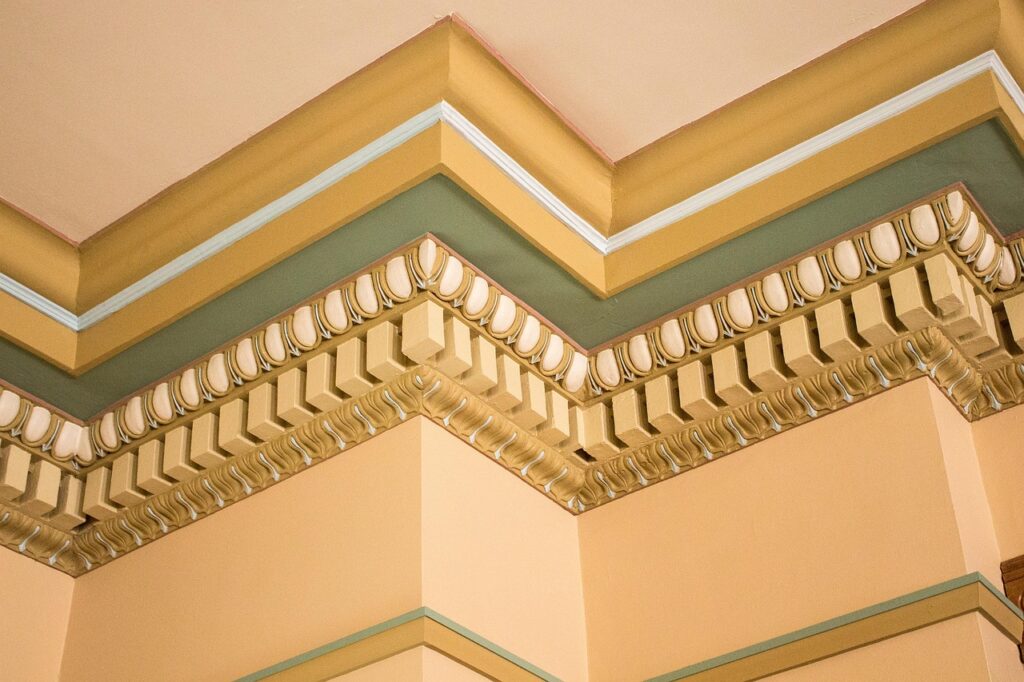
Ornate moldings add a refined layer of elegance to the rustic charm of a French country kitchen. Incorporate decorative touches like carved corbels beneath shelves, crown molding on cabinetry, or beaded trim along ceilings to elevate the overall design. These graceful accents soften the rugged textures of wood and stone, creating a balanced blend of sophistication and warmth. The result is a space that feels both stately and inviting—true to French countryside style.
10. Linen and Toile Fabrics for Softness
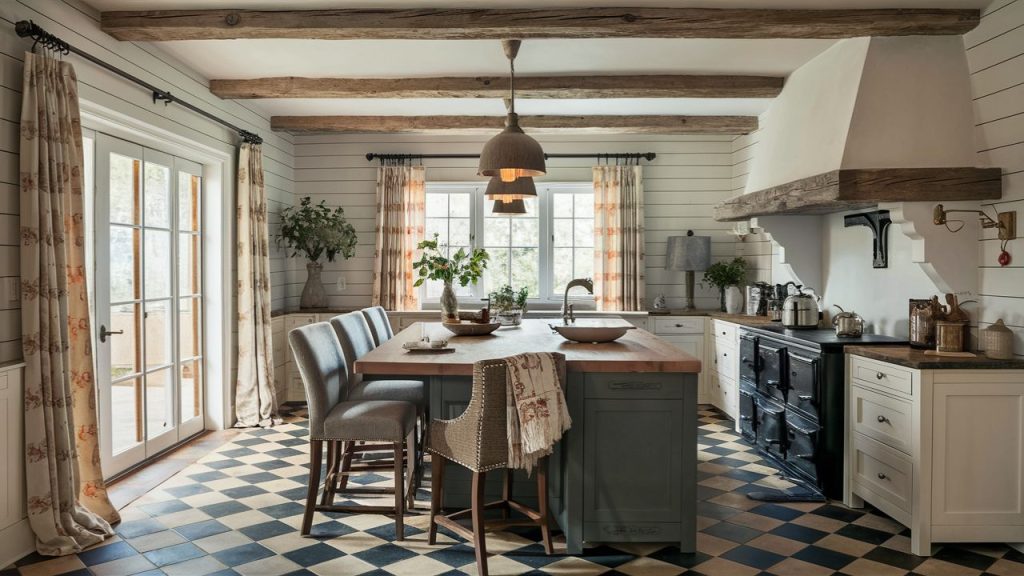
Linen and toile fabrics are essential for bringing softness and texture to a French country kitchen. Incorporate natural textiles like linen, cotton, or classic toile patterns in window treatments, seat cushions, or table runners to introduce gentle layers and visual warmth. These materials evoke the relaxed, lived-in charm of rural French homes while enhancing comfort and elegance. Their muted tones and subtle prints complete the cozy, timeless appeal of the space.
11. Hanging Herbs for a Fresh Touch
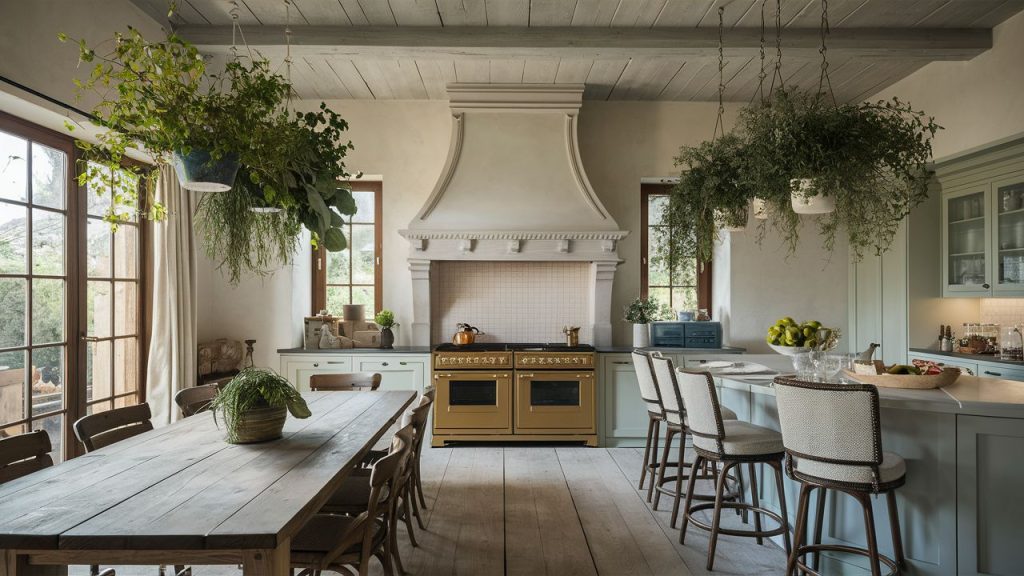
Hanging herbs add a fresh, organic touch that perfectly complements the French country aesthetic. Bundle dried lavender, thyme, or rosemary and hang them near a window, above the sink, or along a wooden beam. Not only do they infuse the kitchen with pleasant natural fragrance, but they also serve as charming, functional decor. Whether fresh or dried, herbs bring a sense of simplicity, beauty, and authenticity that echoes the traditions of rustic French living.
12. Displayed Cookware for Function and Style
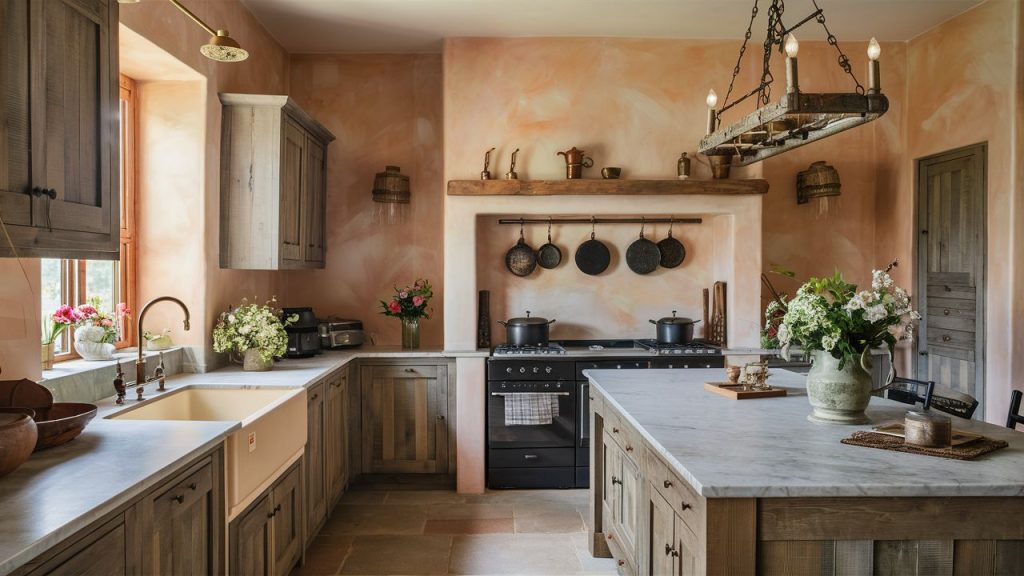
Displaying cookware is a hallmark of French country kitchens, where function and style go hand in hand. Hang frequently used pots, pans, and utensils on iron hooks or racks, or neatly stack them on open shelves for easy access. This practical approach doubles as charming decor, adding personality and visual texture to the space. By showcasing well-loved kitchen tools, you create an inviting, lived-in atmosphere that celebrates both beauty and everyday usefulness.
13. Patterned Tile Floors for Old-World Flair
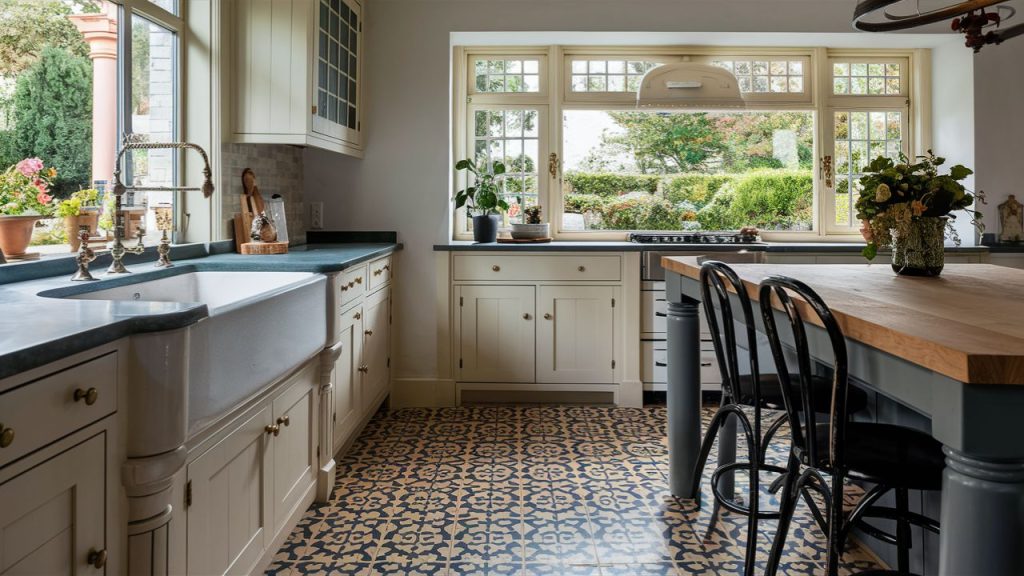
Patterned tile floors add old-world charm and a sense of timelessness to a French country kitchen. Consider using encaustic tiles with intricate motifs or aged terracotta flooring to ground the space in rustic elegance. These patterns introduce subtle movement and visual interest underfoot, enhancing the overall warmth and authenticity of the design. With their historic appeal and durability, these floors beautifully echo the charm of traditional provincial kitchens.
14. Glass-Front Cabinets for Elegant Display
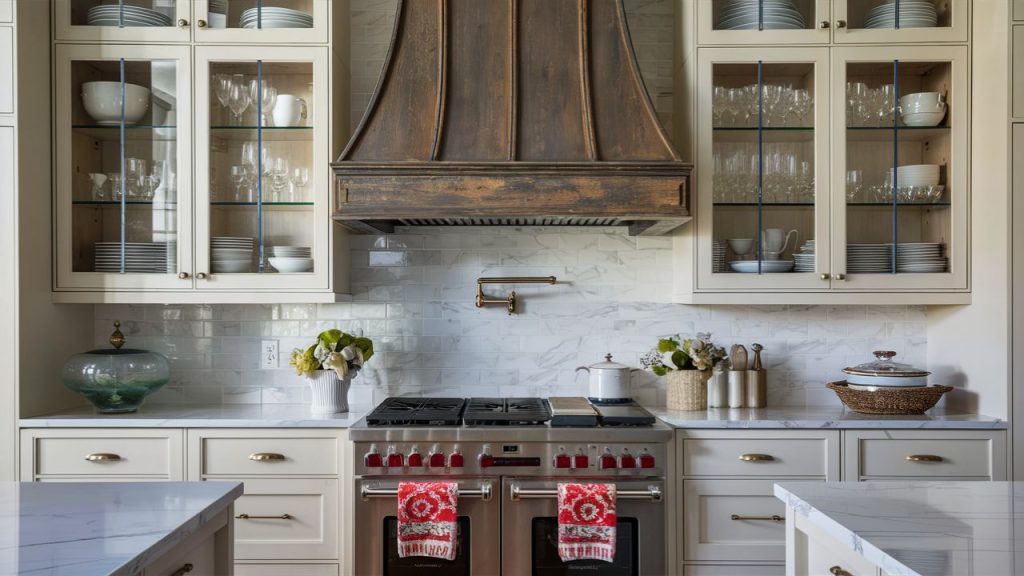
Glass-front cabinets offer a perfect balance of elegance and practicality in a French country kitchen. By replacing solid doors with clear or lightly frosted glass panes, you can beautifully display curated dishware, antique ceramics, or treasured heirlooms. This design choice introduces a sense of openness and lightness, breaking up the visual weight of traditional cabinetry while still maintaining enclosed, organized storage. It adds both charm and refinement to the space.
15. Antique Accessories for Finishing Touches
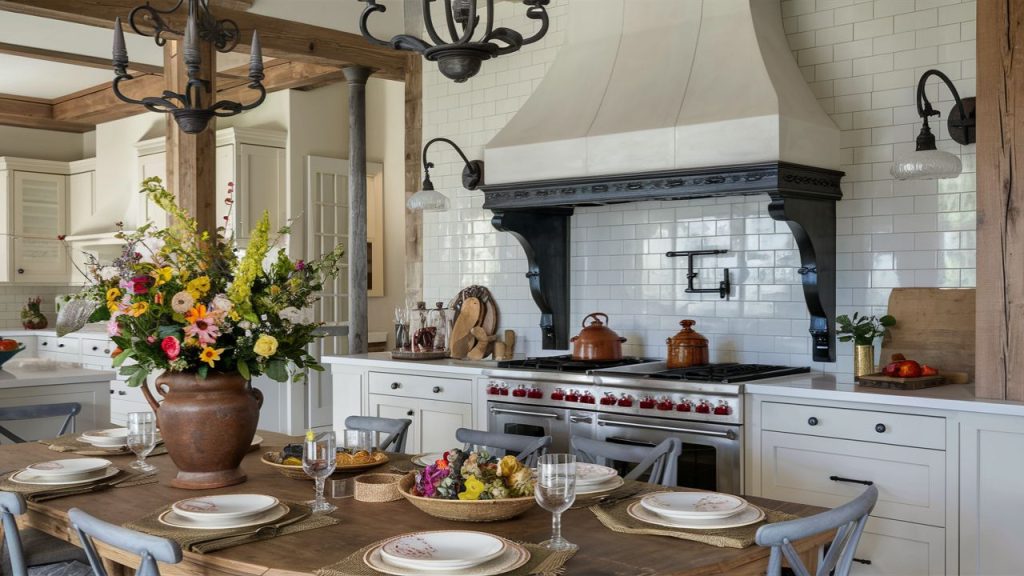
Antique accessories are the perfect finishing touches for a French country kitchen, adding personality and a sense of history. Incorporate items like weathered cutting boards, enamel pitchers, vintage clocks, or charming flea market finds to enhance the room’s curated, collected feel. These pieces tell a story and bring warmth, making the kitchen feel lived-in and authentically French. Thoughtfully chosen accents complete the space with charm and timeless character.
This article was created with the assistance of AI but thoroughly edited by a human being.