
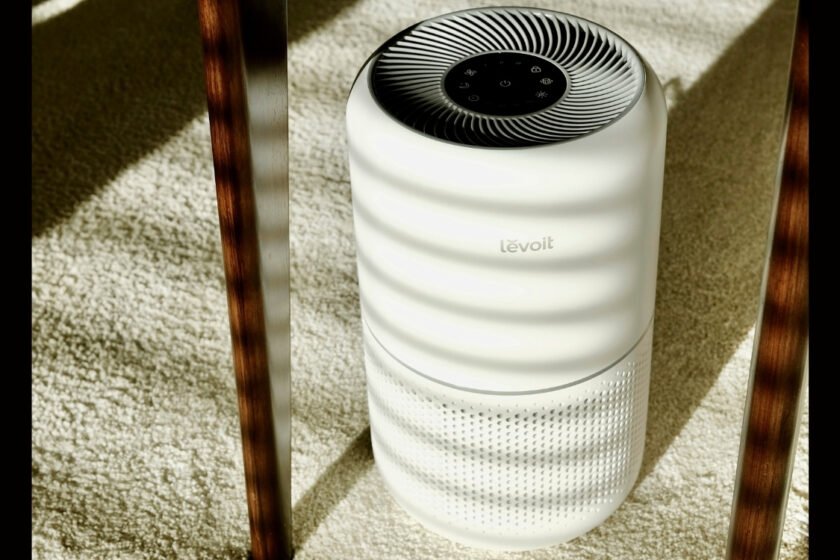
City air often contains fine particles from traffic, wildfire smoke, and construction dust. A purifier with a true HEPA filter effectively targets these pollutants, as the U.S. EPA defines HEPA as capturing at least 99.97 per cent of 0.3-micron particles. Energy Star evaluates efficiency using a Clean Air Delivery Rate to watt ratio, which helps manage electricity costs in small apartments. It also helps to choose models listed by California’s Air Resources Board, which certifies them for low ozone emissions to ensure safety indoors. The seven picks below emphasize certified filtration, clear specs, and proven room coverage for urban homes.
1. Coway Airmega AP-1512HH “Mighty”

The Coway Mighty remains a compact workhorse for apartments, with published coverage for rooms up to 361 square feet and rapid whole-room cycles listed by the manufacturer. It combines a pre-filter, deodorization filter, and true HEPA filter with an auto mode that ramps up when pollution rises. According to Coway’s specifications, the unit can purify 361 square feet in 12.5 minutes and 1,748 square feet in one hour at high speed. That throughput is ideal for areas with high traffic volumes and frequent particulate spikes.
2. Blueair Blue Pure 211i Max

For large living rooms, the 211i Max is engineered for spaces up to 635 square feet and uses Blueair’s HEPASilent system that blends mechanical filtration with electrostatic particle charging. According to Blueair, CADR and room size listings were updated to align with new U.S. Department of Energy test methods, which clarify expectations for buyers comparing models. The onboard sensors and auto mode help handle rush hour pollution without constant fiddling. If you host often or have an open-plan layout, the higher airflow can clear cooking- and street-related particles more quickly.
3. Levoit Core 400S

The Core 400S suits bedrooms and mid-sized studios, pairing app control with detailed specs. According to Levoit, the unit’s Clean Air Delivery Rate is 231 cubic feet per minute, and the noise range is 22 to 52 decibels, which is helpful for night use. The company lists an ideal room size of 358 square feet at around five air changes per hour, which aligns with urban needs where windows may stay closed. The auto mode and particle sensor eliminate guesswork, and the cylindrical intake facilitates maneuvering in confined spaces.
4. Honeywell HPA300

Honeywell’s HPA300 clearly displays the third-number CADR ratings that have been published. The HPA300, according to Honeywell, provides 4.8 air changes per hour in a 465 square foot space, with CADR values of 300 for tobacco smoke, 320 for dust, and 300 for pollen. It’s simple to match purifier output to real city apartments thanks to those details. The device uses an activated carbon prefilter and a true HEPA filter to cut down on traffic and cooking odors. Easy maintenance is made possible by the clear controls and filter indicators.
5. IQAir HealthPro Plus

IQAir sells HyperHEPA technology, which targets particles much smaller than the 0.3 micron HEPA benchmark, to address ultrafine particle concerns. A range typical of urban combustion sources is covered by the HealthPro Plus, which captures 99.5% of particles down to 0.003 microns, according to IQAir’s product page. The system incorporates app monitoring for ongoing feedback, and the sealed housing attempts to prevent bypass. Its deep media filters make it suitable for long-term use in crowded urban areas, despite being bigger and heavier than compact units.
6. Austin Air HealthMate Plus

A large bed of activated carbon and a medical-grade HEPA filter are highlighted in the HealthMate Plus if gas and odor control are important considerations. Austin Air claims that the filter can lower long-term expenses for urban households because it is made to last up to five years under typical residential use. According to the company, the unit is useful near busy roads or when smoke from wildfires drifts into cities because it targets a wide range of gases and volatile organic compounds. For durability, the steel housing and simple controls are ideal.
7. Dyson Purifier Cool Formaldehyde TP09

Dyson’s TP09 adds targeted formaldehyde sensing and catalytic breakdown, which is relevant in modern apartments with new furniture and finishes. The entire device, according to Dyson, is sealed in accordance with HEPA H13, which keeps trapped particles in place. The device also automatically detects and responds to changes in the air quality. The tall tower design serves as both a cooling fan and an efficient air circulator in open spaces. This model is unique for homes that are susceptible to chemical off-gassing because of the formaldehyde feature.