
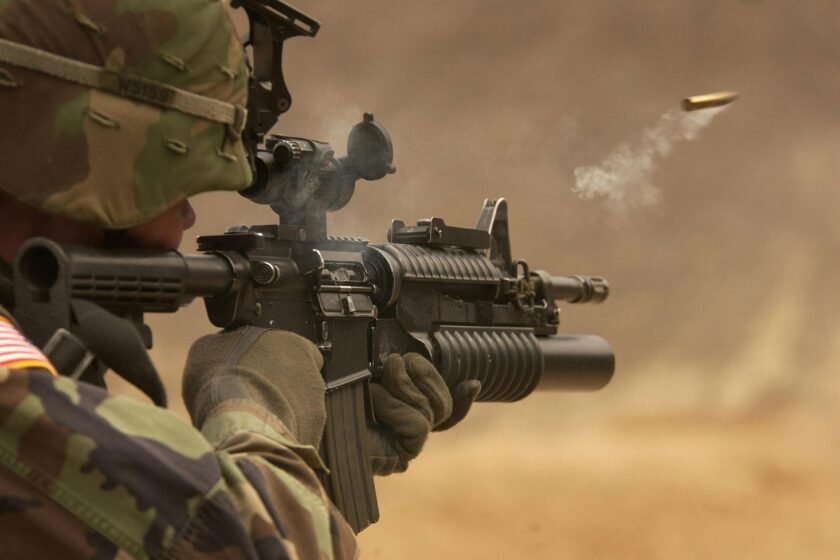
World War II didn’t just shift global politics and geography; it also revolutionized military technology. From communication breakthroughs to advanced aircraft, the gear developed during this time laid the foundation for modern warfare. What makes these tools remarkable isn’t just their power or precision, but how they reshaped strategy, coordination, and even the daily life of soldiers. Today’s military tech owes a lot to the innovations of the 1940s. Whether you’re a history buff or just curious, here are seven key pieces of WWII gear that changed the way wars are fought and are still influencing military operations today.
1. Walkie-Talkies

Before WWII, coordinating troops in real-time across battlefields was slow and risky. The introduction of the walkie-talkie gave soldiers a mobile, reliable way to communicate instantly. Originally called the SCR-300, this two-way radio was carried on a soldier’s back and allowed commanders to direct operations without relying on runners or signal flares. It was especially useful in complex operations where timing was everything. Though bulky by today’s standards, the walkie-talkie was revolutionary for its time. It laid the groundwork for portable communications in both military and civilian life, including emergency services and field operations.
2. The Enigma Machine

Used by the Germans, the Enigma machine encrypted military messages in ways thought to be unbreakable. But Allied codebreakers, led by figures like Alan Turing at Bletchley Park, successfully cracked it. This breakthrough in cryptography gave the Allies access to crucial intelligence, often referred to as “Ultra,” which helped shift the course of the war. The effort required to build early computing machines to process the vast number of possible code combinations. Not only did this help win the war, but it also sparked the birth of modern computing and cyber defense strategies used by militaries today.
3. Radar

Radar was still in its infancy when WWII began, but it quickly became a game-changer. Using radio waves to detect incoming aircraft or ships, radar allowed defenders to anticipate attacks with unprecedented accuracy. The British use of radar during the Battle of Britain is a classic example, helping to detect German bombers before they reached the coast. Radar also evolved to assist with navigation and target acquisition, helping both land and naval forces. Today’s surveillance and missile defense systems all trace their roots back to this WWII-era innovation.
4. The Jeep

Simple, rugged, and incredibly versatile, the Jeep became the ultimate all-purpose military vehicle during WWII. Officially known as the Willys MB, it could navigate rough terrain, carry troops and supplies, and even serve as a makeshift ambulance. The Jeep’s success lay in its lightweight design and adaptability, making it a crucial asset in both European and Pacific theaters. Its legacy lives on in modern military transport vehicles and even civilian SUVs. More than just a car, the Jeep represented a shift toward fast, flexible ground operations that remain essential in military strategy today.
5. Fighter Plane Technology

WWII saw a huge leap in fighter plane design and capability. Planes like the Supermarine Spitfire, P-51 Mustang, and the Messerschmitt Bf 109 combined speed, maneuverability, and firepower like never before. These aircraft played a critical role in gaining air superiority and supporting ground troops. Innovations like retractable landing gear, enclosed cockpits, and better aerodynamics gave pilots more control and power in the sky. This period also saw the first use of long-range bombers and early jet engines, paving the way for modern air forces and precision-strike capabilities that are now central to military planning.
6. The M1 Garand

The M1 Garand was the first semi-automatic rifle to be widely issued to infantry in a major war, giving American soldiers a significant edge. While most other armies were still using bolt-action rifles, the M1 allowed for faster firing without manual cycling between shots. This increased firepower changed how infantry engaged in combat, making squads more efficient and lethal. General George S. Patton even called it “the greatest battle implement ever devised.” Its design influenced future rifle development and helped set the standard for what a modern infantry weapon should be.
7. Paratrooper Gear

Paratroopers were a bold new concept in WWII: soldiers dropped behind enemy lines to secure key targets and disrupt operations. Their gear had to be specialized, from parachutes to lightweight weapons and packs. These troops relied on speed, surprise, and mobility, often operating without immediate backup. Their successful use in operations like D-Day and Market Garden showed how effective air insertion could be. Paratrooper missions required coordination, training, and specialized equipment, helping to develop today’s airborne and special operations forces who still use similar tactics and gear.