
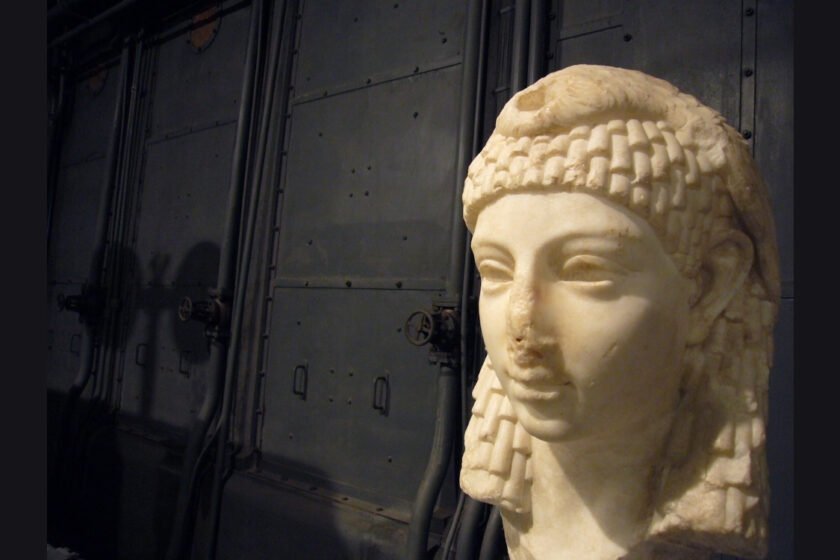
Cleopatra VII, the last active ruler of the Ptolemaic Kingdom of Egypt, remains one of history’s most captivating figures. Her life has been told and retold through ancient accounts, literature, and films, often blending fact with myth. While she was a powerful political leader, she was also surrounded by stories that exaggerated or misunderstood her true legacy. From her intelligence and multilingual skills to persistent myths about her beauty and death, Cleopatra’s story is far more complex than the romanticized versions we often hear. Here are nine fascinating facts and myths about this legendary queen.
1. She Spoke Multiple Languages

Cleopatra was highly educated and reportedly spoke at least seven languages, including Egyptian, Greek, and Latin. Unlike many of her Greek-descended predecessors, she embraced the Egyptian language, strengthening her connection with her people. Her linguistic abilities enabled her to negotiate directly with foreign leaders without the need for translators, thereby enhancing her diplomatic power. Ancient historians described her as charismatic and persuasive, with intelligence that impressed even her political enemies. Her mastery of languages not only made her an effective ruler but also challenged the stereotype of ancient queens relying solely on beauty or marriage alliances for influence.
2. She Was Not Egyptian by Blood

Although Cleopatra ruled Egypt, she was of Macedonian Greek descent, a member of the Ptolemaic dynasty founded by one of Alexander the Great’s generals. The Ptolemies maintained Greek traditions and often spoke Greek as their primary language. Cleopatra stood out by embracing Egyptian culture, religion, and language, which helped her gain loyalty from her subjects. She portrayed herself as the reincarnation of the goddess Isis, blending Greek and Egyptian traditions. This cultural fusion helped strengthen her rule, but it also fueled later myths that she was purely Egyptian, a misconception that still persists today.
3. Her Beauty Was Overstated

The idea that Cleopatra’s power came mainly from her physical beauty is largely a myth. Ancient coins and sculptures suggest she had a strong nose and prominent features rather than the Hollywood-style beauty often depicted. Historical accounts from Plutarch and others emphasized her charm, intelligence, and wit over physical appearance. Her ability to captivate powerful men like Julius Caesar and Mark Antony was rooted in her confidence, eloquence, and strategic thinking. By portraying her as simply beautiful, later storytellers overlooked the depth of her political and intellectual skills, reducing a complex leader to a romanticized figure.
4. She Formed Strategic Alliances Through Romance

Cleopatra’s relationships with Julius Caesar and later Mark Antony were as much political as personal. Aligning herself with these powerful Roman leaders provided military protection and political support for Egypt. With Caesar, she secured her throne during a time of internal conflict. Her union with Antony aimed to create a powerful alliance that could challenge Rome’s dominance. While romance was certainly involved, these partnerships were strategic moves in a turbulent political landscape. Ancient writers often exaggerated the romantic aspects, but the alliances were deeply tied to her survival as a ruler and protector of Egypt’s independence.
5. She Was a Skilled Naval Commander

Cleopatra took an active role in military affairs, and occasionally in naval strategy. During the Battle of Actium in 31 BCE, she commanded part of her fleet alongside Mark Antony in a decisive conflict against Octavian. Although they ultimately lost, Cleopatra’s involvement demonstrated her courage and leadership in wartime. She invested resources into building and maintaining a strong navy, recognizing its importance for Egypt’s defense. Ancient accounts confirm she was present in key battles, making her one of the few female leaders in history to participate in large-scale naval warfare during her reign directly.
6. The Myth of the Milk Bath

One popular myth claims Cleopatra maintained her beauty by bathing in donkey’s milk. While there is little historical evidence to support this, the story has persisted for centuries. Some believe it originated from Roman propaganda designed to portray her as indulgent and luxurious. Others suggest it was inspired by ancient Egyptian beauty rituals involving milk and honey, which were known for their skin-softening properties. Whether or not the story is true, it reflects how her image became intertwined with exotic and extravagant legends that often overshadowed her political achievements and leadership skills.
7. Her Death Was Likely Not by Snake Bite

The traditional story of Cleopatra’s death tells that she committed suicide by allowing an asp to bite her. Modern historians debate this version, suggesting she may have used poison instead. The snake bite tale likely became popular because it was dramatic and symbolically tied to Egyptian culture. Ancient Roman accounts, particularly those from Octavian’s circle, may have shaped the story to fit political narratives. Regardless of the method, her death marked the end of Egypt’s independence, as Rome annexed the kingdom soon after, beginning a new chapter in the region’s history.
8. She Had Children Who Played Key Roles

Cleopatra had four known children: Caesarion with Julius Caesar, and Alexander Helios, Ptolemy Philadelphus, and Cleopatra Selene with Mark Antony. Caesarion briefly ruled Egypt before being executed by Octavian. Cleopatra Selene survived and became Queen of Mauretania, ensuring her mother’s bloodline continued in North Africa. The fates of her sons, Alexander Helios and Ptolemy Philadelphus, remain unclear, but they were likely raised in Rome after Cleopatra’s death. Her children were pawns in the political struggles between Rome and Egypt, their lives deeply shaped by the shifting alliances and power plays of the ancient Mediterranean world.
9. Her Legacy Remains Complex

Cleopatra’s story has been retold for over two thousand years, with each era reshaping her image to suit its own narratives. Ancient Romans often painted her as a dangerous seductress, while later historians and artists romanticized her life and loves. Modern scholarship portrays her as a capable, intelligent, and ambitious ruler who navigated an extremely challenging political environment. Myths about her beauty, death, and personal life still circulate, but historical evidence paints a richer, more nuanced picture. Cleopatra remains a symbol of power, resilience, and the enduring fascination of ancient Egypt’s last great queen.