
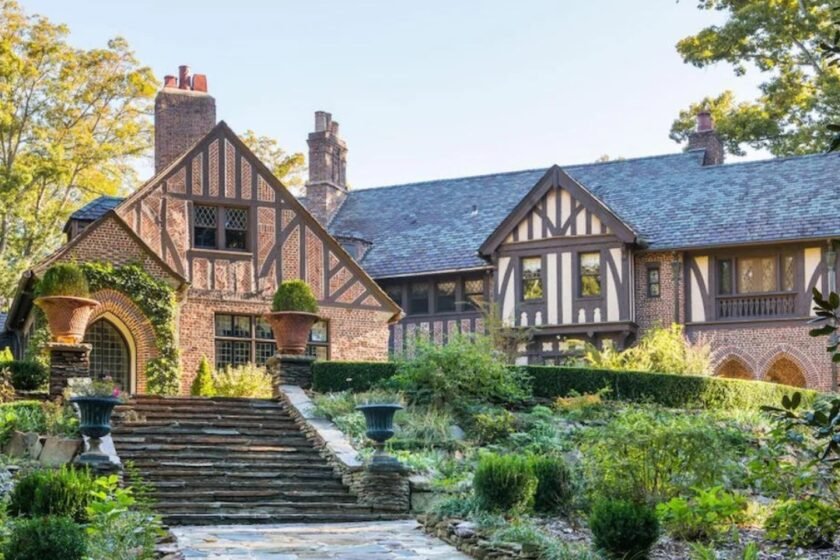

Glenridge Hall was built in 1929 by Thomas K. Glenn, a well-known Atlanta businessman and one of the co-founders of Georgia Power. The mansion was built on 400 acres of farmland north of Atlanta. It was designed in the Tudor Revival style by architect Samuel Inman Cooper. The construction took about a year, and 60 men worked on the project. Thomas Glenn lived in the house until his death in 1946.
In the early 1980s, Glenn’s granddaughter began to restore the mansion. Her work helped Glenridge Hall earn a place on the National Register of Historic Places in 1982. Over the years, the mansion was used for many charitable events. It also served as a filming location for movies and TV shows like Driving Miss Daisy and The Vampire Diaries.

By the summer of 2014, the estate had shrunk to about 80 acres. Later that year, the property was put up for sale. The Georgia Trust for Historic Preservation then added Glenridge Hall to its 2015 list of Places in Peril. Local groups and preservationists were alarmed by this move. They saw the mansion as an important piece of local history and culture.
In 2015, plans were made to demolish the mansion. The site was to be cleared for new developments. Mercedes-Benz planned to build its U.S. headquarters on the site, and a local homebuilder named Ashton Woods was set to build new homes on the land. Many local preservationists and community members opposed the plan. They launched a petition on Change.org that gathered over 15,000 signatures by April 2015.

Despite the public outcry, the decision to tear down Glenridge Hall went ahead. The mansion was demolished on April 9, 2015. After its demolition, the property was removed from the National Register of Historic Places. The loss of the mansion marked the end of a historic era in Sandy Springs.
Glenridge Hall was more than just a building. Its Tudor Revival design, with steep gables and detailed stone work, made it one of the most striking homes in the area. It stood as a reminder of a time when grand homes were built to last. Many local residents and historians cherished the mansion for its beauty and history. They saw it as a link to the past and to the legacy of the Glenn family.
The demolition of Glenridge Hall has left many in the community feeling a deep sense of loss. People say that an important part of the area’s heritage has been erased. For many, the mansion was a symbol of a bygone era and a testament to the region’s early days. The decision to demolish it has sparked a debate on the balance between economic development and historic preservation.

Local historians and preservation groups continue to fight to save other historic sites in the area. They hope that the loss of Glenridge Hall will serve as a lesson to protect more landmarks. They argue that new development should not come at the cost of erasing history. They believe that preserving the past can add value to a community and help tell the story of the region.
Today, the memory of Glenridge Hall lives on in the stories of those who remember its grandeur. The mansion was a key part of Sandy Springs’ history and a reminder of a rich heritage. While new buildings and modern developments rise in its place, many still mourn the loss of this grand home. The story of Glenridge Hall shows the challenges of preserving historic buildings in the face of progress. It is a reminder that, while growth is important, we must also find ways to honor and save our past.