
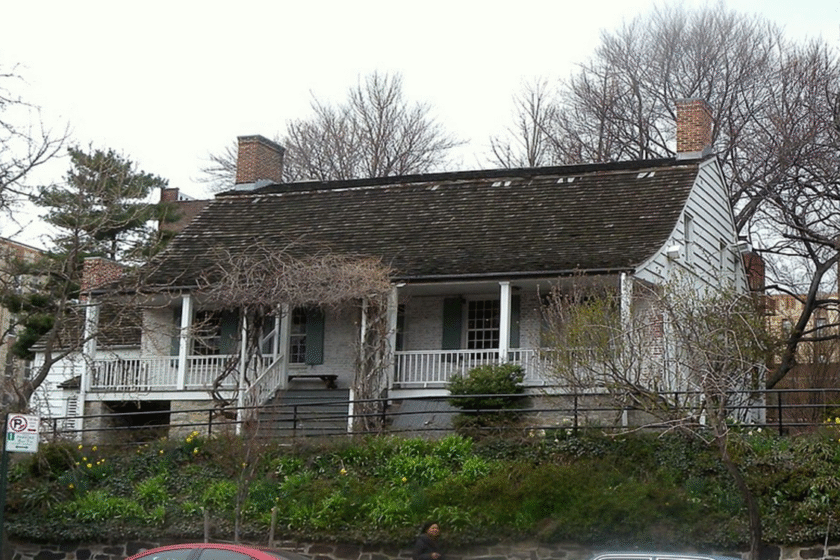

The Dyckman Farmhouse, built in 1785 by William Dyckman, is Manhattan’s last remaining Dutch colonial homestead, preserving a rare link to New York City’s agrarian past. Jan Dyckman established a farm on Manhattan’s northern tip in the 1660s, which grew into a 250-acre estate. During the American Revolutionary War, the original farmhouse was destroyed when the Dyckman family fled British-occupied Manhattan, but William Dyckman later rebuilt it on Broadway and West 204th Street. Using fieldstone and clapboard, he incorporated a gambrel roof and wide porches reflecting Dutch architecture. The estate once thrived with orchards and a cider mill, but urbanization led to its decline. In 1915, Mary Alice Dyckman Dean and Fannie Fredericka Dyckman Welch restored the farmhouse, reopening it as a museum. Today, the Dyckman Farmhouse Museum remains a National Historic Landmark, offering insight into early American life.
Historic Stone Plaque and Entrance Marker

A weathered stone plaque is set into a garden wall, marking the entrance to Dyckman House Park. The engraved inscription highlights the years 1783 and 1916, commemorating the estate’s deep history in Manhattan. Ivy cascades down the stone, integrating nature with the home’s long-standing presence. Tall trees cast shadows that create a sense of depth, enhancing the rustic charm of the entrance. The contrast between the dark plaque and the lighter stone makes the lettering stand out clearly. This historic marker, aged yet enduring, reflects the centuries of change the farmhouse has witnessed. As the city evolved, the plaque remained, a silent testament to the property’s resilience. The stone, worn smooth in places, holds the stories of past generations. Standing before it, visitors are reminded of an era when New York was still taking shape, yet this farmhouse was already a part of its history.
Early Image of the Farmhouse

A sepia-toned photograph captures the farmhouse in its early years, surrounded by a white picket fence. The wooden structure, featuring a traditional gambrel roof, showcases classic Dutch colonial craftsmanship. A towering tree shades part of the home, its sprawling branches stretching outward. Shuttered windows line the front, reflecting the simplicity of the era. The dirt road running alongside the fence hints at the area’s rural past before urbanization took over. In the background, open land extends beyond the home, showing a time when New York was still developing. The house’s well-maintained facade suggests a close connection to its early caretakers. Every element in the photograph, from the fence’s crisp lines to the timber details of the home, tells a story of preservation and tradition.
A Historic Farmhouse Amid Manhattan’s Transformation

Construction cranes tower over a newly paved road, signaling the city’s rapid modernization. Wooden planks and equipment clutter the street, emphasizing the transformation happening around the farmhouse. A billboard advertising a bustling marketplace stands in the background, reflecting the commercial growth of Manhattan. Despite the surrounding change, the farmhouse remains untouched, a silent witness to the city’s evolution. The small structure’s resilience against encroaching urbanization makes it a rare historical gem. Workers move hurriedly, engaged in shaping the modern landscape, while the farmhouse stands still in time. The juxtaposition between the old and the new highlights the property’s unique role in Manhattan’s history. As the city builds upward, this home serves as a steadfast reminder of a bygone era. Its endurance in the face of transformation tells a powerful story.
Dyckman Farmhouse and Its Porch

This historic farmhouse stands proudly atop a stone foundation, surrounded by sculpted hedges and greenery. The front porch, supported by white wooden columns, offers a welcoming sight. A small annex on the left adds to the home’s functional layout. The gambrel roof, a classic feature of Dutch colonial design, reflects its historic origins. Crisp white clapboard siding contrasts with the dark stone base, adding depth to the structure. A low stone wall encircles the property, subtly marking its boundary. Despite the changes in the city, the farmhouse maintains its timeless character. The thoughtful details of the architecture showcase the craftsmanship of its builders. The setting radiates a sense of tranquility, offering a glimpse into the home’s enduring past amid the bustling cityscape.
Aerial View of the Historic Estate

An aerial perspective captures the farmhouse in its entirety, nestled within a manicured landscape. A neatly trimmed lawn stretches out in front, bordered by a low stone wall. The American flag waves gently, standing as a reminder of the home’s historical significance. Surrounding apartment buildings rise in the background, emphasizing the farmhouse’s survival through Manhattan’s rapid growth. Classic cars line the street, reflecting the early 20th-century setting. The contrast between the urban skyline and the preserved estate tells a story of resilience. Despite the towering structures nearby, the farmhouse remains an oasis of history. The property’s well-maintained gardens blend seamlessly with the old-world charm of its architecture. Every angle of this bird’s-eye view reveals how the estate has remained untouched by modern expansion. Its place in the city’s evolving landscape highlights the importance of preserving history.
Garden Pathway and Blooming Flowers

A red-brick path meanders through a garden bursting with colorful blossoms. Bright pink and white flowers contrast against the deep green hedges that line the walkway. Lush vines creep up the farmhouse’s stone and wood exterior, softening the historic architecture. A neatly painted white picket fence runs parallel to the pathway, enhancing the home’s timeless appeal. Sunlight filters through the trees, casting dappled shadows across the manicured landscape. Each carefully arranged flower bed reflects the attention to detail in maintaining the estate’s charm. The garden’s natural beauty complements the farmhouse’s rustic aesthetic. Despite being in the heart of the city, the space feels like a serene retreat. The setting blends history with nature, creating an atmosphere that is both welcoming and elegant. Every step along the path connects past generations to the present.
Porch and Colonial Architectural Details

A low overhang, upheld by white columns, provides shade to this charming front porch. Green shutters frame the windows, standing out against the weathered clapboard and exposed brick. A simple wooden bench rests beside the entrance, evoking a sense of quiet nostalgia. The porch floorboards, darkened by age, remain sturdy beneath the weight of time. Every architectural element showcases the functionality and simplicity of colonial craftsmanship. The entrance’s unadorned design highlights the farmhouse’s practical origins. Sunlight streams in, enhancing the rustic beauty of the porch. The setting offers a glimpse into a past when such homes were a common sight in Manhattan.
Grassy Lawn

A group of visitors gathers on a grassy lawn beneath tall, leafy trees. Sunlight filters through the branches, casting soft shadows across the scene. A speaker addresses the crowd, likely sharing the estate’s rich and storied history. Some attendees sit on picnic blankets, embracing the relaxed atmosphere. The peaceful setting offers a connection to the past, preserved within the farmhouse’s grounds.
Blossoming Garden

A vibrant garden filled with purple blossoms stretches along the property’s edge. Delicate petals contrast beautifully against the stone pathways and rustic wooden structures. A small stone outbuilding sits nestled among the trees, adding to the estate’s charm. Beyond the garden, a busy Manhattan street reflects the ever-changing urban environment. Cars line the road, providing a stark contrast to the peaceful landscape. Towering buildings in the distance highlight the farmhouse’s rare survival amid city expansion. The balance between nature and architecture defines the estate’s enduring appeal. As flowers bloom, history remains deeply rooted within the grounds. The past and present exist in harmony, making this property a rare treasure.
A Peaceful Haven Amidst the City’s Hustle

Lush greenery surrounds this historic farmhouse, offering a peaceful contrast to the bustling city. A winding brick path meanders through the vibrant garden, framed by blooming trees and neatly trimmed hedges. Pink and white blossoms create a seasonal display, bringing natural beauty to the property. Mature trees provide shade, casting dappled sunlight onto the landscape below. Stone walls encircle the home, preserving its historic charm while blending seamlessly with the surrounding modern buildings. The raised foundation enhances the farmhouse’s prominence, making it stand out in the urban environment. From above, the property appears as a hidden sanctuary, shielded from the city’s noise. The landscaping remains well-maintained, emphasizing a mix of structured hedges and freely growing flora. A curved walkway leads toward the home’s inviting entrance, while strategically placed seating areas blend into the greenery. This timeless retreat offers a glimpse into history while maintaining a serene presence.
Rustic Log Cabin

A rustic log cabin sits nestled among dense foliage, its sturdy wooden beams standing as a reminder of the past. The weathered exterior showcases the craftsmanship of early construction, with thick logs stacked together for durability. A rough-hewn wooden door sits slightly ajar, revealing the dim interior beyond. Small windows punctuate the front, allowing slivers of light to filter through. The slanted roof, covered in aged wooden shingles, bears the marks of time. Stonework along the foundation reinforces the structure, adding an extra layer of strength. A gravel path leads toward the entrance, bordered by patches of grass and small shrubs. The surrounding trees create a natural canopy, casting cool shadows throughout the area. Despite its simplicity, the cabin holds a certain charm, reflecting the rustic lifestyle of its era. The natural setting enhances its secluded, timeless appeal.
Front Door and Porch

A pale blue wooden door contrasts beautifully against the textured white stone walls, creating a visually striking entrance. Pumpkins rest casually on the porch floor, hinting at the warmth of seasonal traditions. The wide-plank wooden flooring shows signs of age, its slightly worn texture complementing the home’s historic charm. A simple wooden bench sits to the side, adding to the rustic aesthetic. The door’s classic panel design remains unchanged, maintaining an authentic farmhouse feel. A weathered doormat lies in front, subtly welcoming visitors. Shadows from nearby trees play across the walls, adding movement to the still scene. The rough stone exterior enhances the home’s timeless appeal, with each crevice and groove adding character. Though minimal in adornment, the entrance exudes a quiet elegance, offering a glimpse into the home’s rich past.
Hallway and Interior View

A softly lit hallway extends toward an open Dutch door, revealing a bright outdoor space beyond. Warm wooden floorboards stretch from end to end, their deep tones contrasting against the light-colored walls. A sturdy staircase rises to the right, its polished wooden railing reflecting a subtle sheen. Overhead, a lantern-style light fixture casts soft shadows, adding depth to the space. The ceiling’s low beams enhance the farmhouse’s cozy atmosphere. Along one side, a small antique wooden cabinet sits tucked against the wall, its simple design blending effortlessly with the surroundings. The hallway’s minimal furnishings allow the craftsmanship of the home’s construction to shine. Natural light pours in through the open doorway, illuminating the subtle details in the wood grain. The overall ambiance remains inviting, balancing historic elements with timeless simplicity. Every detail adds to the home’s enduring character.
Home Office

Sunlight streams through the window, casting a golden glow over the study’s antique furnishings. An elegant wooden writing desk stands against the wall, its polished surface reflecting the light. A pair of ornately carved chairs flank a small drop-leaf table, set with papers and delicate glassware. The warm orange tones of the walls complement the deep wood grains of the furniture, enhancing the room’s inviting atmosphere. A tall grandfather clock stands proudly in the corner, marking the passage of time. Against one wall, a large fireplace framed with decorative tiles adds a touch of refinement. Soft afternoon light filters through, illuminating the historical details. Thoughtfully arranged elements bring a sense of quiet sophistication to the space. Every feature, from the classic moldings to the carefully preserved woodwork, contributes to the room’s undeniable charm.
Dining Room and Fireplace

A rustic dining area sits beneath exposed wooden beams, where a grand brick fireplace serves as the focal point. A heavy wooden table, simple yet sturdy, holds an assortment of pottery, candles, and fresh produce, evoking a sense of timeless hospitality. The flickering glow of candlelight enhances the room’s warmth, casting elongated shadows across the wooden floor. The deep red brick of the hearth contrasts beautifully with the surrounding plaster walls. A set of wooden chairs, each slightly different in design, lines the table, reflecting the home’s practical origins. In the background, a sturdy wooden door stands closed, its iron latch reinforcing the farmhouse’s early craftsmanship. The room’s well-worn charm tells a story of gatherings from years past. Each carefully curated detail maintains the authenticity of the space, preserving its history with grace.
Historic Hearth and Kitchen Tools

A black-and-white photograph captures a traditional brick hearth, where iron pots and ladles hang neatly in a row. The fireplace’s large opening dominates the space, emphasizing its role in daily life. Worn bricks, darkened from years of use, frame the rugged cooking area. Shelves above the hearth hold an assortment of well-used kitchen tools, hinting at past meals prepared over the open flame. A simple wooden stool sits in the corner, adding to the practicality of the space. The overall design showcases an era when kitchens were the heart of the home. Every item, from the cast-iron kettles to the hand-carved utensils, reflects the era’s craftsmanship. Though aged, the hearth remains a symbol of warmth and sustenance.
Kitchen and Dishware Display

An inviting kitchen corner features antique wooden cabinetry, where open shelves display a collection of neatly arranged dishware. A dark dresser, topped with a bowl of fresh fruit, adds warmth to the space. The blue-patterned plates on the white rack create a striking visual contrast. A woven basket rests beside a wooden chair, reinforcing the rustic farmhouse aesthetic. The soft lighting highlights the careful arrangement of everyday objects, each one a reminder of simpler times. Exposed wooden beams along the ceiling bring a sense of authenticity. Subtle imperfections in the furniture add to the home’s well-preserved charm. The combination of practical design and classic decor maintains the farmhouse’s historic integrity. Every corner of the room reflects a thoughtful curation of past and present, bringing warmth to this functional space.
Cozy Bedroom with Fireplace

A charming bedroom showcases a four-poster bed covered with a colorful quilt, adding warmth to the space. Deep red walls create a bold contrast against the white fireplace mantel, drawing attention to the room’s historic elegance. An antique wooden dresser sits against the far wall, its rich grain adding depth to the decor. A floral-patterned armchair, positioned near the window, invites moments of quiet reflection. Sunlight filters in, casting soft shadows across the wide plank flooring. An intricately designed clock above the fireplace preserves the charm of a bygone era. Carefully arranged furnishings highlight the room’s well-preserved aesthetic. Every detail, from the handcrafted furniture to the vintage decor, enhances the timeless appeal. The warm tones of the room combine with traditional elements, preserving its classic farmhouse charm while offering a peaceful retreat within the historic home.
Another Serene Bedroom with Rustic Elegance

Another bedroom embodies understated elegance, with a dark wooden armoire standing near a neatly made bed. A patterned quilt, draped across the mattress, adds texture and charm to the room’s rustic atmosphere. A plush white chair, positioned beside a small wooden table, provides a cozy nook within the space. The sloped ceiling accentuates the intimate setting, while natural light softly filters through the window. A simple candleholder sits atop the wooden nightstand, reinforcing the home’s historic ambiance. Wide plank flooring, rich with character, stretches across the room, adding to its old-world appeal. Each carefully selected furnishing complements the farmhouse’s preserved aesthetic. The combination of warm wood tones and soft textiles enhances the inviting atmosphere. This peaceful retreat remains true to its historic roots while maintaining a timeless, tranquil presence in the home’s overall design.