
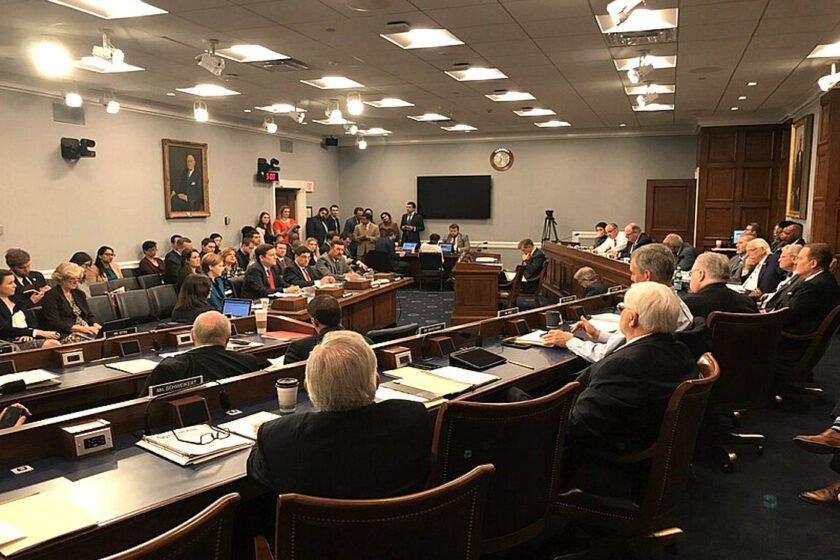

The House Committee on Ways and Means has advanced a tax bill as part of the budget reconciliation process, introducing significant public finance reforms. Key provisions include changes to the low-income housing tax credit, alterations to the endowment tax, and a gradual phase-out of clean energy tax credits. The bill, which also impacts the municipal market, is set to undergo further review before reaching the House floor for approval.
Tax Bill as Part of Budget Reconciliation

On May 14, 2025, the House Committee on Ways and Means advanced a tax bill, integral to the budget reconciliation process. The bill aims to implement the Trump administration’s fiscal priorities. Notably, it does not change the exclusion of interest from municipal bonds for federal income tax purposes, keeping this provision intact.
Low-Income Housing Tax Credit Enhancements

The bill proposes several changes to the low-income housing tax credit program:
- The tax-exempt bond-financing requirement for projects using the “4%” low-income housing tax credit would be temporarily reduced to 25% of the project’s total basis (down from 50%). This change would apply to buildings placed in service after December 31, 2025, with at least 5% of the financing sourced from bonds issued between December 31, 2025, and January 1, 2030.
- The ceiling on housing tax credits allocated by states would rise by 12.5% for the years 2026 through 2029.
- For projects in rural and Indian areas, the eligible basis could be increased by up to 30% for buildings placed in service between December 31, 2025, and January 1, 2030.
Endowment Tax Rate Adjustments

Significant changes are proposed for the excise tax imposed on private colleges, universities, and foundations:
- The excise tax rate on institutions with endowments greater than $750,000 per eligible student will increase from 1.4% to a range of 7% to 21%, depending on the student-to-endowment ratio.
- The bill also narrows the definition of eligible students to include only U.S. citizens and permanent residents.
- Income derived from student loan interest and royalties from federally subsidized research will be included in the calculation of net investment income subject to the excise tax.
- Certain religiously affiliated institutions will be exempted from the endowment tax.
- Private foundations with assets of $5 billion or more will see an increase in the excise tax rate on net investment income from 1.39% to as high as 10%.
Amendment Proposed

The bill proposes technical amendments to Section 144 of the Internal Revenue Code. These changes reflect updates in the capitalization of certain startup costs for small issue manufacturing bonds. This provision aims to simplify and modernize the tax treatment of these bonds, benefiting manufacturers in the early stages of their operations.
Phasing Out of Clean Energy Tax Credits

The bill includes provisions to accelerate the phase-out of various clean energy tax credits:
- The 48E Investment Tax Credit and 45Y Production Tax Credit will begin phasing out in 2029, with full elimination scheduled for 2032.
- The transferability of these credits will be repealed for projects starting construction after December 31, 2027, and for clean fuel production starting after that date.
- Tax credits for electric vehicles and chargers will end for those sold or placed in service after December 31, 2025, with limited exceptions.
Impact on Municipal Market Participants

The proposed legislation includes provisions that will affect municipal market participants, including changes to bond financing structures and tax incentives related to public infrastructure projects. These shifts are expected to have significant implications for investors, issuers, and municipalities that rely on tax-exempt financing.
Next Steps and Legislative Process

After advancing through the Ways and Means Committee, the reconciliation bill, including the proposed tax provisions, will be reviewed by the House Budget Committee and the Rules Committee before being considered on the House floor. Once passed, the bill will require approval from both chambers of Congress, with any differences between the versions being resolved before final enactment. These changes are expected to undergo further refinement as the legislative process moves forward. This version maintains the original details while breaking down the bill’s provisions into clear and concise sections for easier understanding.