
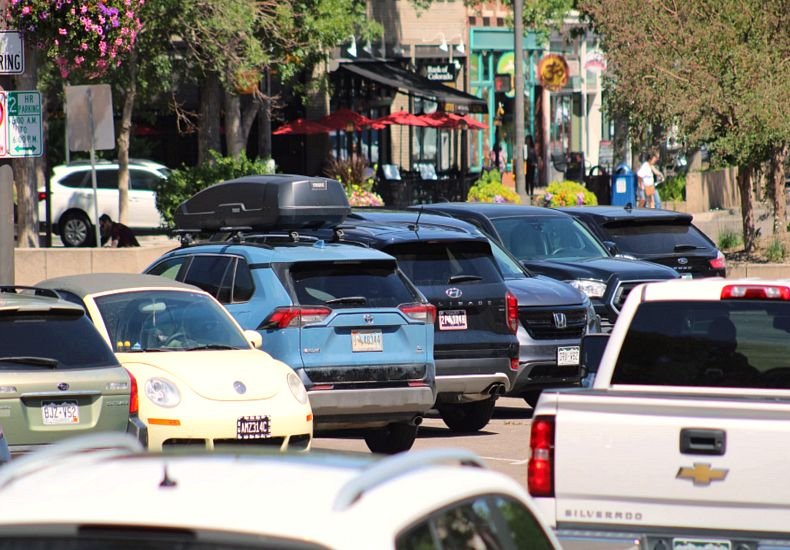

For nearly a decade, residents of San Francisco’s Excelsior neighborhood have been battling city officials over the issue of parking, which has become a persistent nightmare. The area’s lack of residential parking permits has led to widespread chaos, with cars blocking sidewalks and driveways, and residents struggling to find parking spaces. Despite multiple efforts and surveys, the city has yet to implement the necessary changes, leaving the neighborhood frustrated and increasingly isolated.
A Parking Crisis in Excelsior
The Excelsior neighborhood, once one of San Francisco’s last working-class strongholds, is plagued by parking issues that have escalated in recent years. Residents like Bill Holdenstern have spent years petitioning the city for residential permit parking, a solution that would limit the number of cars per household and improve enforcement. The area, near the Balboa Park BART Station, has become a magnet for commuters and those taking advantage of free parking.
Read: Environmental Groups Sue Trump Administration Over ‘Secret Climate Report’ by Skeptics
Struggles with Triple-Parked Streets
Residents describe streets where vehicles are triple-parked, blocking sidewalks and driveways. Bill Holdenstern describes his block as “the nightmare block” due to the overwhelming congestion. The issue isn’t just about inconvenience; some residents have even had their tires slashed or cars keyed due to parking disputes. For some, like Marina Mantovani, parking issues have forced them to pay for costly alternatives like Uber to avoid moving their car.
Also read: Residents Left With Nowhere to Go As Homeless Encampments Bulldozed in Washington
The City’s Inaction
Despite years of complaints and community efforts, the San Francisco Municipal Transportation Agency (SFMTA) has yet to introduce residential permit parking. A major obstacle is the complicated petition process that requires signatures from 50% of residents on each affected block, a hurdle that’s difficult to clear in working-class neighborhoods like the Excelsior. While wealthier neighborhoods have managed to secure parking permits, the Excelsior continues to be overlooked.
Also read: Trump Moves Closer to Invading Mexico With Military Strikes on Cartels
Political Support and Roadblocks
Former District 11 Supervisor Ahsha Safaí recognized parking as a top concern for the neighborhood. He pushed the SFMTA to collect data and started a town hall process to gauge community support. In 2019, a survey showed 41% support for permit parking, but the numbers weren’t enough to meet the necessary threshold. The city then conducted a parking occupancy study, revealing that over 80% of the street spaces were occupied, with many vehicles coming from outside the area.
Also read: Trump Claims Xi Promised No Invasion of Taiwan While He Remains President
The Impact of Bureaucracy
The city’s bureaucratic hurdles make the process even more difficult. Residents must gather signatures, conduct studies, and jump through numerous procedural hoops. The COVID-19 pandemic further delayed the petition-gathering process, adding confusion and frustration. Holdenstern, who had hopes of raising his family in the Excelsior, has now considered leaving due to the ongoing parking nightmare.
Also read: Families Hit Hard as Homelessness in Utah Surges to 18 Percent
The Financial and Social Cost
As the city struggles with a $322 million budget deficit, the need for solutions like residential parking permits has never been clearer. Permit parking doesn’t generate revenue but recoups administrative and enforcement costs. More importantly, it could help address systemic inequalities in how working-class neighborhoods are treated compared to wealthier areas.
Also read: ICE Punishes Volunteer Nurse for Documenting Immigration Raids
Moving Forward: No Clear Solution Yet
In 2025, the residents’ campaign gained some momentum when Holdenstern enlisted the help of a former city planner. The city has begun to consider expanding an existing permit area nearby, which could potentially offer a quicker path to resolving the issue. However, the process is still bogged down in red tape, and residents remain uncertain whether meaningful change will ever come.