
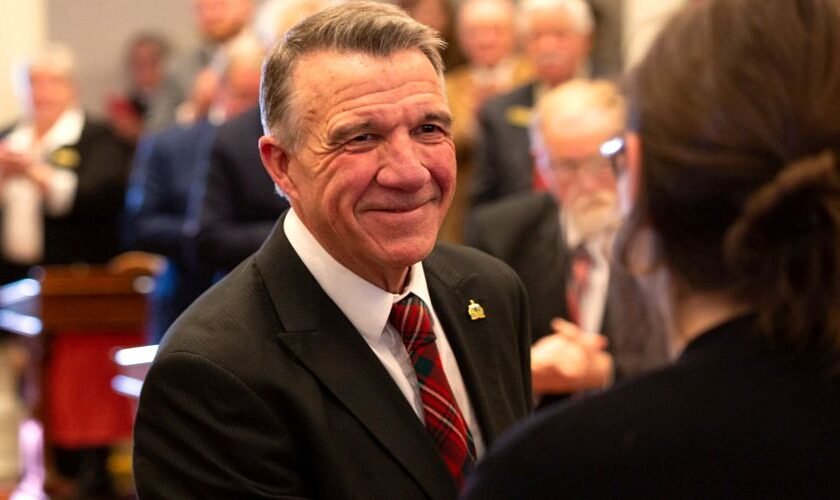

Vermont’s Republican Governor Phil Scott has refused to send the state’s National Guard troops to Washington, D.C., despite a Pentagon request for a small contingent. His chief of staff, Jason Gibbs, explained that Scott does not believe enforcing domestic law is a proper use of the Guard. Instead, he insists they should only be deployed in response to immediate emergencies or natural disasters where local authorities are unable to cope. This makes Scott a rare Republican leader openly defying Trump administration pressure.
Declining Violence in D.C.
The Trump administration has justified its deployment of National Guard troops by citing what it calls a spiraling crime crisis in the capital. However, official data paints a different picture: violent crime in Washington, D.C., has actually declined in both 2024 and 2025. Critics argue Trump’s efforts are politically motivated, with Democrats labeling them as a stunt designed to distract from controversies, including the Justice Department’s handling of the Jeffrey Epstein files. Scott’s refusal further highlights the widening divide between Trump’s narrative and the facts on the ground.
Six Republican-Led States Comply
In recent days, six Republican-led states, including West Virginia, South Carolina, Ohio, Mississippi, Tennessee, and Louisiana, have authorized the deployment of their National Guard troops to Washington. Their decision follows Trump’s initial deployment of 800 Guard members, which, with reinforcements, could raise the number of troops to nearly 1,700. Vermont, however, has become the standout exception, with Scott holding firm that his state’s Guard will not be sent for what he views as a politicized mission.
Uncertainty Over Troops’ Mission
Despite the surge of National Guard personnel into Washington, it remains unclear exactly what function they will serve. Officials have only offered general statements that the troops will be used for monument protection, traffic control, and community safety patrols. Some reports suggest they may even be armed. But critics, including D.C. leaders, argue the numbers being sent are disproportionate to the city’s actual security needs. This lack of transparency has raised fresh questions about the true intent of the deployments.
Governor Scott Calls the Deployment ‘Hyperpoliticized’
Jason Gibbs, speaking on behalf of Governor Scott, emphasized that Vermonters largely oppose the idea of their Guard being used in Washington under current circumstances. He described the operation as “hyperpoliticized,” stressing that neither the governor nor the public sees it as an acceptable or appropriate mission. Gibbs clarified that Scott might have considered the request differently if it had come directly from D.C. leaders asking for help, but no such call was made. Instead, the request came top-down from the Pentagon under Trump’s direction.
D.C. Leaders Push Back Against Federal Takeover
Washington’s officials have strongly opposed the influx of out-of-state forces. On Friday, the city’s attorney general filed a lawsuit against the Trump administration over its takeover of the Metropolitan Police Department. Mayor Muriel Bowser has also spoken out, arguing that the troop levels being proposed make no sense given the crime statistics. “The numbers on the ground don’t support 1,000 people from other states coming to Washington,” she said. Local leaders see the move as an unnecessary show of force that undermines their own authority.
Not the First Clash
Governor Scott’s rejection is not without precedent. This is at least the second time he has rebuffed Trump administration efforts to use Vermont’s National Guard for controversial missions. Previously, Scott declined a Defense Department request to deploy Guard troops in support of Immigration and Customs Enforcement operations at detention facilities. His consistent stance suggests a broader resistance to politicizing Vermont’s military resources, even as other Republican governors fall in line with the administration’s demands.