
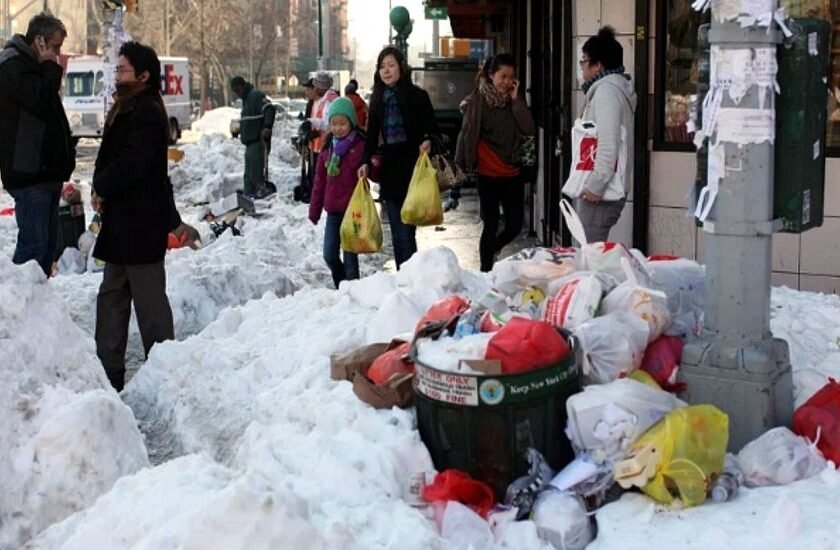

New York is set for a cloudy and rainy week, with scattered showers, rising humidity, and mild temperatures that won’t exceed the 70s. But beyond the short-term forecast, meteorologists warn of a much harsher season ahead. A developing La Niña pattern, combined with unusually warm lake waters, could bring a freezing and snow-heavy winter across the state.
Clouds and Showers This Week
AccuWeather forecasts scattered showers and grey skies for much of the week, with cloud cover persisting Tuesday through Thursday. Temperatures are expected to remain mild, not climbing above the 70s.
Humidity will build again by Friday, when the heaviest rainfall is likely to hit during the morning rush hour, causing potential commuting delays.
Winter Outlook: Snow and Freezing Temperatures
As summer winds down, attention is turning to the upcoming cold season — and forecasters warn that New York could be in for a particularly harsh winter.
La Niña, a recurring climate phenomenon, is expected to bring colder, wetter conditions across the state. Combined with unusually warm waters in Lake Erie and Lake Ontario, forecasters warn of heavy lake effect snow that could bury upstate communities under several feet of accumulation.
Lake Effect Snow Could Be Severe
Lake effect snow occurs when cold air sweeps over relatively warm lakes, creating intense snowfall. Towns such as Hamburg and Orchard Park could see snow measured in feet this winter if lake temperatures remain elevated.
Last winter, Syracuse topped snowfall charts with just over 115 inches, followed by Rochester with more than 88 inches and Binghamton with just over 80 inches.
What is La Niña?
According to the National Center for Atmospheric Research, La Niña is defined as a climate pattern that causes unusual cooling of surface and subsurface waters in the Pacific Ocean. It typically lasts 1–3 years and often leads to colder, snowier winters in the Northeast.
Between 2020 and 2022, La Niña temporarily slowed global temperature increases driven by climate change. In contrast, the 2023–2024 El Niño event fueled record-breaking warmth worldwide.
Looking Ahead
With La Niña returning, meteorologists caution New Yorkers to prepare for below-freezing temperatures and persistent snow this winter. For many communities across the state, winter 2025 may bring snowfall totals far above seasonal averages.