
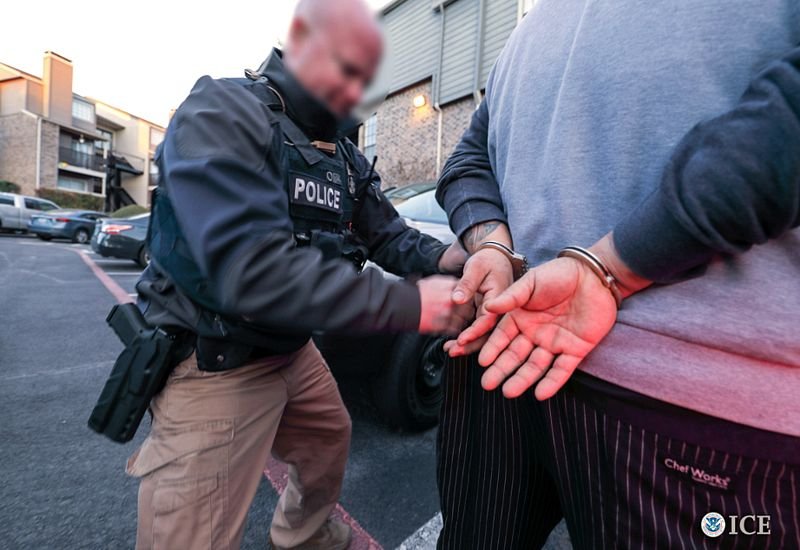

The U.S. Supreme Court has allowed federal agents in Los Angeles to conduct immigration stops based on factors such as race, language, job, or location, in a decision that has alarmed immigrant communities and civil rights advocates. As reported by The Guardian, the 6–3 ruling lifted restrictions previously imposed by a lower court and is being hailed by the Trump administration as a major victory. Critics warn it sets a dangerous precedent that could erode constitutional protections across the country.
Court Decision and Fallout
On Monday, the Supreme Court’s conservative majority overturned a lower court order that had limited “roving” immigration patrols in Los Angeles. The decision gives federal agents wide discretion to stop individuals without traditional reasonable suspicion. Advocates say the ruling threatens to erode Fourth Amendment protections against unlawful searches and seizures, particularly in immigrant-heavy communities.
Sotomayor’s Forceful Dissent
Justice Sonia Sotomayor, the first Latina on the court, issued a sharp dissent. She warned: “We should not have to live in a country where the Government can seize anyone who looks Latino, speaks Spanish, and appears to work a low wage job. Rather than stand idly by while our constitutional freedoms are lost, I dissent.” Los Angeles mayor Karen Bass echoed her words, declaring: “I agree with her – I dissent. We all dissent because from the beginning, we have known that Los Angeles has been used as a test case for total dominance and unchecked power by the federal government.”
Trump Administration Reaction
The Department of Homeland Security celebrated the outcome, writing on X: “DHS law enforcement will continue to FLOOD THE ZONE in Los Angeles.” Attorney General Pam Bondi also praised the ruling, saying it allows agents to operate “without judicial micromanagement.” The administration framed the decision as essential to carrying out what it calls the “largest mass deportation campaign” in U.S. history.
Kavanaugh’s Concurring Opinion
In a concurring opinion, Justice Brett Kavanaugh defended the policy, arguing that race can be a “relevant factor” when combined with other “common sense” indicators such as employment in landscaping or construction, limited English proficiency, or location. Critics, however, said his reasoning “blinks reality,” noting that U.S. citizens were also stopped under the tactics in question.
Community Outrage in Los Angeles
The ruling has sparked fresh outrage in Los Angeles, where immigrant rights groups have long accused federal agents of targeting day laborers, bus stops, and workplaces. Armando Gudino of the Los Angeles Worker Center Network said: “Immigration agents are now being given the power to profile, stop, detain, and arrest people because of the color of their skin, the language they speak, or the work that they do. In doing so, they have effectively legalized racial profiling and by extension racial discrimination.”
Political Leaders Respond
California leaders condemned the court’s ruling in stark terms. Governor Gavin Newsom declared: “Trump’s hand-picked Supreme Court majority just became the Grand Marshal for a parade of racial terror in Los Angeles.” He added: “Trump’s private police force now has a green light to come after your family – and every person is now a target.” Local officials, including councilmember Eunisses Hernandez, warned that immigrant labor powers California’s economy and said the decision punishes communities essential to the state’s success.
Ongoing Legal Battle
While the Supreme Court decision immediately restored patrol powers, it is not the final ruling in the case. A federal judge will revisit the matter later this month to determine whether more permanent restrictions should be imposed while litigation continues. In the meantime, local groups have mobilized patrols and support networks to protect immigrant families, vowing to “continue fighting despite a lack of protection.”