
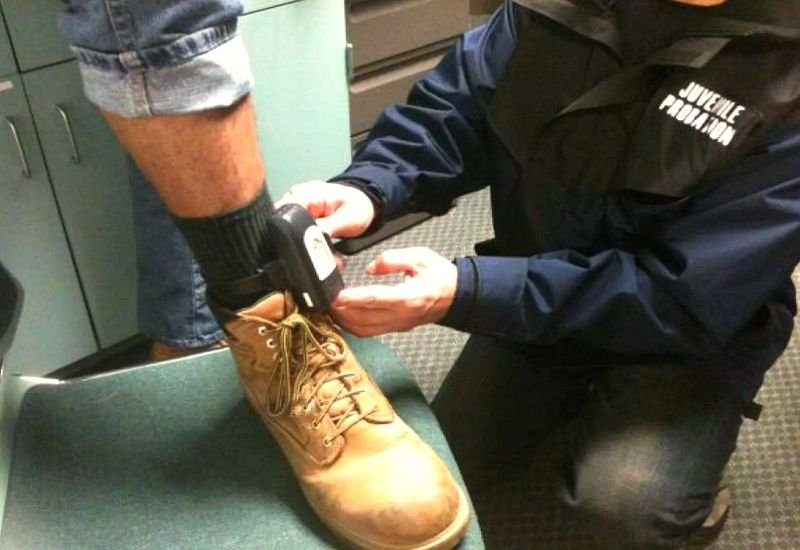

Immigration and Customs Enforcement (ICE) has begun putting ankle monitors on immigrants attending court hearings, a shift in policy that critics say stigmatizes people following legal processes. The practice comes after federal judges blocked certain expedited deportations, prompting ICE to increase surveillance of immigrants even when they comply with court appearances. Attorneys and volunteers report tense encounters and emotional distress as people are required to wear the bulky devices.
Courtroom Confrontations Escalate
Attorney Olavo Michel described a tense encounter at a San Diego immigration court. ICE officers swarmed him and his client, a Russian asylum seeker, in the hallway. “The officers weren’t even trying to have a conversation. They were talking over me. They were trying to hand stuff to my client without permission. They were aggressive and condescending to me,” Michel said. His client was instructed to report immediately to the ICE offices for an appointment to receive an ankle monitor.
Ankle Monitor Policy Shift
Michel observed that ICE is increasingly placing immigrants on “alternatives to detention,” primarily in the form of ankle monitors or bracelets. “The protocol now appears to be placing everybody on alternatives to detention, either in the form of an ankle monitor or a bracelet,” Michel explained. This move appears to be a blanket policy, expanding surveillance beyond traditional detention.
Judicial Pushback
ICE’s actions follow rulings from federal judges limiting fast-track deportations. In August, Judge Jia M. Cobb blocked expedited removal for people admitted through humanitarian parole, and later for individuals arrested in the U.S. interior. “Prioritizing speed over all else will inevitably lead the Government to erroneously remove people via this truncated process,” Cobb wrote. The rulings have curtailed ICE’s ability to detain or deport people immediately after hearings, prompting the agency’s increased use of monitoring technology.
San Diego Observations
Volunteers and attorneys at the San Diego court have reported ICE distributing letters in hallways and fitting ankle monitors on attendees. Josh, a court volunteer, said an ICE supervisor told him the agency would be tracking “everybody.” The scale of this new practice nationwide remains unclear, with New York attorneys reporting no similar incidents in their courts. ICE has not provided a comment.
Monitoring Data and Costs
As of late August, more than 182,000 people were in ICE’s alternatives-to-detention program, which includes GPS ankle monitors, bracelets, and check-in requirements, according to the Transactional Records Access Clearinghouse (TRAC). Participants have been monitored for an average of over 700 days. While ICE reports a cost of less than $4.20 per day per participant, technology and monitoring costs vary widely, with a 2023 American Bar Association report estimating $200,000 daily for monitoring 194,000 immigrants via GPS and phone applications.
Emotional Toll on Immigrants
Reports detail the emotional impact on those required to wear ankle monitors. One woman with temporary protected status cried as ICE officers fitted the device after her hearing, despite being legally protected from deportation. Michel said his client similarly expressed frustration: “His biggest frustration is like, ‘What else do you want? What do you want me to do?” These encounters illustrate the tension and fear caused by ICE’s expanded surveillance measures.
Implications for Enforcement
The use of ankle monitors on court attendees underscores the Trump-era administration’s prioritization of control and surveillance over procedural fairness. Critics argue that this approach treats law-abiding immigrants like criminals and exacerbates anxiety among vulnerable populations, raising questions about proportionality and oversight in immigration enforcement.