
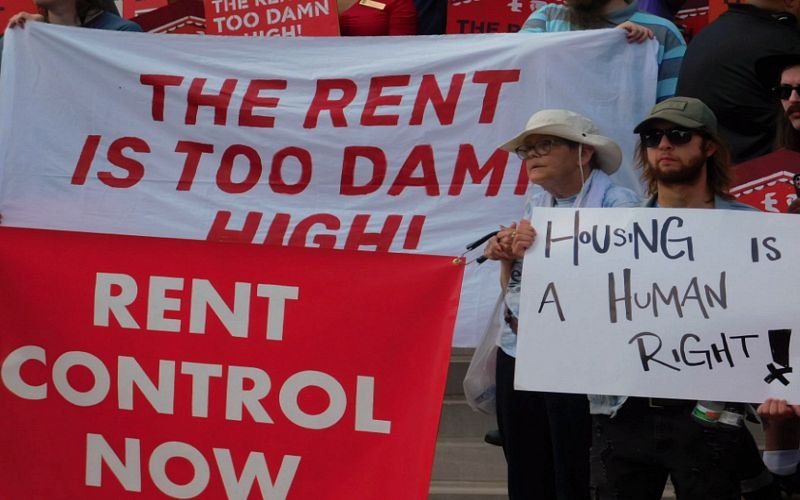

Massachusetts is once again at the center of a fierce housing debate as a proposed ballot measure seeks to cap rent increases across the state. Supporters argue rent control is necessary to protect tenants from skyrocketing housing costs, while opponents warn it could worsen the housing shortage and discourage new development.
Ballot Initiative on Rent Control
On September 3, Attorney General Andrea Campbell certified 44 potential ballot questions for the 2026 election, including “An Initiative Petition to Protect Tenants by Limiting Rent Increases.” The measure would cap annual rent increases at 5% or the inflation rate, whichever is lower.
The proposal would not apply to owner-occupied buildings with four or fewer units or to newly built housing less than 10 years old. If it makes the ballot and passes, it would mark the state’s first rent control law since 1994.
Supporters Cite Housing Crisis
Homes for All Massachusetts, the group leading the petition, argues that the initiative is a direct response to one of the most expensive rental markets in the country. The state’s average rent is $2,914 per month, compared to the national average of $1,754.
Governor Maura Healey’s administration recently released a housing plan that calls for building or restoring 220,000 homes over the next decade. Advocates say rent control will give struggling tenants immediate relief while broader housing solutions take shape.
Opposition From Real Estate Groups
Real estate groups strongly oppose the proposal. The Greater Boston Real Estate Board labeled rent control “a disaster for Massachusetts,” warning it would reduce development incentives, shrink housing supply, and ultimately worsen affordability.
The Massachusetts Housing Coalition also argues that rent control could backfire by fueling gentrification, benefiting wealthier renters, and reducing property maintenance.
History of Rent Control in Massachusetts
Rent control has a long and contentious history in the state. First introduced during World War I, it reappeared during World War II and again in the 1970s amid inflation and housing shortages.
In 1970, the state legislature allowed cities to adopt rent control. Cambridge, Boston, Brookline, Somerville, and Lynn enacted ordinances, but most eventually repealed them. In 1994, voters narrowly approved a statewide ban on rent control, with Cambridge residents voting overwhelmingly to keep it.
Since then, multiple attempts to revive rent control have surfaced, including Boston Mayor Michelle Wu’s 2022 proposal for voluntary guidelines tied to tax breaks.
How Massachusetts Compares to Other States
Currently, California, Oregon, and Washington have statewide rent control, while cities in New York, New Jersey, Minnesota, Maryland, and Washington, D.C. set local rules. Thirty-six states ban rent control altogether.
The Massachusetts proposal differs from past efforts by applying uniform rent limits across the entire state, unlike earlier policies that left the decision to individual cities.
The Core Debate: Tenants vs. Landlords
Opponents argue rent control reduces housing quality, citing landlords’ inability to afford maintenance under capped rents. They also point to Cambridge’s post-1994 experience, where property values rose by $1.8 billion after rent control ended.
Supporters counter that repealing rent control fueled gentrification, pushing low-income tenants out. Academic studies show that rising property values were driven not just by improved housing stock but also by the influx of wealthier residents.
At its heart, the debate raises a fundamental question: should wealth in the rental market accumulate with landlords through rising rents, or stay with tenants through stronger protections?
Beyond Rent Control
Critics correctly note that rent control alone will not solve the housing crisis. Limited supply drives up costs, and rent caps do not create new homes. However, supporters see it as a tool to slow rent hikes and prevent more residents from being priced out.
The ballot initiative exempts new housing from controls for 10 years to encourage development, but advocates argue further incentives will be needed to expand affordable housing stock.
Next Steps for 2026 Ballot
To qualify for the November 2026 ballot, organizers must gather 70,000 voter signatures by December 3, 2025. If successful, the proposal is expected to spark one of the most contentious policy debates in Massachusetts in decades.