
In a significant shift, the U.S. Senate confirmed 48 of Donald Trump’s nominees in a single vote on Thursday, using newly implemented rules designed to break a months-long deadlock over executive branch appointments. The move, made possible by changes to Senate procedures, has allowed Republicans to bypass typical objections, clearing a backlog of lower-level nominations held up by Democrats.
Senate Approves Rule Change
Frustrated by delays and stalling tactics, Senate Republicans pushed through new rules last week to streamline the confirmation of lower-level, non-judicial nominations. These new rules, which allow nominees to be confirmed with a simple majority vote, mark a change from the previous process, where a single objection could block confirmation. The rule change applies only to executive branch positions, not judicial or high-level cabinet posts.
Key Nominees Confirmed
Among those confirmed were Jonathan Morrison, named administrator of the National Highway Traffic Safety Administration, and Kimberly Guilfoyle, nominated as U.S. ambassador to Greece. Guilfoyle, a former California prosecutor and television personality, was a major fundraiser for Trump’s 2020 campaign and is well-known for her ties to the Trump family, having once been engaged to Trump’s son, Donald Trump Jr.
Thune Defends Rule Change
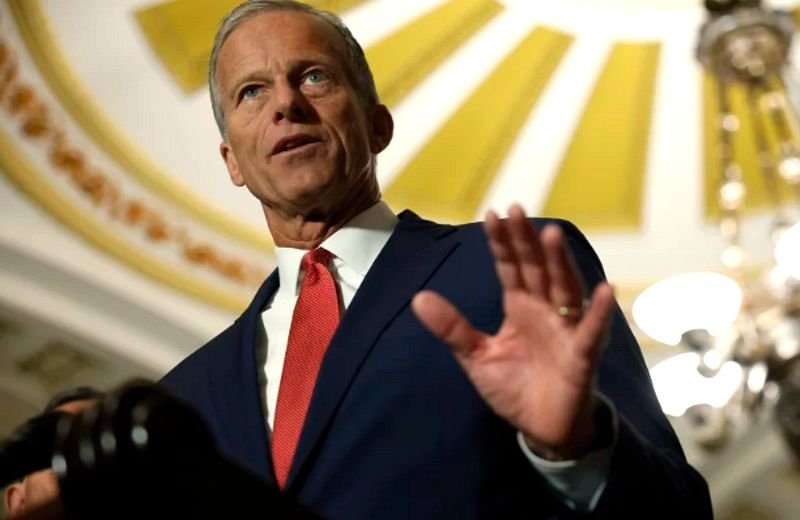
Senator John Thune, a leading advocate for the change, defended the new approach, calling it a necessary fix for a broken process. “Republicans have fixed a broken process,” Thune said ahead of the vote. The move is a response to years of partisan gridlock and increasing frustration within the Senate over slow confirmations, especially after Democrats forced numerous votes on Trump’s nominees.
Democrat Opposition to Change
Democrats have strongly opposed the rule change, arguing that it allows for a more partisan, less transparent process that undermines Senate traditions. Senate Minority Leader Chuck Schumer stated that Republicans would “come to regret” the rule change, drawing parallels to past battles over the filibuster. Democrats argue that many of Trump’s nominees are “historically bad,” prompting them to use their influence to delay confirmations whenever possible.
Partisan Gridlock and Filibuster History
The rule change comes amid a long history of partisan gridlock in the Senate, with both parties blocking each other’s nominees. In 2013, Senate Democrats eliminated the 60-vote threshold for executive branch and lower court judicial nominees, a move that was later mirrored by Republicans in 2017 for Supreme Court nominations. These shifts have led to ongoing debates over the role of the filibuster and how it shapes the Senate’s ability to confirm nominees.
GOP Plans Additional Confirmations
Following the successful confirmation of 48 nominees, Republicans plan to continue clearing Trump’s backlog of appointments. A second batch of nominees is expected to be confirmed in the coming weeks, with the goal of filling over 100 pending positions. Senate Republicans are determined to keep pace with previous administrations, ensuring that Trump’s appointments move forward without significant delays.
Democrats Warn of Long-Term Impact
Schumer and other Democrats continue to criticize the new rules, claiming that they are designed to give Trump unchecked power to fill executive branch positions without adequate scrutiny. “What Republicans have done is chip away at the Senate even more, to give Donald Trump more power and to rubber-stamp whomever he wants, no questions asked,” Schumer said, warning that the move could have lasting effects on the Senate’s checks and balances.