
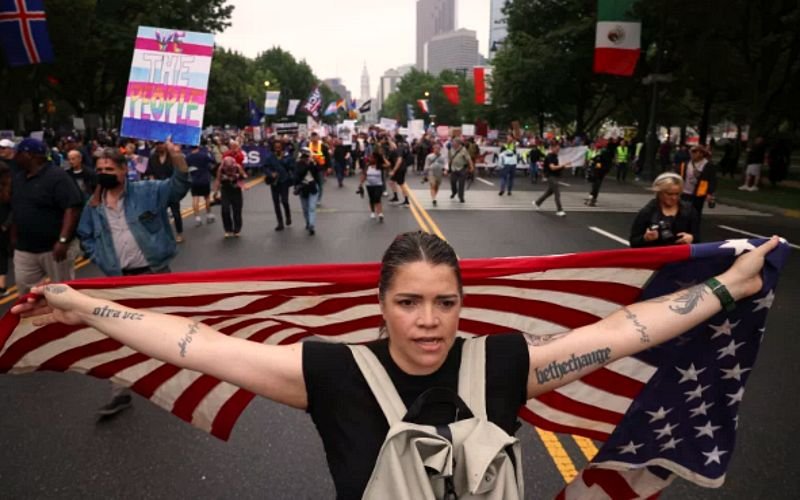
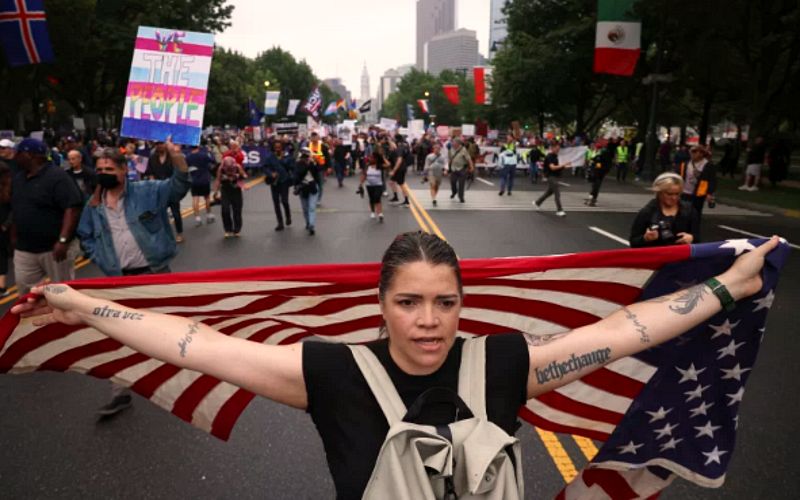
A new Reuters/Ipsos survey reveals that most Americans believe armed troops should only be deployed to counter external threats, underscoring growing discomfort with recent domestic military actions. The findings come amid public backlash over Donald Trump’s continued deployment and threats to send National Guard troops to several major US cities, including Chicago, Portland, and Los Angeles.
Most Americans Limit Troop Use
According to the survey released on Wednesday, 58% of Americans said the president should send in armed forces only in response to external threats. About 25% supported broader uses for the military, while 18% said they were unsure. The poll highlights widespread concern about using the US military within domestic borders, a debate that has intensified as Trump expands troop activity in American cities.
Partisan Divide Over Military Deployment
Political affiliations played a key role in shaping opinions. The survey found that 72% of Democrats agreed that the military should only be used for external defense, compared to 51% of Republicans and 53% of independents or other party supporters. The data shows a significant partisan gap, reflecting the broader national divide over Trump’s approach to law enforcement and civil unrest.
Public Split on Presidential Authority
When asked whether the president should have the power to send troops into a state without a governor’s consent, only 37% of Americans supported the idea. Nearly half, 48%, said they disagreed, and 15% remained unsure. Among Republicans, 70% backed Trump’s authority to override governors, compared to just 13% of Democrats, revealing stark differences in views on executive power.
Overwhelming Support for Military Neutrality
Despite political differences, there was near-universal agreement on one issue: the importance of keeping the military politically neutral. The survey found that 83% of all respondents endorsed neutrality, including 78% of Republicans, 93% of Democrats, and 80% of those with other affiliations. The findings suggest that while Americans are divided over domestic deployments, they share concern about politicizing the armed forces.
Trump’s Military Controversies Escalate
Last month, Donald Trump provoked strong criticism after suggesting that American cities could serve as training grounds for the military. Speaking to more than 800 military leaders at Quantico, Virginia, Trump said, “Last month I signed an executive order to provide training for a quick reaction force that can help quell civil disturbances. This is gonna be a big thing for the people in this room, because it’s the enemy from within, and we have to handle it before it gets out of control.”
He also claimed he told Defense Secretary Pete Hegseth that “we should use some of these dangerous cities as training grounds for our military,” remarks that drew immediate condemnation from Democratic lawmakers.
Clashes With State Leaders
The conflict between Trump and state officials intensified this week as armed national guard troops arrived in Illinois under his orders. Trump publicly called for the jailing of Chicago’s mayor Brandon Johnson, and Illinois governor JB Pritzker, accusing them of failing to protect ICE officers during immigration raids. Both leaders have resisted his pressure. Johnson responded, “I’m not going anywhere,” while Pritzker declared, “I will not back down.”
Court Blocks Portland Deployment
The tensions reached the courts last weekend when a federal judge blocked Trump’s attempt to send national guard troops to Portland, Oregon. The ruling came after Trump threatened to authorize “full force, if necessary” in what he described as a “war-ravaged” liberal city. The decision marked a significant legal setback for Trump as he faces mounting resistance from governors, judges, and the public alike over his use of military power.