
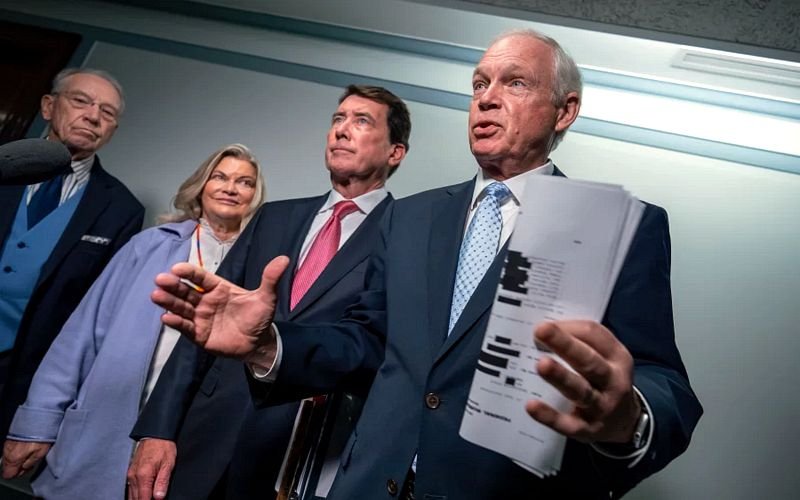
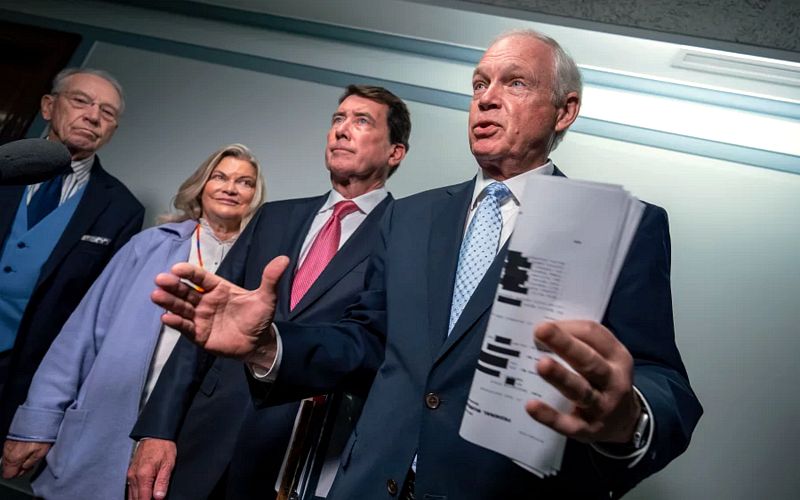
In a dramatic escalation of the nation’s longest-ever government shutdown, Senate Republicans on Friday rejected a proposal from Democratic leader Chuck Schumer to reopen the government. Schumer’s offer included reauthorizing federal funding in exchange for a one-year extension of Affordable Care Act (ACA) tax credits aimed at lowering healthcare costs. Despite mounting public pressure and growing economic fallout, GOP leaders dismissed the deal, insisting that shutdown negotiations must conclude before any talks on healthcare subsidies take place.
Read: Megyn Kelly Sparks Reactions After Admitting Gavin Newsom Is ‘Hot But Hollow’
Democrats Push for Compromise
Chuck Schumer presented a plan on the Senate floor that he said could swiftly end the shutdown while easing healthcare costs for millions. “Democrats are ready to clear the way to quickly pass a government funding bill that includes healthcare affordability,” Schumer declared. He urged Republicans to accept “a clean, one-year extension of the ACA tax credits” and proposed a bipartisan committee to discuss long-term reforms after reopening the government. “Now, the ball is in the Republicans’ court. We need Republicans to just say yes,” he said, framing the proposal as both practical and bipartisan.
Also read: Trump’s Inner Circle Sabotages His Venezuela Strike Plan
GOP Response and Refusal
Senate Majority Leader John Thune rejected the proposal outright, with his spokesperson, Ryan Wrasse, asserting that negotiations over healthcare must wait until the government is reopened. “Extending the Covid bonuses is the negotiation – something that can only take place after the government reopens. Release the hostage. End the pain,” Wrasse said. Republican senators echoed the sentiment on social media with a blunt response: “Hard no, Chuck.” Thune has kept the Senate in session through the weekend, though prospects for a breakthrough remain slim.
Also read: Tears in the Auditorium, Hillsboro’s Cry for Protection From ICE
Shutdown Drags Into 38th Day
The government shutdown, now in its 38th day, has paralyzed major federal services and left millions of Americans in limbo. Despite holding both chambers of Congress, Republicans have failed to secure enough votes to advance a House-approved funding bill, which Democrats continue to block. Speaker Mike Johnson has kept the House in recess since 19 September, meaning even if an agreement were reached, reopening the government would not be immediate.
Also read: “Dozy Don Is Back”: Newsom Mocks Trump, 79, After Oval Office Nap Moment
Mounting Fallout Nationwide
As the shutdown grinds on, its impact is spreading across sectors. The Trump administration attempted to halt food aid payments under the Supplemental Nutrition Assistance Program (SNAP) for the first time in U.S. history, though a court blocked the move. The Federal Aviation Administration also cut commercial flights, citing safety concerns as unpaid controllers reduced capacity. According to FlightAware, roughly 800 U.S.-linked flights had been canceled by Friday morning, reflecting the shutdown’s growing strain on infrastructure and public services.
Also read: Reporters Stunned as Trump Brags America Could Destroy the World ‘150 Times’ Over
Political Divide Over Spending
The Senate’s 60-vote threshold has made bipartisan cooperation essential, yet elusive. Thune has attempted 14 times to secure Democratic support for a temporary funding bill extending through 21 November, but only three Democrats have crossed party lines. Democrats maintain that any funding measure must include a one-year ACA tax credit extension, warning that costs for healthcare plans could rise by an average of 26% once the credits expire, according to the Kaiser Family Foundation.
Also read: Trump, 79, Has Dangerous Sleeping Patterns, Vance Reveals
Economic Impact and Worker Uncertainty
White House Economic Council Director Kevin Hassett warned that the shutdown could slash U.S. GDP growth by half this quarter. While he projected a rebound if the shutdown ends and federal workers are repaid, uncertainty remains over whether Trump will approve back pay. The president has publicly suggested withholding wages from furloughed employees, many of whom his administration has criticized. Meanwhile, Senate Democrats blocked a Republican bill that aimed to pay select federal employees and active-duty troops, arguing it would allow Trump to pick and choose who gets paid.
Also read: Republicans Pay Heavy Price as Trump’s Disconnect From Struggling Americans Grows
Political Stakes and Poll Pressure
The Democrats’ recent electoral victories have strengthened their resolve to hold out. Schumer pointed to those wins as proof that voters support the party’s stance. “Americans plagued by high costs fired a political torpedo this week at Donald Trump and Republicans,” he said. “Even Donald Trump knows Americans hold Republicans responsible for this mess.” Polls show growing public frustration with the GOP’s handling of the shutdown, though some Democrats warn that backing down too soon could alienate their base. Senator Chris Murphy cautioned, “If we surrender without having gotten anything, we risk undoing the progress we’ve made.”
Also read: New York Post’s Attempt to Mock Zohran Mamdani Turns Into Viral Collector Craze
Trump’s Reaction and Strategy
Donald Trump has expressed concern that the shutdown could hurt Republicans politically, calling it “negative for Republicans.” He urged his party to consider abolishing the Senate filibuster to speed legislation through Congress. “If Republicans kill the Filibuster, they sail to Victory for many years to come. If they don’t, DISASTER waiting to happen!” Trump posted on Truth Social. However, Majority Leader Thune dismissed the suggestion, reiterating that Senate Republicans have no intention of eliminating the filibuster.