
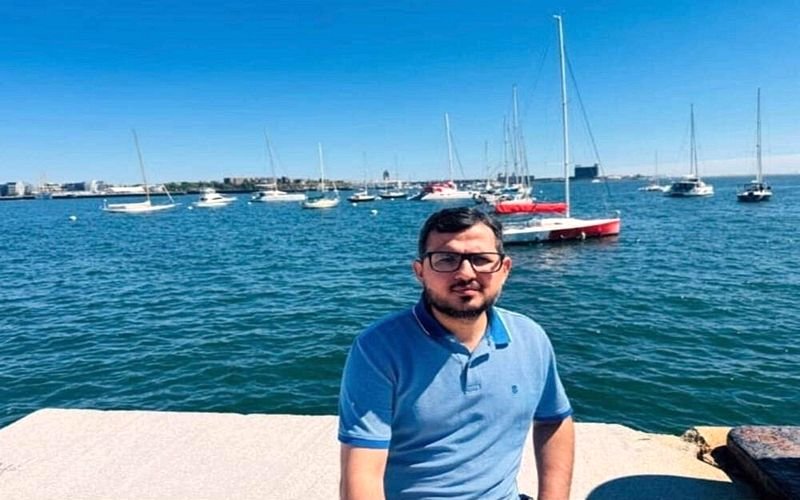
A 34-year-old Afghan asylum seeker battling brain cancer was arrested by U.S. Immigration and Customs Enforcement (ICE) after he asked for directions while working as a food delivery driver in Massachusetts. The man, identified as Ihsanullah Garay, came to the United States on a student visa in 2021 but now faces deportation proceedings amid questions about ICE’s claims over his visa status and his access to medical care.
Read: Republicans Fracture as Shutdown Becomes Longest in U.S. History
Arrest During Routine Delivery
On September 14, Garay was taken into custody in Methuen, Massachusetts, after approaching someone for directions while delivering food. ICE spokesperson James Covington defended the arrest, describing Garay as “an illegal alien from Afghanistan.” However, Garay’s cousin Abdul, a U.S. citizen, said Garay entered the country legally on a student visa to pursue a PhD in finance at a Philadelphia university.
Also read: Taylor Swift Talks About Quitting Music After Marriage, Says “It’s Not Why People Get Married”
Dispute Over Visa Status
Covington claimed that Garay’s visa expired on September 7, 2021, and that he had “violated the terms of his lawful admission when he refused to leave the country.” Yet documentation provided by Abdul shows the visa was valid until August 2022, five months after President Joe Biden made Temporary Protected Status available to Afghans in the U.S. following the Taliban’s takeover. ICE has not explained why it classified Garay as “illegal” or why it listed an incorrect expiration date.
Also read: Trump Administration Freezes $11 Billion in Army Corps Projects, Hitting Democrat-Led States Hard
Afghanistan’s Collapse And Risks
Garay’s alleged visa expiration date fell just nine days after the final withdrawal of U.S. forces from Afghanistan. As the Taliban seized control, Garay, who had worked as a risk manager at a bank tied to the former Afghan government, received direct threats. Returning home would have placed him in grave danger, and thousands like him sought protection under emergency humanitarian programs during that period.
Also read: Khamenei Mocks Trump with “Keep Dreaming” Remark Over Iran Nuclear Strike Claims
Cancer Diagnosis And Treatment
Just weeks after applying for asylum, Garay was diagnosed with stage-2 brain cancer and underwent emergency surgery to remove half of the tumor. Abdul, who owns a computer store, helped his cousin through chemotherapy and radiation treatments. “He’s doing better, but his memory is very reduced,” Abdul said. Without insurance coverage for rehabilitation, Garay lived in Abdul’s store so he could attend his medical appointments.
Also read: U.S. Shutdown Threatens National Security as 1,400 Nuclear Workers Sent Home
Arrest Amid Legal Authorization
Before his arrest, Garay held a valid driver’s license, a pending asylum application, and a work authorization valid until 2029. He was working for DoorDash and Grubhub when ICE detained him. He was first held in a Rhode Island facility, later moved to Florida, and most recently transferred to Georgia, where his case is now pending. His October 16 bond hearing in Massachusetts was canceled and must be rescheduled in Georgia, where immigration law is considered far stricter.
Also read: Republican Strategist Quits Party, Calls GOP “A Cult of Personality”
Legal And Medical Concerns
Garay’s doctor wrote to ICE in late September, confirming his diagnosis and need for ongoing treatment. Despite this, ICE has not commented on whether Garay is receiving adequate medical care while in custody. His attorney continues to work on his behalf, while advocates fear the transfers could endanger his health and weaken his legal standing.
Also read: Bruni Exposes Trump’s Presidency as a ‘Court of Sycophants’ Led by a Yes-Men Circle
Advocacy And Outrage
John Moses, co-founder of the Massachusetts Afghan Alliance, said he learned of Garay’s case through local media and has been reaching out to contacts for help. “All of the skills I used and the contacts I used to help Afghans escape the Taliban, I’m having to use to protect Afghans from my government,” Moses said, expressing frustration over the treatment of vulnerable evacuees who once relied on U.S. protection.