

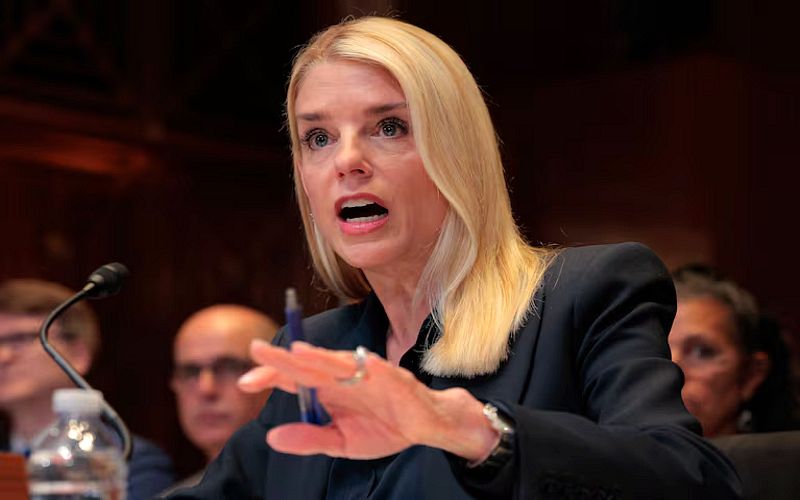
Attorney General Pam Bondi faced intense scrutiny Wednesday as she tried to justify President Donald Trump’s sudden reversal on the Jeffrey Epstein files. Earlier this year, Bondi’s department declared there was nothing left to investigate, enraging MAGA supporters. Now, Trump has demanded the files be released and instructed Bondi to probe Democrats once linked to Epstein, putting the attorney general in an awkward position. Bondi struggled to clarify what “new information” prompted the dramatic shift and repeatedly deferred to following the law.
Trump Orders File Release
After months of resistance, Trump instructed Republicans to support a transparency bill mandating the release of Epstein-related files. Bondi now must comply, despite her earlier memo stating “no further disclosure would be appropriate or warranted.” The sudden change reflects Trump’s response to pressure from his base and bipartisan calls for transparency, while simultaneously using the files to investigate political opponents.
Bondi Struggles to Explain
When pressed on the reason for the reversal, Bondi said, “Information that has come for, um, information. There’s new information, additional information,” without elaborating. She emphasized, “We will continue to follow the law to investigate any leads,” but offered no clarity on the specifics of the alleged new evidence or how it affects previous DOJ conclusions.
DOJ Memo Controversy
Bondi’s department issued a contentious memo in July declaring the files revealed no incriminating evidence against uncharged third parties. It concluded there was “no credible evidence” that Epstein blackmailed prominent individuals. The memo and a February photo-op with MAGA influencers, where binders of publicly available documents were distributed, enraged Trump supporters who expected greater disclosure.
Congressional Push Accelerates
Congress has passed legislation requiring Bondi to release all unclassified records, documents, communications, and investigative materials related to Epstein and Ghislaine Maxwell within 30 days. The law also covers individuals and entities with known or alleged ties to Epstein’s trafficking or financial networks. However, the legislation allows redaction of documents that could jeopardize ongoing federal investigations.
Democrats Targeted by Trump
Trump has directed Bondi to investigate Democrats formerly associated with Epstein, including Bill Clinton, Reid Hoffman, and Larry Summers. All three have denied knowledge of Epstein’s crimes. Critics argue the directive risks politicizing the DOJ and may be used as a pretext to withhold sensitive documents. Bondi has appointed Jay Clayton to lead this politically charged investigation.
Clayton’s Epstein Connections
Jay Clayton, appointed to lead the Southern District of New York, has past associations with Epstein-linked figures. He joined the board of Apollo Global, led by Leon Black, who paid Epstein roughly $170 million for financial advice, partly funding Epstein’s operations. Clayton’s prior appointments and ties have raised concerns over the independence and objectivity of the current investigation.
Legal and Political Implications
Bondi’s repeated evasions highlight the tension between legal obligations and political pressure. How the files are released and which documents are withheld could influence both public perception and ongoing investigations. Analysts warn the administration’s handling of the Epstein files may set precedents for politicizing federal investigations in the future.