
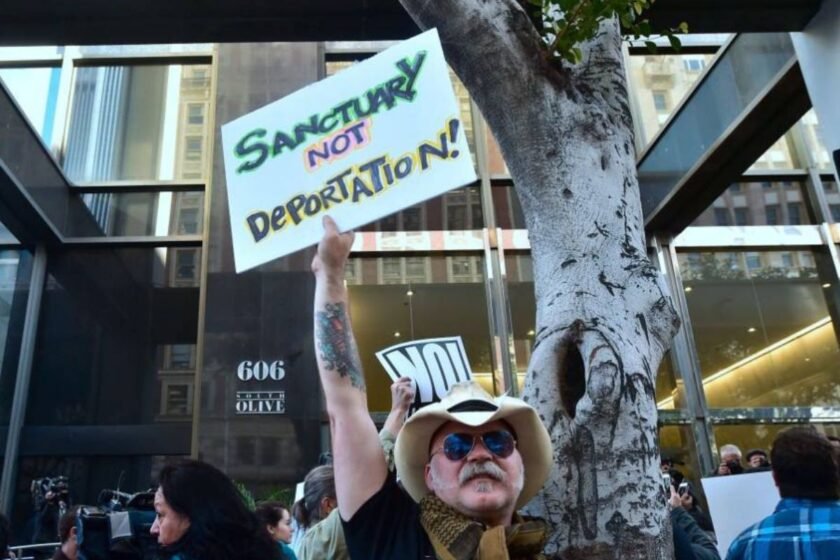

A recent court order has temporarily halted the deportations linked to former President Trump’s asylum ban. This decision has significant implications for immigration policy and enforcement, directly affecting the lives of many asylum seekers. The judicial halt brings the administration’s efforts to impose stricter asylum measures under scrutiny.
The ruling underscores ongoing legal battles over the Trump administration’s approach to immigration. It highlights the division between the judiciary and executive branches, as well as the continued tension over policies impacting asylum seekers entering the United States.
This pause on deportations also shifts the operational landscape for the U.S. Customs and Border Protection (CBP), demanding immediate adjustments in enforcement protocols.
Read : Trump Expands ICE Hiring Nationwide Amid Aggressive Immigration Crackdown
Asylum Ban Blocked
A federal court has issued an injunction against enforcing the asylum ban, a move that effectively suspends the deportations of those affected by the policy. It was originally implemented during Trump’s tenure to limit asylum claims, particularly from Central American migrants.
The court found that the rule unlawfully restricted the rights of individuals who might qualify for asylum under international and domestic law. It emphasized the need for due process and adherence to established refugee protections.
This decision comes as a reprieve for many asylum seekers who had faced expedited removal without full hearings of their claims. Their cases will now be revisited under existing immigration frameworks.
Also read : Legal Battles May Force Epstein Files Open, Despite Trump Administration’s Block
Trump’s Immigration Policies
Under Trump’s administration, a series of restrictive immigration policies were introduced, fundamentally altering the asylum process. These included the “Remain in Mexico” policy and a significant reduction in refugee admissions.
The policies were part of broader attempts to curb illegal immigration and were often met with legal challenges and public outcry. Critics argued these measures undermined international asylum agreements and U.S. moral leadership.
- Reduction in asylum grants
- Increased border enforcement and detention
- Enhancement of legal and procedural barriers for asylum seekers
- International pressure and declining global asylum cooperation
Also read : Trump’s HUD Plan Could Leave 1.4M Low-Income Renters Homeless, NYU Report Finds
Legal Challenges Unfold
The halted deportations are the latest in a series of legal challenges against Trump’s immigration policies. Courts across the country have repeatedly been pivotal in responding to these contentious measures.
Numerous lawsuits have sought to overturn policies deemed as overreach by the executive branch. Plaintiffs, typically representing refugee advocacy groups and affected migrants, argue that the administration compromised human rights and due process.
These cases highlight the judiciary’s role in maintaining a check on executive power, ensuring that administrative actions comply with the Constitution and international obligations.
Also read : Smithsonian to Restore Trump Impeachments in Museum Exhibit
CBP’s New Directives
Following the court order, CBP has been tasked with revising its operational procedures regarding asylum seekers. Immediate changes include halting deportations until further legal clarification is provided.
CBP must now navigate a complex legal environment while ensuring compliance with the latest judicial directives. This situation requires a balance between enforcement duties and adherence to court orders.
The agency is expected to enhance communication with other federal entities, ensuring that the interpretations of such legal decisions are uniformly applied across various jurisdictions.
Also read : Utah Sen. Mike Lee Drops Controversial ‘Public Land Sale’ Plan Amid Backlash
Federal Appeals Court Decision
A recent ruling by a federal appeals court has halted former President Donald Trump’s asylum deportations, impacting thousands of individuals seeking refuge in the United States. This pivotal court order was issued by the Ninth Circuit Court of Appeals, emphasizing a key judicial stance on immigration and asylum policies.
The court’s decision focused on the protocols initially established under the Trump administration, questioning their alignment with existing federal laws and international agreements on refugee rights. Judges highlighted procedural deficiencies and rights violations, which have left many asylum seekers in precarious circumstances.
Data revealed that under Trump-era policies, asylum application rejections surged sharply, reflecting a broader strategy of deterrence that critics argue undermined humanitarian obligations. The court’s ruling underscores the legal checks on executive power and their role in ensuring compliance with constitutional and statutory safeguards.
Furthermore, the decision potentially sets a precedent for future immigration policy cases, emphasizing the judiciary’s vital role in balancing enforcement with rights protection under the law.
Also read : ICE Arrests Afghan Man in Connecticut Despite Legal U.S. Entry
ACLU’s Role in the Lawsuit
The American Civil Liberties Union (ACLU) played a crucial role in bringing this lawsuit against the Trump administration’s asylum deportations. Known for their legal advocacy in defense of individual rights, the ACLU argued that these policies violated both U.S. and international legal standards.
The organization represented numerous asylum seekers affected by expedited deportations, highlighting individual cases that illustrated broader systemic issues. Their legal team worked diligently to compile evidence and expert testimonies that underscored the harmful impacts of the policies in question.
In their suit, the ACLU cited breaches in due process, arguing that many deported individuals were denied a fair chance to present their asylum claims. This contributed significantly to the court’s decision to suspend the deportations temporarily.
The ACLU’s victory in this case is part of a broader effort to protect asylum rights. Their advocacy continues to focus on ensuring adherence to just immigration practices and holding government entities accountable for overreach.
Next up :