
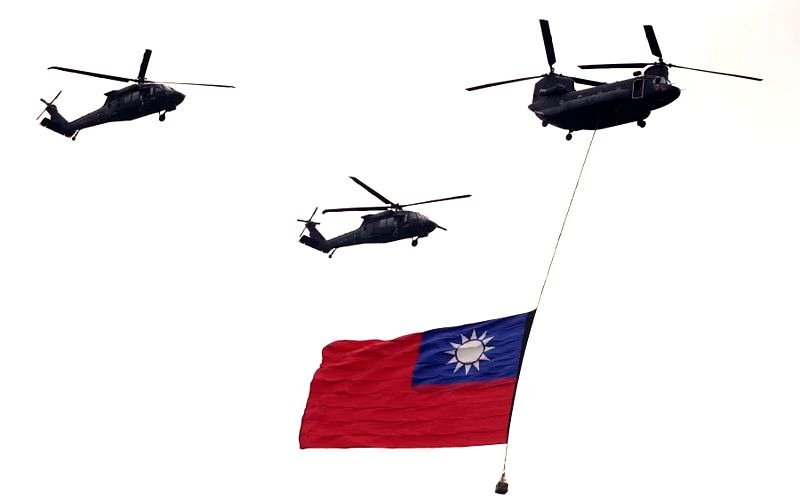
Tensions between Beijing and Taipei have intensified after China publicly released the identities of 18 people it claims are part of Taiwan’s “psychological warfare unit.” Chinese police in Xiamen accused the group of spreading “separatist” propaganda and offered cash rewards for tips leading to their arrest. The move came just one day after Taiwan’s president pledged to strengthen the island’s defense against growing Chinese aggression, triggering an angry response from Beijing.
Read: US Professor’s Flight to Spain Abruptly Cancelled After Antifa Remarks Spark Uproar
Beijing Publishes Wanted List
China’s public security bureau in the coastal city of Xiamen announced that 18 individuals had been identified as “core members” of Taiwan’s psychological operations unit. Authorities released their names, photos, and Taiwanese identification numbers, offering rewards of up to 10,000 yuan (approximately US$1,402) for information leading to their capture. The bureau accused them of engaging in “long-term separatist activities” aimed at undermining China’s sovereignty.
Also read: Trump Accused of Weaponizing Justice Department After Letitia James Indictment Sparks Outrage
Accusations of Psychological Manipulation
According to the Xiamen bureau, the unit allegedly engaged in disinformation campaigns, intelligence gathering, and propaganda operations targeting China. The state-run Xinhua news agency claimed the group created “seditious” games, fake videos, and illegal radio broadcasts designed to “incite secession” and manipulate public opinion with the help of “external forces.” Beijing framed the effort as part of a broader crackdown on what it considers separatist threats from Taiwan.
Also read: US Deploys 200 Troops to Israel Amid Ceasefire Mission
Taiwan Slams Beijing’s Allegations
Taiwan’s Ministry of National Defense sharply rejected China’s claims, describing them as baseless and politically motivated. “These accusations reflect the despotic and pig-headed thinking of an authoritarian regime … trying to divide our people, belittle our government, and conduct cognitive warfare,” the ministry said in a statement. It condemned Beijing’s use of propaganda and disinformation, arguing that the campaign was an attempt to sow fear and distrust among Taiwanese citizens.
Also read: Letitia James Indicted as Trump Intensifies Campaign Against Political Rivals
Claims of Fabricated Data
Taiwan’s defense officials further asserted that China had repeatedly exploited the island’s open society to fabricate personal data for such reports. “China has used the free flow of information in our democratic society to piece together and fabricate personal data,” the ministry said. It emphasized that protecting national security “and the safety and well-being of the people” remains the unshirkable duty of every member of Taiwan’s military.
Also read: GOP in Turmoil: Johnson Warns Republicans Could “Tear Each Other Limb From Limb”
Symbolic but Strategic Move
Analysts say the wanted notice carries limited practical impact, as Taiwanese intelligence officers rarely travel to mainland China. However, experts view the move as a psychological tactic aimed at intimidating Taiwan’s military and eroding public morale. The lack of legal jurisdiction over the island further underscores the symbolic nature of Beijing’s announcement, but it also highlights China’s growing use of psychological pressure in its confrontation with Taipei.
Also read: DHS Slams NBC Over False ICE ‘Bait’ Story: “Stop the Lies”
Taipei Strengthens Defense Commitment
Just a day before China’s announcement, Taiwan’s President Lai Ching-te had pledged to strengthen the island’s defense capabilities and urged Beijing to “renounce the use of force.” His remarks drew swift condemnation from China, which labeled him a “troublemaker” and a “war-maker.” Lai’s comments reflected Taipei’s growing resolve to counter China’s political, military, and information warfare efforts amid escalating cross-strait tensions.
Also read: California Becomes First State to Ban Ultra-Processed Foods from School Meals
Pattern of Intimidation Continues
This is not the first time China has issued such threats. In June, Beijing offered similar bounties for the arrest of 20 alleged Taiwanese military hackers, a move Taiwan dismissed as an intimidation tactic. The latest reward notice, experts say, fits into a broader strategy of psychological operations designed to weaken Taiwan’s unity and deter its defense personnel through public exposure and fear campaigns.