
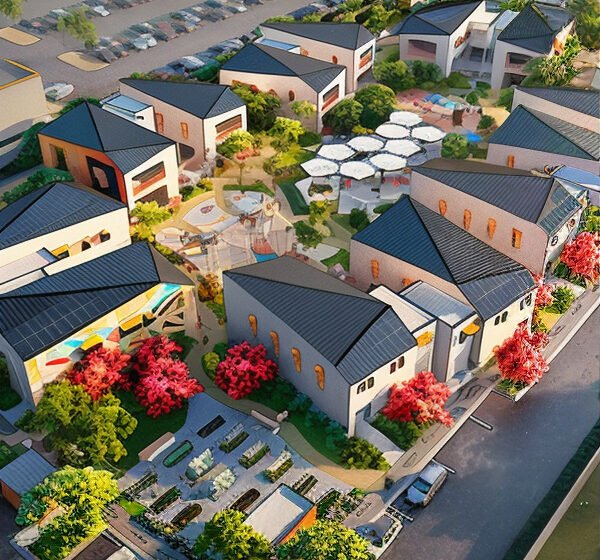

Christian Bale, renowned for his cinematic roles and humanitarian efforts, has embarked on a significant philanthropic project in Palmdale. Known for his commitment to underrepresented causes, Bale has recently announced the development of a foster home community. With construction underway, the project aims to transform foster care housing practices in this Southern California city.
Bale’s Vision for Foster Care
Bale’s initiative is rooted in the desire to reform a system often criticized for separating siblings. Inspired by personal interactions with foster families, he envisions a sanctuary where children can thrive together. His approach emphasizes stability, emotional support, and community engagement, aiming to redefine traditional foster care models.
The Role of Together California

Together California, a nonprofit dedicated to enhancing foster care, partnered with Bale to facilitate this ambitious project. The organization provides expertise and resources essential for constructing the community. Their collaboration ensures that the homes are not only functional but also foster a nurturing environment tailored to children’s needs.
Keeping Foster Siblings United
A cornerstone of Bale’s project is to keep siblings together, addressing a critical gap in the current foster care system. Research indicates that such separations can impact emotional and psychological well-being. By designing homes that accommodate larger family units, Bale’s project seeks to maintain these vital familial connections.
The Palmdale Community Impact
The foster community center in Palmdale is expected to boost local morale and provide essential services. It aims to become a model for inclusive urban planning, integrating seamless support systems for foster families. Local officials have expressed optimism about the project’s potential to inspire similar initiatives across the country.
Supporting Transitional Housing

Christian Bale, the acclaimed actor known for his transformative roles, is taking significant steps to address homelessness in Palmdale. In early 2023, Bale initiated the construction of a foster home community to provide transitional housing for youth aging out of the foster care system. The initiative aims to bridge the gap for young adults who often face homelessness once they leave foster care.
The project responds to pressing statistics: each year, about 20,000 young adults leave foster care without stable living arrangements. Bale’s commitment to this cause stems from his long-standing involvement with various children’s charities. By creating a supportive environment, he hopes to offer a new start for those in need.
His approach includes offering skill-building programs, counseling, and mentoring to empower residents. The community will also focus on ensuring access to education and career resources. This holistic support system is designed to promote sustainable independence.
Designing a Community Center
Central to Bale’s vision is a community center, intended to be the heart of the development in Palmdale. The center will host various programs aimed at skill development and emotional well-being. Plans include spaces for workshops, counseling sessions, and job training, catering to the residents’ diverse needs.
The architectural design emphasizes open, inviting spaces that encourage interaction and collaboration. Bale has personally overseen several aspects of the design to ensure it fosters a sense of belonging. The community center will also serve as a venue for events that engage both residents and the broader Palmdale community.
Bale’s hands-on approach extends to selecting sustainable materials and ensuring environmental practices are integral to the construction process. His vision for the center is not just structural but also rooted in building a nurturing environment.
Collaboration with Tim McCormick
Integral to the project’s success is Bale’s collaboration with Tim McCormick, a noted expert in developing housing solutions. McCormick brings decades of experience in creating sustainable housing for vulnerable populations. Together, they aim to establish a model for transitional living that can be replicated in other communities.
Their partnership began when McCormick and Bale met at a charity event focused on youth homelessness. Impressed by McCormick’s work, Bale invited him to co-lead the initiative. This collaboration combines Bale’s philanthropic vision with McCormick’s practical expertise.
They frequently meet to discuss progress, challenges, and innovations, ensuring the project remains aligned with its goals. Their dynamic partnership is marked by mutual respect and a shared commitment to making a lasting impact.
Nonprofit Partnerships and Goals
The foster home community is backed by strategic partnerships with several nonprofits, enhancing its scope and effectiveness. Organizations dedicated to youth empowerment and homelessness prevention are integral to the project’s outreach efforts. These partnerships are crucial for providing specialized services and expanding resource availability.
Bale’s initiative also aligns with broader community goals, working closely with local government and advocacy groups. The partnerships are structured to ensure accountability, transparency, and measurable outcomes. Nonprofits involved in the initiative emphasize sustainable change and long-term support.
Bale and his team aim for the project to serve as a blueprint for other communities facing similar challenges. By fostering collaborative efforts, they hope to inspire more comprehensive approaches to transitional housing nationwide. Their goal is to create a supportive community that offers hope and opportunity to those transitioning out of foster care.