
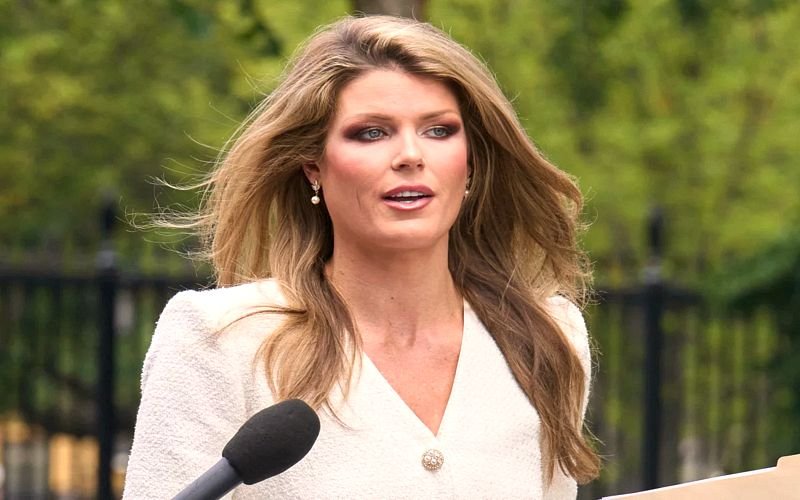
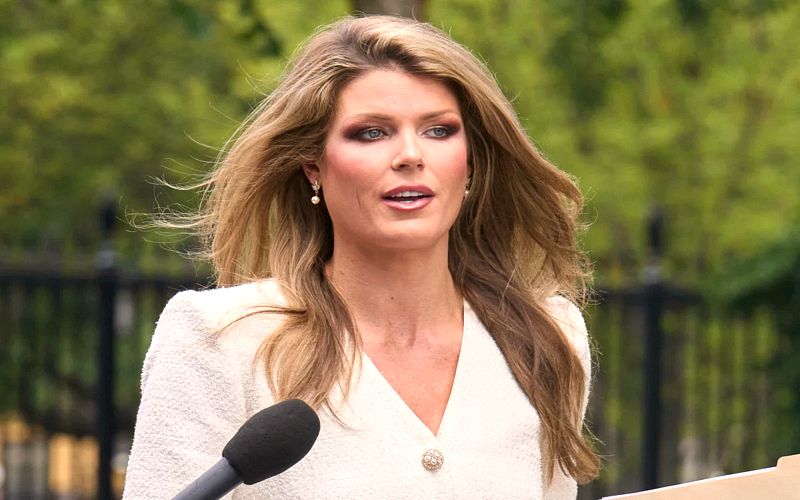
Interim U.S. Attorney Lindsey Halligan is pushing back hard after a federal judge appeared to agree with accusations that she acted at the direction of former President Donald Trump in the indictment of James Comey. The confrontation unfolded during a tense Virginia hearing that put both the prosecution’s motives and procedures under scrutiny. Halligan, a former beauty queen with no prior prosecutorial background, defended her independence while publicly rebuking the judge’s remarks. The case has since grown more chaotic following revelations about irregularities in the grand jury process.
Judicial Clash Erupts
The exchange erupted when Judge Michael Nachmanoff questioned whether Halligan had acted as a “puppet” for Trump, echoing a claim made moments earlier by Comey’s attorney, Michael Dreeben. Halligan told the New York Post, “Personal attacks, like Judge Nachmanoff referring to me as a ‘puppet,’ don’t change the facts or the law.” The confrontation set the tone for a combative session that repeatedly circled back to presidential influence and prosecutorial judgment.
Claims of Political Direction
Dreeben argued that Trump directly pushed the Justice Department to target Comey, pointing to a message the former president accidentally posted publicly on Truth Social. In that message to Attorney General Pam Bondi, Trump demanded action against his political adversaries, writing, “We can’t delay any longer, it’s killing our reputation and credibility.” Five days later, Comey was indicted for allegedly lying to Congress during a 2020 hearing.
Courtroom Allegations Intensify
Judge Nachmanoff pressed the issue sharply, asking Dreeben, “So Ms. Halligan was the stalking horse, or to use a different word, a puppet, for the president?” Dreeben avoided the label but maintained that Halligan “did what she was told.” The exchange underscored the courtroom’s growing skepticism about political influence behind the indictment.
Halligan’s Strong Rebuttal
Halligan hit back in a detailed statement to the Post, invoking judicial ethics. “The Judicial Canons require judges to be ‘patient, dignified, respectful, and courteous to litigants, jurors, witnesses, lawyers, and others with whom the judge deals in an official capacity’ … and to ‘act at all times in a manner that promotes public confidence in the integrity and impartiality of the judiciary,’” she said. She added that her “focus remains on the record and the law,” insisting she would continue her duties with professionalism.
DOJ Team Defends Prosecutor
In court, prosecutor Tyler Lemons disputed the accusation that Halligan acted on Trump’s post, calling Dreeben’s claims “inferential leaps.” He insisted there was “no proof” she interpreted Trump’s message “as a charge,” adding emphatically, “Ms. Halligan was not a puppet.” His defense added internal tension to a case already marked by political implications.
Stunning Grand Jury Revelation
The hearing then veered into even more damaging territory for prosecutors. Lemons admitted that the grand jury never saw the final version of the indictment before it was signed. Instead, after jurors rejected one count, the Justice Department presented an alternative version directly to the foreperson for signature. Judge Nachmanoff sought clarification, asking, “Am I correct that the new document was never presented to the grand jury for approval?” Lemons replied, “I wasn’t there, but that is my understanding.” Halligan later confirmed his account to the judge.
Defense Demands Case Collapse
Comey’s lawyers moved swiftly, arguing the disclosure further proved the indictment should be dismissed. “This has to stop,” Dreeben told the judge. “This court is the first to confront the issue of whether a message needs to be sent to the executive branch.” The defense framed the case as a test of judicial independence amid claims of political retaliation.