
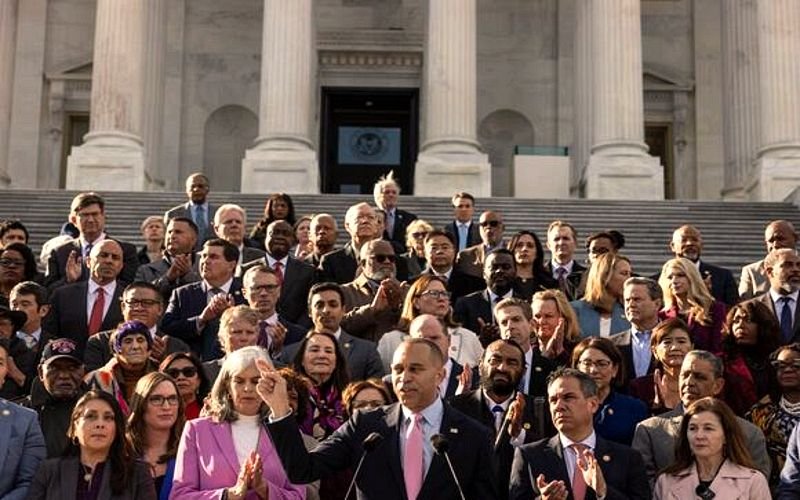
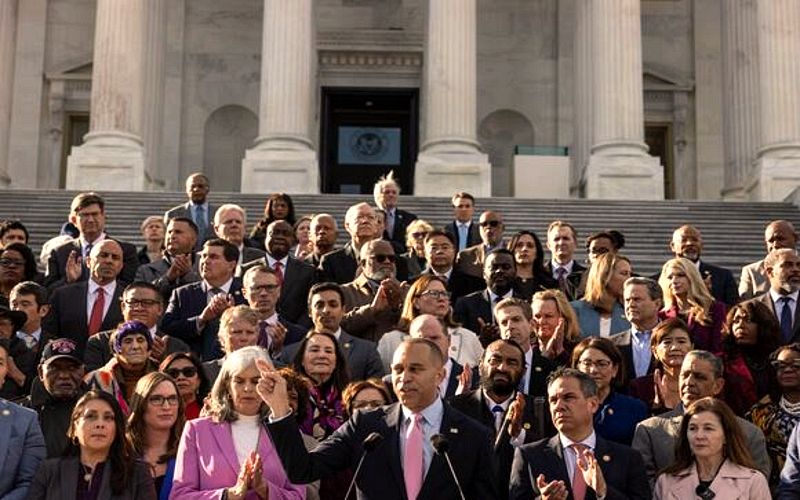
A major rift has erupted within the Democratic Party following the recent agreement to reopen the federal government. Progressive and establishment Democrats are clashing over the role of eight Senate members who helped pass the deal without securing key concessions on health care. The disagreement has intensified internal tensions, with social media clips and public statements highlighting party divisions. Strategists warn that this infighting risks overshadowing the party’s efforts to hold Republicans accountable ahead of the 2026 midterms.
Party Fractures Exposed
The shutdown deal has laid bare deep divisions within the Democratic Party, particularly between younger, progressive lawmakers and establishment figures. While progressives demand aggressive opposition to Trump and GOP policies, older members prioritize maintaining party unity. House Minority Leader Hakeem Jeffries and other moderates have called for a coordinated approach, but their efforts have often been drowned out by outspoken criticism.
Progressive Backlash Intensifies
Rep. Alexandria Ocasio-Cortez and other progressives publicly criticized Senate Democrats who supported the deal, posting viral videos and interviews online. Nearly every Democratic Senate candidate condemned the agreement, while some House members even called for Minority Leader Chuck Schumer to step down. The flurry of public commentary reflects frustration over perceived concessions to Republicans and dissatisfaction with party leadership.
Campaign Arm Intervenes
The House Democratic campaign arm issued a memo urging members to keep focus on holding vulnerable Republicans accountable for the shutdown. The memo stressed that intra-party conflict should not distract from messaging against GOP responsibility. Yet, the factional battles demonstrate that party cohesion remains fragile ahead of critical votes on health care and funding deadlines.
Strategic Concerns Raised
Democratic strategists warn that the internal fight risks blunting the party’s electoral focus. Matt Bennett, president of Third Way, said, “We need to keep the focus on where this belongs: Trump and Republicans having taken away health care from millions.” Other strategists note that losing sight of health care accountability could weaken messaging in key battleground races.
Primaries Fuel Discord
The divisions are magnified by competitive primaries, where candidates feel pressure to appeal to the party’s activist base. Democrats in swing districts and states are navigating how to criticize party colleagues while maintaining attacks on Republicans. Amanda Litman, co-founder of Run For Something, noted that airing disagreements may ultimately strengthen candidates by clarifying their positions for voters.
Upcoming Political Deadlines
The internal debate comes as Democrats face critical deadlines, including the December vote on extending Affordable Care Act subsidies and a January government funding deadline. These high-stakes votes increase pressure on party members to align strategically while balancing constituent expectations and primary challenges.
Leadership Under Scrutiny
While Schumer’s position as Minority Leader is not seriously threatened, confidence in his leadership has taken a hit. Even progressive allies acknowledge the difficulty of replacing him, leaving the party to manage its infighting while preparing for midterms. Jim Manley, former aide to Harry Reid, emphasized the need to return attention to health care debates and hold Republicans accountable.