
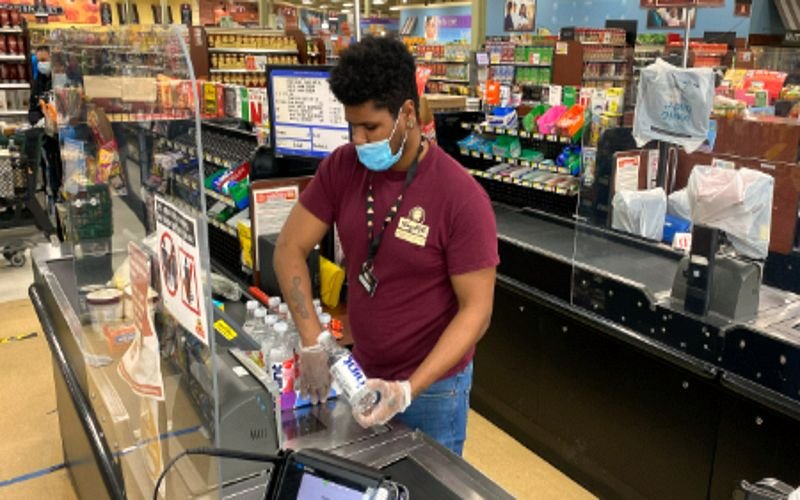
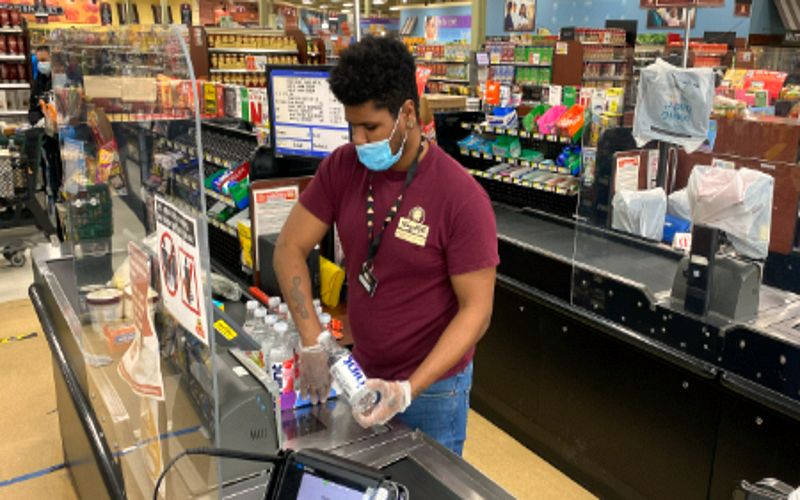
Across the US, families say their budgets are stretched thinner than ever as Donald Trump’s sweeping tariffs take hold, sending the cost of everyday goods soaring. From groceries and gas to household items, consumers are feeling the burden of policies that economists say have shifted nearly a trillion dollars in new costs onto American households. While the White House insists the tariffs will strengthen manufacturing, voters say they are facing a starkly different reality, empty shelves, shrinking grocery lists, and growing financial anxiety.
Families Struggle to Afford Essentials
Paige Harris, a 38-year-old mother of two from Stella, North Carolina, says her grocery cart has become lighter even as her bills rise. “Items that I have bought regularly have gone up in price steadily,” she said. “From hair dye to baby formula, our grocery list has gotten smaller while our budget has had to increase. Meats like steak are a no-go for our household.” Harris, who works as a teacher’s assistant, is one of dozens of Americans describing how tariffs have changed their daily lives. “You see prices soaring,” she said. “It has become very clear that this administration did not and does not care about the everyday lives of Americans.”
Studies Show Americans Bearing the Cost
A new report from S&P Global revealed that US companies are expected to pay at least $1.2 trillion more in 2025 expenses due to the tariffs, with two-thirds of that cost being passed directly to consumers. That means Americans will shoulder more than $900 billion in additional expenses. A separate analysis by the Yale Budget Lab found the tariffs could add nearly $2,400 a year to the average household’s costs.
Fixed Incomes Hit Hardest
For retirees like 74-year-old Jean Meadows in Huntsville, Alabama, the economic strain is impossible to ignore. “Prices are way too high. I mostly shop at Costco and buy as little as possible anywhere else,” she said. “I can’t imagine that stores haven’t noticed the change. I think people are really afraid of what is coming.” Myron Peeler, also retired, said his bread now costs double what it did a year ago. “We live on a fixed income that doesn’t keep up with inflation,” he said, noting that he’s only managing because his home and car are paid off.
Polls Reveal Growing Anxiety
A recent Guardian-exclusive poll found that Americans see tariffs as the second biggest threat to the national economy. Many say their weekly spending habits have been upended. With incomes lagging behind, more families are cutting out essentials and downgrading to store brands. The concern is not only about higher costs but also about the shrinking availability of basic goods.
Trade War With China Escalates
Despite mounting public discontent, Trump has shown no signs of backing down from his tariff policy. He recently reignited a trade war with China, threatening to impose a 100% tariff on Beijing as early as November. The move came after China restricted exports of rare earth minerals used in electric vehicles and medical equipment, a move Trump called “very hostile.” In an interview with Fox News, Trump conceded that the tariffs were “not sustainable,” but said, “They forced me to do that.”
Everyday Items Becoming Unaffordable
The average US tariff on Chinese goods now stands at 58%, according to the Peterson Institute for Economics. For many Americans, that’s already too high. Michele, a resident of northeastern Pennsylvania, said her family can’t afford new tires. “Affordable tires are no longer in stock, and we can’t afford $250 a tire,” she said. Others report similar issues, “empty shelves, higher prices”, as import costs ripple through supply chains. Natalie from New Hampshire said, “The store shelves have become more and more bare … instead of multiple choices there may only be one or two, and name brands are being replaced by store brands.”
Lifestyle Changes Become the New Normal
Many Americans say their lifestyles have shifted dramatically. Minnie, a 55-year-old food writer in Portland, Oregon, described how the tariffs have forced her family to cut back sharply. “I don’t shop for non-essentials. No fall shopping trips for a new sweater or jeans. And we’ll make all our Christmas presents this year,” she said. “We used to dine out once a week. Now we never eat out. Even fast-casual is insanely pricey. Everything is twice what it used to cost and we’re very afraid of what’s next.”
Young Workers Feel the Squeeze
For younger Americans, the pressure is just as intense. Cassie, a 25-year-old consultant from Siler City, North Carolina, said her $65-a-week grocery budget no longer stretches far enough. “Now I must visit at least four different stores in the area and other towns, often driving longer distances to find the best prices,” she said. “During the summer months and the Mexico/Latin America tariff announcement, Walmart and other stores in the area ran out of bananas for around two weeks. No one could get bananas in my area.”
Economic Pain Persists Despite Cooling Inflation
Even as the national inflation rate steadies at 2.9%, Americans say life isn’t getting easier. For 81-year-old Florida resident Richard Ulmer, “everything” from groceries to the electric bill is more expensive. “This year has been the worst from a financial standpoint,” he said. Economists warn that without relief from tariffs, the cost of living may remain high well into 2026, deepening the economic unease already gripping millions of households.