
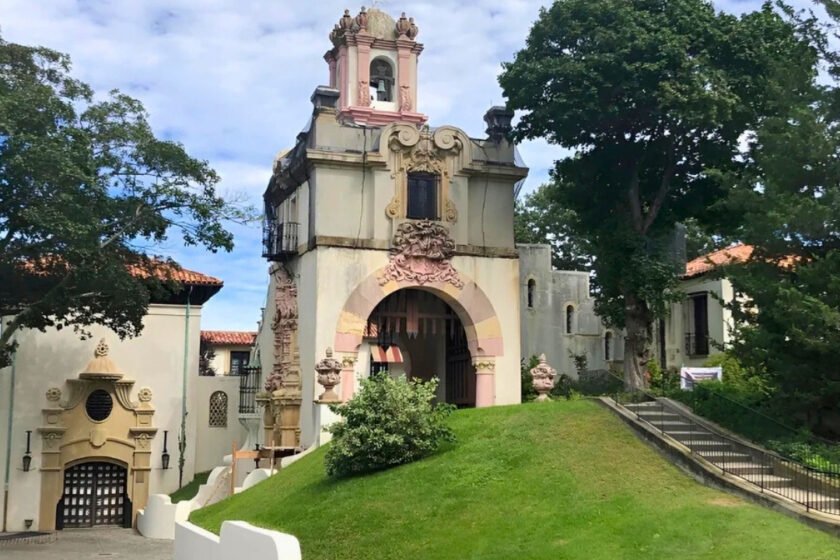

Perched on a bluff above Northport Harbor in Long Island, Eagle’s Nest is no ordinary Gilded Age estate—it’s the lifelong passion project of William K. Vanderbilt II, a sailor, collector, and adventurer who transformed his family home into a global museum. Shared on reddit/centuryhomes, the story of this Spanish Revival mansion captivated history lovers with its mix of architecture, exploration, and enduring legacy.
A Mansion Built for Exploration
Between 1910 and 1936, William K. Vanderbilt II—great-grandson of railroad magnate Cornelius Vanderbilt—built Eagle’s Nest as a retreat and a reflection of his curiosity. Designed by Warren and Wetmore, the architects behind Grand Central Terminal, the home stands out for its Spanish tile roofs, Moroccan-style courtyard, and iron eagles salvaged from Grand Central itself.

But the soul of the house lies in the collections Vanderbilt amassed on his two global voyages aboard his 264-foot yacht Alva. His love for marine biology and world cultures turned Eagle’s Nest into a unique hybrid of home and museum. In the 1920s, he opened the Hall of Fishes to the public—highlighted by a 32-foot taxidermied whale shark caught off Fire Island in 1935.

A Collector’s World Within Walls
Unlike the grand, French-style Gold Coast mansions nearby, Eagle’s Nest was deeply personal. Vanderbilt’s treasures—from taxidermied tigers to tribal artifacts—filled its wings. The Hall of Fishes displayed thousands of marine specimens. The Habitat Room featured dioramas created by American Museum of Natural History artisans. Even the former nursery held a 3,000-year-old Egyptian mummy purchased in Cairo.

These rooms weren’t for show—they were for sharing knowledge. Today, guided tours and period performances based on Vanderbilt’s own journals bring the Jazz Age and his world travels to life.

A Public Legacy with Private Roots
Vanderbilt ensured Eagle’s Nest would endure. Upon his death in 1944, he donated the 43-acre estate and a $2 million endowment to Suffolk County to preserve it as a public museum. Opened in 1950, it remains a National Historic Landmark. The home’s interiors are preserved as they were in the 1940s, and the 147-seat planetarium—added in 1970—still offers shows to visitors, keeping Vanderbilt’s mission of education alive.

A Timeless Voyage in Stone
Eagle’s Nest stands today as a monument to adventure, learning, and legacy. For the r/centuryhomes community, it’s proof that historic homes can be more than beautiful structures—they can be living reflections of the people who built them.
