

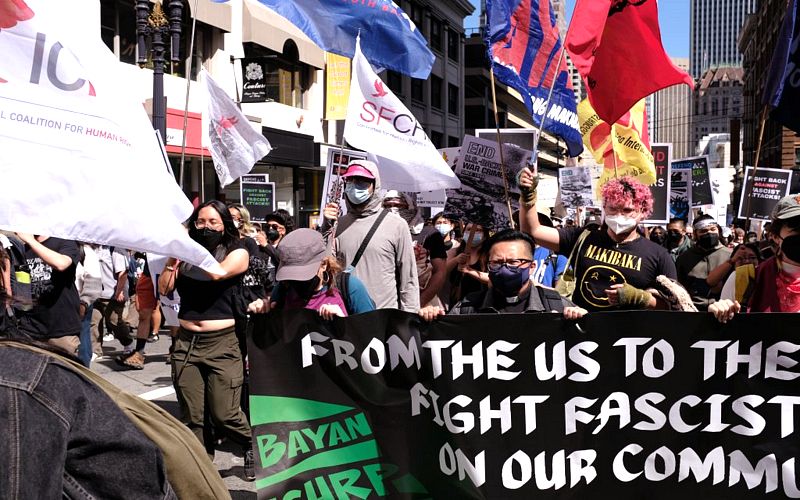
Over 300 Filipino activists and allies marched through San Francisco on Friday, protesting against the Trump administration’s immigration policies, including the treatment of Filipino migrants in ICE custody. The demonstration highlighted concerns about deportation practices and the lack of support from the Philippine government for detained nationals.
Read: Resolution to Honor Charlie Kirk Divides U.S. House Amid Political Backlash
Protest Against Immigration Crackdowns
On September 19, 2025, hundreds of Filipino activists gathered in San Francisco for a powerful march denouncing the ongoing immigration crackdowns, particularly those targeting Filipino migrants. The protest, organized by groups such as BAYAN USA, the Malaya Movement, and Tanggol Migrante Movement, centered on the hardships faced by Filipino detainees in ICE custody. Demonstrators marched from Union Square to the U.S. immigration court and the Philippine Consulate, where they expressed their anger at both the U.S. government and the Philippine government for their handling of immigration issues.
Also read: Chicago Launches Secret Text Alert System to Warn Immigrants Against ICE Raids
ICE Targeting Filipino Migrants
The protesters raised concerns about the Trump administration’s crackdown on Filipino migrants, citing the arrests and deportations of individuals, including workers in sensitive sectors such as caregiving and healthcare. Activist Andan Bonifacio, a Stanford graduate, pointed out that Filipino migrants are among those being particularly targeted by ICE raids, with little to no assistance from the Philippine government.
Also read: U.S. to Deny Visas to Those Celebrating Charlie Kirk’s Death, Says Rubio
Filipino Government’s Lack of Support
The protesters also criticized the Philippine government for its perceived indifference toward the welfare of its citizens in U.S. detention. Brendan Lee, a San Francisco activist who was himself shot multiple times by the Filipino military, argued that Filipino migrants are left to languish in ICE detention facilities without any support from their home country. The protesters accused the Philippine government of washing its hands of responsibility for its detained nationals, further exacerbating the hardships these migrants face.
Also read: Millions More Women Are Childless as Women are Skipping Motherhood
Declining Number of Filipinos in Immigration Court
Data from the Transactional Records Access Clearinghouse (TRAC) at Syracuse University shows a dramatic decline in the number of Filipinos going through immigration court in San Francisco. In 1998, 531 Filipinos passed through the court, but by 2024, that number had fallen to just 82. Despite this drop, Filipino migrants still represent a significant portion of ICE proceedings in California, ranking as the ninth largest migrant group in the state.
Also read: Gavin Newsom Surges in 2028 Polls Despite Homelessness Crisis in California
ICE Tactics Under Fire
Speakers at the protest, including Pilar Castille, condemned the tactics used by ICE against Filipino migrants. Castille accused ICE agents of terrorizing migrant communities and “kidnapping” people off the streets and from courthouses. The protesters denounced ICE’s actions as unjust and called for more accountability from both the U.S. and Philippine governments.
Also read: Trump Slams Newsom for Pushing Housing Project in Wealthy Los Angeles Neighborhood
Philippine Consulate Defends Its Actions
In response to accusations that the Philippine government was neglecting its citizens in ICE custody, the consulate issued a statement in July, claiming that consulate officials had conducted welfare checks on detained Filipinos. However, the consulate did not respond to recent requests for comment regarding the allegations raised during the protest.
Also read: White House Denies Trump’s Involvement in Epstein Letter Amid Scrutiny
A Call for Justice and Solidarity
The protest in San Francisco was a call for justice and solidarity, with activists demanding better treatment for Filipino migrants and greater support from both the U.S. and Philippine governments. The march highlighted ongoing concerns over the treatment of migrants in detention and the broader implications of U.S. immigration policies.