
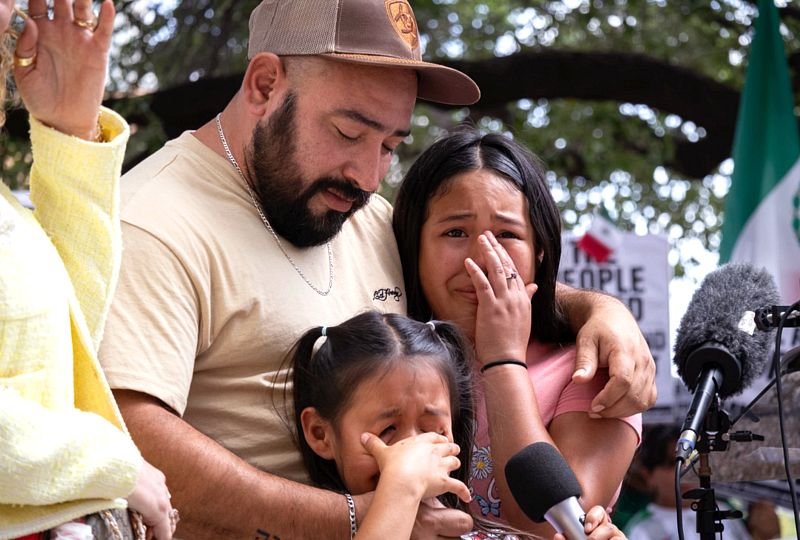

A 6-year-old girl and her mother were deported to Ecuador last week after being detained by Immigration and Customs Enforcement (ICE) in New York, triggering outrage from local officials and immigrant advocates. The arrest, seen as one of the most striking examples of President Trump’s revived family detention policy, has placed renewed scrutiny on the administration’s handling of migrant families. Advocates and state leaders condemned the move, calling it “cruel and unjust,” as more families with children continue to face similar fates.
Family Arrest in Manhattan
Martha, a mother from Ecuador, arrived with her 6-year-old daughter and 19-year-old son for a required ICE check-in at a federal building in Lower Manhattan. Instead of a routine visit, all three were detained. Her son was sent to a New Jersey facility, while Martha and her daughter were flown to Texas before being deported a week later. The family’s sudden removal left behind two other children in New York who were not detained.
Read: Smartmatic Executives Accused of Stealing Millions in LA Voting Contract Scandal
Political and Public Backlash
The detention of such a young child sparked strong responses from New York leaders. Governor Kathy Hochul issued a rare statement condemning the move as “cruel and unjust.” Local advocacy groups quickly mobilized legal efforts to stop the deportation, but their attempts failed. The case underscored growing frustration among state leaders over Trump’s renewed immigration enforcement strategies.
Also read: Ex-Priest Chris Brain Convicted of Indecent Assault Against Nine Women
Revival of Family Detention
The Trump administration reinstated family detention in March, reviving a practice that dates back to George W. Bush, expanded under Barack Obama, and largely halted during Joe Biden’s presidency. ICE defends the tactic as necessary to deter illegal migration and ensure court appearances, but human rights groups argue it traumatizes children and punishes families seeking safety.
Also read: 17 States Tighten School Phone Bans as New Academic Year Begins
Inside Detention Facilities
Families like Martha’s are often sent to the South Texas Family Residential Center, operated by private prison company CoreCivic. With capacity for 2,400 detainees, it is one of the largest ICE facilities in the U.S. While officials claim it is retrofitted for families, detainees report inadequate healthcare, poor access to legal counsel, and limited opportunities for children’s recreation. Lawyers describe conditions as damaging for minors, many of whom have lived in the U.S. for years before detention.
Also read: ICE Arrests 9 Immigrants Tied to Asian Organised Crime Groups at California Nightclub
Impact on New York Students
Martha’s daughter had been enrolled at the Jose Peralta School of Dreamers in Queens before her deportation. She was not the only young student affected. At least four migrant students over 18 enrolled in New York City schools have also been detained this year. Teachers, principals, and school officials have pleaded for their release, emphasizing that schools must remain “safe, welcoming places.” Despite these calls, ICE continues courthouse arrests targeting students during immigration hearings.
Also read: FDA Confirms Radioactive Contamination in Walmart’s Shrimp Sold Across 13 States
Courtroom Arrests and Family Separation
In New York, most arrests occur not on school grounds but inside immigration courthouses. Lawyers report that families are routinely torn apart in courthouse hallways as ICE officers arrest parents or children attending hearings. “We’ve just continued to see family units get, essentially, torn apart,” said Allison Cutler of the New York Legal Assistance Group. Advocates argue that, despite claims of keeping families together, ICE’s practices frequently lead to painful separations.
Also read: Texas AG Paxton Threatens Abortion Pill Providers With Legal Actions
Broader Deportation Trends
Since January, ICE has detained about 50 children under 18 in the New York City area, with at least 38 deported. Many are from Ecuador, mirroring Martha’s case. Advocates like Mariposa Benitez, who supports detained families, describe a rising wave of arrests at ICE check-ins. Some families are deported in less than a week, with children pulled from schools or sent directly from check-ins to detention centers across the country.