
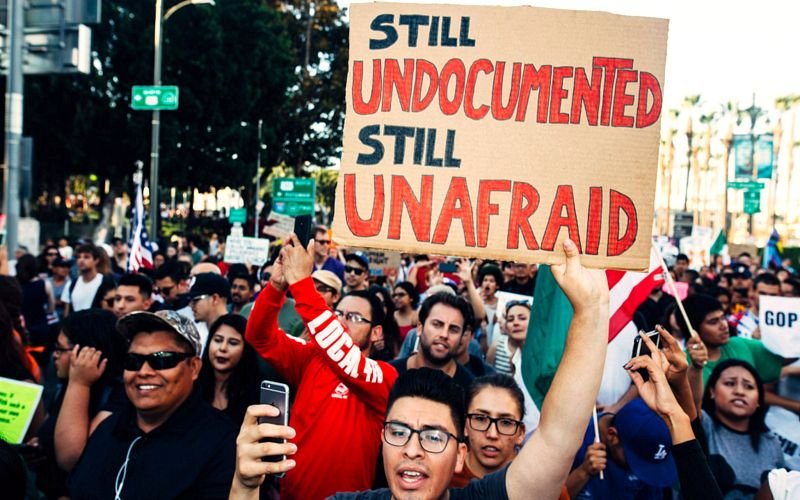

Across the United States, immigrant-rights activists are fighting deportation crackdowns with tools of their own: tracking apps, social media alerts, and street-level surveillance. From Los Angeles to New York, community groups are tailing ICE vehicles and warning residents in real-time. But as their efforts grow, the Trump administration is vowing to prosecute those it accuses of interfering with law enforcement.
Activists Shadow ICE
In Los Angeles, Francisco “Chavo” Romero and fellow activists gather before dawn near an ICE staging area on Terminal Island. They follow marked and unmarked government vehicles, sending out alerts about their locations. “With minimal resources, we’ve been able to confront, challenge and expose a billion-dollar repressive state apparatus that is attacking and kidnapping our people,” Romero, 50, said. He argues the practice helps protect Latino communities from sudden raids.
Apps Gaining Millions
Technology has become a powerful weapon for activists. In Austin, tech worker Joshua Aaron created ICEBlock, an app that reports sightings of ICE agents, which now has over 1 million users. On Long Island, 23-year-old Ahmad Perez launched a similar app that already counts 80,000 users. Both allow people to submit tips and receive push notifications of confirmed sightings. Volunteers verify reports, sometimes speaking with local police to avoid false alarms.
White House Pushback
The Trump administration has condemned these surveillance tactics. “Interfering with federal law enforcement is a crime – so is assaulting law enforcement and harboring criminal illegal aliens,” White House spokeswoman Abigail Jackson told Reuters. Administration officials argue that apps warning people about ICE operations could shield criminals and obstruct federal enforcement.
Legal Gray Areas
Legal experts say the situation is not clear-cut. Courts have long upheld the right to record law enforcement in public. “If activists are recording ICE and telling people where they are with the intent to have people avoid ICE or have people physically interfere with ICE, that’s where it potentially gets dicey,” said Sophia Cope of the Electronic Frontier Foundation. Conservative legal analyst Hans von Spakovsky noted the Trump administration might argue that such tools encourage lawbreaking, unlike apps that warn drivers of speed traps.
Government Threats Escalate
Attorney General Pam Bondi has warned Aaron to “watch out,” saying he is “not protected” under the Constitution. Homeland Security Secretary Kristi Noem said she is working with the Justice Department to explore charges against Aaron and other developers. “If you obstruct or assault our law enforcement, we will hunt you down and you will be prosecuted to the fullest extent of the law,” Noem said in an email.
Personal Consequences
Aaron dismisses the threats, saying: “This administration tends to blow a bunch of hot air in front of the cameras, but then they don’t follow up and do anything because they know they don’t have a legal leg to stand on. You can’t limit what people can see with their own eyes.” Still, his family has felt the fallout. His wife, Carolyn Feinstein, was fired from her job at the Department of Justice after officials said she had a stake in the company that owns ICEBlock’s intellectual property.
Local Action on Long Island
For Perez, activism remains personal. As the son of a Moroccan immigrant and Puerto Rican father, he says the raids threaten families like his. “We all want criminals out of our streets. We all want the gang members out of our communities,” Perez said. “But what we’re seeing now is innocent families, we’re seeing innocent children with no criminal records, sometimes U.S. citizens being detained … and expedited out of the country like it’s a FedEx package.”