
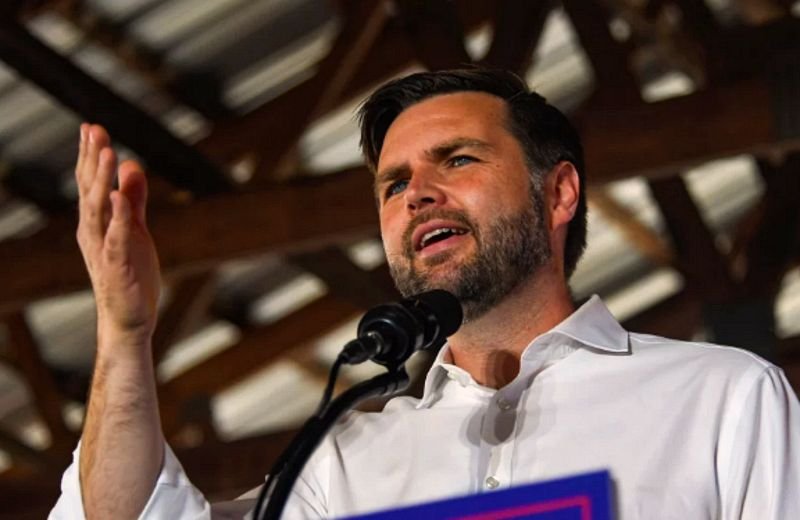

Vice President JD Vance is under fire after declaring that he believes Ibuprofen, a common pain medication, is “useless,” during a health summit in Washington, D.C. Admitting he’s “one of these crazy people,” Vance made the remarks while aligning himself with Robert F. Kennedy Jr.’s “Make America Healthy Again” (MAHA) initiative. His comments quickly drew criticism for echoing MAHA’s controversial stance on medicine and public health.
Vance’s Controversial Claim
Speaking at the MAHA summit on November 12 alongside Health and Human Services Secretary Robert F. Kennedy Jr., Vance described himself as “instinctively MAHA.” He explained, “If I have like, you know, a back sprain, or I slept weird and I woke up with back pain, I don’t want to take Ibuprofen. I don’t like taking medications. I don’t like taking anything unless I absolutely have to.” He added that this was not “anti-medication,” but rather “anti-useless-medication.” Despite his lighthearted tone, Vance acknowledged, “I’m one of these crazy people.”
White House Declines Comment
The White House has yet to address the Vice President’s remarks. Representatives for Vance also declined to comment when contacted by The Daily Beast. The statement has stirred reactions online, with health experts and critics arguing that such comments from a sitting vice president could reinforce misinformation about commonly used medications.
Inside the MAHA Movement
MAHA, led by Kennedy under the Trump administration, brands itself as an initiative “taking bold, decisive action to reform America’s food, health, and scientific systems.” Its stated goal is to “identify the root causes of the chronic disease epidemic and make America Healthy Again.” However, the group has faced extensive criticism for its promotion of pseudoscience and anti-vaccine rhetoric.
Kennedy’s Anti-Vaccine Legacy
Kennedy’s long record of opposing vaccines and medications is well-documented. He previously refused to advocate for the measles vaccine during an outbreak, instead spreading misleading claims about it. His anti-vaccine nonprofit even accused hospitals of being responsible for the deaths of two children who died from measles. Kennedy also moved to stop the CDC from recommending COVID-19 vaccines for children and pregnant women, calling it an act of “common sense.”
Fringe Medical Claims
Kennedy’s controversial statements have only intensified in recent months. He recently claimed that circumcised children have “double the rate of autism,” blaming Tylenol exposure. Weeks earlier, he and President Donald Trump suggested that taking Tylenol during pregnancy was linked to autism in babies. The claims, unsupported by credible science, triggered outrage among health officials. Former HHS Secretary Xavier Becerra and Senate Majority Leader John Thune urged Americans to trust medical professionals rather than “misinformation and fear.”
Backlash from Family and Lawmakers
Even Kennedy’s own relatives have denounced his rhetoric. His cousin, Jack Schlossberg, publicly slammed him on November 12, calling him “a rabid dog” who is “spreading lies and misinformation.” Lawmakers from both parties have echoed that criticism, warning that MAHA’s growing influence threatens to undermine public trust in legitimate health policy.
Vance Praises Wife’s ‘MAHA’ Mindset
During the summit, Vance also mentioned his wife, Usha Vance, saying she was “probably one of the original MAHA people.” He admitted that while she may not use the term, she has long prioritized careful health and nutrition choices. Vance said MAHA has affected him “in a profound way,” portraying his comments as a personal reflection rather than an official stance. Still, the remarks have raised questions about the administration’s approach to health messaging amid mounting criticism of its leadership’s ties to anti-scientific movements.