

Los Angeles County’s unhoused population declined modestly for the second consecutive year, according to new 2025 data, offering cautious optimism amid ongoing housing crises and federal funding challenges.
Homelessness Rates Fall Again

The Los Angeles Homeless Services Authority (LAHSA) announced Monday that homelessness in the city of Los Angeles fell by 3.4% and 4% countywide over the past year. This marks the second year in a row of declines following years of rising numbers since 2018.
The 2025 figures reflect a drop in both sheltered and unsheltered populations, with significant reductions in encampments and makeshift shelters across the region.
City Leaders Hail Progress

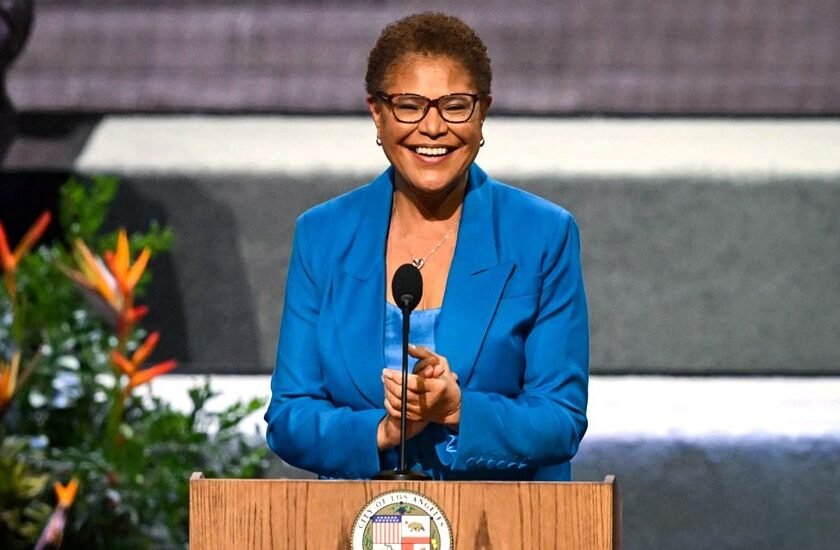
Mayor Karen Bass praised the decline as evidence of effective city-led initiatives. “These results aren’t just data points; they represent thousands of human beings who are now inside, and neighborhoods that are beginning to heal,” she said.
LAHSA CEO Va Lecia Adams Kellum credited collaborative efforts for the turnaround. “Over the last two years, our leaders came together to bring people inside, and their efforts have paid off,” she said.
City Council President Marqueece Harris-Dawson added, “I find it interesting that the folks who question the numbers this year did not have the same energy when the numbers were trending upwards.”
Data Accuracy Debated

Some officials raised concerns about the reliability of the count. A RAND Corporation study previously indicated undercounting in certain areas, and recent LAHSA adjustments to volunteer tallies stirred additional skepticism.
Councilmember John Lee warned, “When there’s this much at stake, accuracy matters and we can’t afford to make decisions based on data that may not reflect what’s actually happening on the ground.”
However, Councilmember Nithya Raman noted, “The count, if it is imperfect, is imperfect in the same way each year. It’s really meant to be a tracker of our progress over time.”
Encampments, Tents See Sharp Decline

The 2025 tally revealed a 7.9% drop in unsheltered homelessness in the city and a 13.5% reduction in tents and makeshift shelters compared to 2024.
Simultaneously, more people entered shelters or interim housing. The number of people in temporary accommodations like motels and tiny homes rose by 4.7%, reaching 16,727 residents this year.
Programs like Inside Safe and Pathway Home, aimed at clearing encampments and relocating residents to temporary and permanent housing, were credited for these improvements.
Nonprofits Warn of Looming Challenges

Nonprofit leaders welcomed the results but cautioned that gains could reverse as federal pandemic-era funding dries up.
“Unaffordable housing is still a leading cause of first-time homelessness, and decades of economic and racial inequities continue to shape who is the most vulnerable,” said Peter Laugharn of the Conrad N. Hilton Foundation.
Katie Hill, CEO of Union Station Homeless Services, warned, “The resources that made [the decline in homelessness] possible are drying up, and in the next couple of years, we will see it’s not going to be the same trend.”
Housing Supply Still Lags Behind

Despite progress, LAHSA acknowledged the region remains far from solving its housing crisis. Roughly 2,960 new affordable apartments opened in 2024, while an estimated 485,000 units are needed to meet demand.
The 2025 count found 43,500 unhoused people in Los Angeles and more than 72,000 countywide. While improved, officials stressed these numbers remain unacceptably high.
“At this pace, it would take three centuries to end homelessness in Los Angeles County,” said Supervisor Lindsey Horvath.