
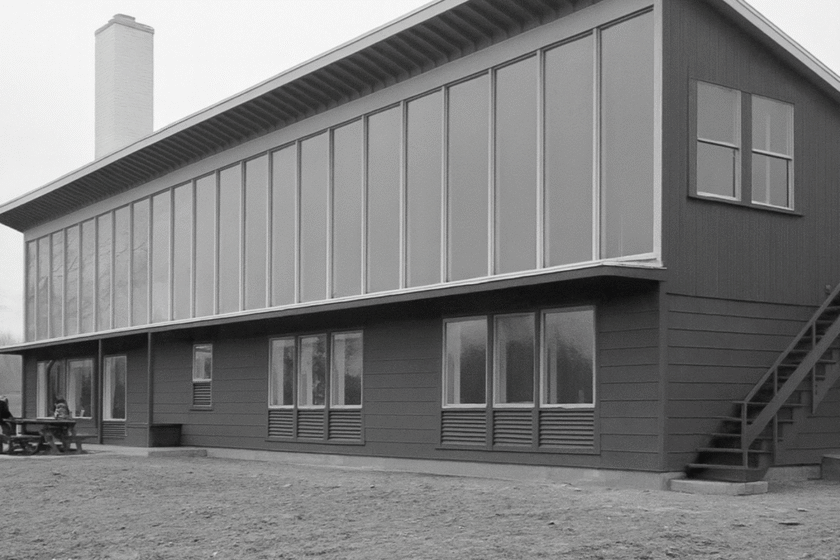

In the early 1940s, a groundbreaking experiment was underway in Dover, Massachusetts.
Hungarian-American scientist Maria Telkes collaborated with renowned architect Eleanor Raymond to transform a standard residential home into a pioneering solar-heated dwelling—a milestone in green energy innovation.
Meet the Sun Queen
Maria Telkes, often hailed as the “Sun Queen,” was a biophysicist and solar energy pioneer.
Born in Budapest in 1900, she earned her Ph.D. in physical chemistry from the University of Budapest in 1924.
After moving to the United States, she devoted her career to renewable energy research, working at institutions such as MIT.
The Pioneering Dover Sun House
Completed in 1948, the Dover Sun House stood as a bold statement of Telkes’ innovative spirit.
It became one of the first homes heated entirely by solar energy.
Backed by philanthropist Amelia Peabody and designed in partnership with Eleanor Raymond, the home embodied a shared vision for sustainable living.
At the core of the system were 3,500 gallons of melted Glauber’s salt, chosen for its ability to store and release heat through phase-change.
This thermal storage allowed the house to remain warm without relying on gas or electricity.
However, when the salt container leaked, the system failed and was eventually replaced with an oil-based heating unit.
By 2010, the original structure was demolished and replaced with a modern solar-powered home—bringing the experiment full circle.

Solar Heating Breakthroughs
Maria Telkes’ work on the Dover Sun House revolutionized solar heating with systems that efficiently captured and stored solar energy.
Her designs incorporated solar collectors made of glass and metal panels, which absorbed heat from the sun directly.
This innovation eliminated the dependence on conventional fossil fuels, showcasing the potential of solar energy even during harsh New England winters.
Glauber’s Salt Innovation
A critical component of Telkes’ solar heating system was the use of Glauber’s salt.
This substance proved crucial due to its ability to store and release heat upon melting and solidifying.
Telkes ingeniously utilized the salt’s thermal energy storage properties to help stabilize the indoor temperatures, ensuring consistent heating.

Phase-Change Storage Explained
Maria Telkes, a prominent figure in solar energy, focused on phase-change materials for thermal storage.
Phase-change storage involves materials that absorb and release heat during transitions between solid and liquid states.
Telkes utilized this technology to store solar energy efficiently, a breakthrough for sustainable home heating.
The innovative approach allows energy to be stored during sunny periods and released when needed, such as at night or on cloudy days.
This development was crucial for minimizing dependence on conventional energy sources, providing a viable alternative through solar power.
Telkes’ expertise lay in her deep understanding of physical chemistry, which she applied to enhance the thermal storage capacity of her materials.
Her pioneering work laid the groundwork for modern energy storage systems, known for their efficiency and sustainability.
Collaborating with Eleanor Raymond
In the late 1940s, Maria Telkes teamed up with renowned architect Eleanor Raymond to pioneer solar home technology.
Their collaboration aimed to design a residence that harnessed solar energy efficiently, integrating Telkes’ storage technology.
Raymond, with her architectural vision, worked closely with Telkes to create a home that was both functionally and aesthetically pioneering.
The partnership married technical innovation with architectural elegance, designed to make solar energy more accessible to the public.
Their combined efforts highlighted the possibility of using solar energy in residential settings, setting a precedent for future sustainable home designs.
This collaboration was instrumental in showcasing the practical applications of solar technology beyond theoretical research.

1948 Solar Home Unveiled
In 1948, the Dover Sun House, a project by Maria Telkes and Eleanor Raymond, was unveiled as the first modern solar-heated house.
Located in Dover, Massachusetts, this landmark project demonstrated the practicality of solar energy in residential architecture.
The house was a pivotal step in solar energy history, drawing significant attention from scientists and the public alike.
Its unveiling showcased a fully functional residence that could be powered by the sun alone, sparking interest in solar technology.
The project marked a transformative moment in energy innovation, emphasizing the feasibility and potential of solar-powered homes.
The Dover Sun House remains a historic example of early sustainable architecture, reflecting the visionary efforts of Telkes and Raymond.
Passive Solar Design Details
The Dover Sun House employed a passive solar design to maximize energy efficiency.
It was strategically oriented to capture sunlight, with large south-facing windows bringing in ample solar heat.
The design utilized Trombe walls, named after Felix Trombe, which are thermal mass walls that absorb solar heat throughout the day and release it slowly at night.
This innovative feature reduced the need for conventional heating, relying on strategic design elements.
Telkes’ phase-change storage technology worked in tandem with the house’s architectural design, making it a self-regulating system.
The passive solar design minimized energy waste, representing a significant advancement in sustainable architecture at that time.
Advancing Thermal Storage
Maria Telkes continued her work on thermal storage, refining phase-change materials for various applications.
Her focus on improving efficiency and capacity made her a leader in solar energy research.
Her advancements in thermal storage technology led to developments in diverse fields, including solar power plants and eco-friendly buildings. T
elkes’ enduring legacy lies in her commitment to practical, efficient energy solutions.
Her work on the Dover Sun House inspired future generations to explore renewable energy sources, proving the viability of solar power.
Telkes’ innovations remain integral to modern discussions on sustainable and energy-efficient living.
Legacy of a Clean Energy Pioneer
Maria Telkes, a trailblazing scientist and pioneer in solar energy, left an indelible mark on sustainable energy solutions.
Born in Budapest, Hungary, in 1900, Telkes earned her Ph.D. in physical chemistry before moving to the United States in the 1920s.
She quickly gained recognition for her innovative work, particularly in solar energy applications.
Telkes is most renowned for her involvement with the Dover Sun House, a collaboration with architect Eleanor Raymond in 1948.
This project in Dover, Massachusetts, stood as the first modern residence heated entirely by solar energy, demonstrating the practical potential of solar thermal technology for domestic use.
Throughout her career, Telkes held more than 20 patents, reflecting her relentless pursuit of advancing solar technology.
Her work extended beyond residential solutions to include desalination systems and solar ovens, showcasing the versatility of solar energy.”
Her contributions laid the groundwork for modern advancements in solar power, inspiring generations of scientists and environmentalists.
Telkes’ legacy continues to remind today’s innovators of the importance of sustainable energy exploration.