
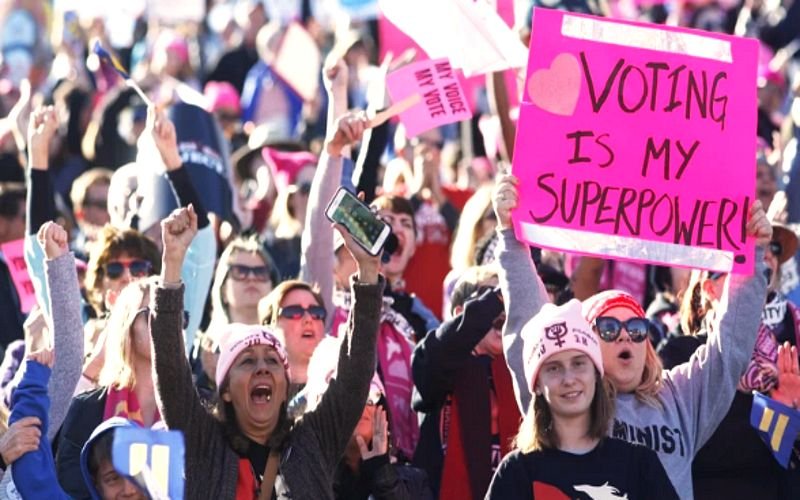
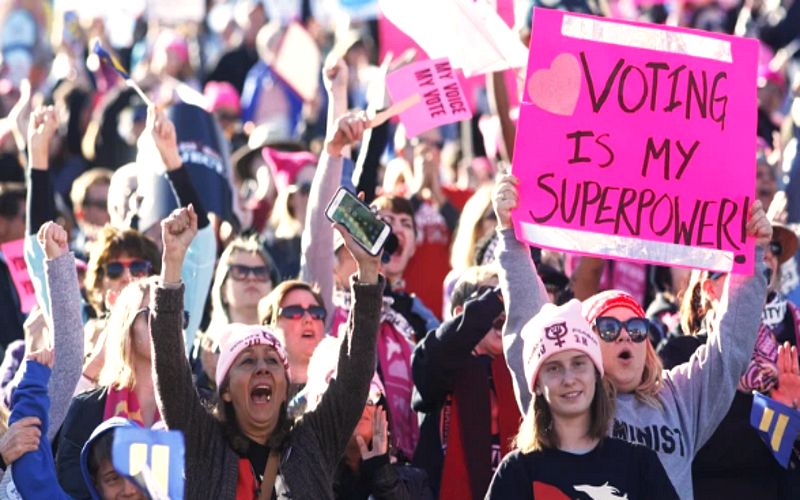
Wanda Mosley traveled from Atlanta to join hundreds of protesters outside the U.S. Supreme Court, where justices were deliberating on a case involving Louisiana electoral districts and Section 2 of the Voting Rights Act. Mosley, wearing a T-shirt reading “We won’t Black down,” voiced concern that the Voting Rights Act, a landmark law designed to prevent racial discrimination in voting, could be dismantled. The stakes are high for those advocating for equal voting rights, as they fear decades of progress may be undone.
Supreme Court Case Could Weaken Voting Rights Act
The case before the Supreme Court centers on Section 2 of the Voting Rights Act, which is critical in preventing racial discrimination in voting procedures. For many of the protesters, this case is not just a legal matter but a direct attack on the legacy of civil rights leaders such as Thurgood Marshall, Martin Luther King Jr., and John Lewis. A decision to weaken the Act would undo much of the progress made since its passage in 1965, and could pave the way for new forms of voter suppression.
Rally Outside the Court Shows Urgency and Resolve
Hundreds gathered in front of the Supreme Court, chanting slogans like “Power to the people” and singing civil rights anthems such as Sam Cooke’s A Change Is Gonna Come and Common and John Legend’s Glory. Signs carried by protesters demanded that the Voting Rights Act be protected. Many signs referenced the ongoing fight for fair voting maps, with messages like “Protect our vote” and “Build Black political power” resonating throughout the crowd.
Speakers Invoke Civil Rights Heroes
Cliff Albright, co-founder of Black Voters Matter, expressed a mixture of sadness and hope. While he lamented the potential loss of the Voting Rights Act, he also emphasized the power of activism. Referencing John Lewis and the Selma to Montgomery marches of 1965, Albright told the crowd, “We’ve got the power to move mountains, we’ve got the power to cross the bridge in a city called Selma.” His call to action was met with a thunderous cheer, affirming the resolve of the demonstrators.
Janai Nelson Reflects Optimism
Janai Nelson, president of the NAACP Legal Defense Fund, emerged from the court after presenting arguments on behalf of Black voters. Speaking to the crowd, she expressed confidence in the strength of the legal arguments. “We believe in the future of this multiracial democracy,” Nelson said. “The right to vote is still the lifeblood of our democracy, and it must be protected at all costs.” Her message emphasized the importance of perseverance in the face of legal and political challenges.
Congresswoman Sewell Reminds of Lewis’s Legacy
Terri Sewell, a Democratic congresswoman from Alabama, reminded the protesters of John Lewis’s enduring influence. Quoting Lewis’s famous words, “Never give up. Never give in. Keep the faith,” Sewell urged the crowd to stay focused on their mission. Her reference to Lewis’s resilience while standing at the Edmund Pettus Bridge in Selma in 1965 resonated deeply with the audience, many of whom considered that moment a pivotal point in the civil rights movement.
Civil Rights Movement’s Generational Struggle Continues
The protest was framed as part of an ongoing, multi-generational fight for civil rights. Alanah Odoms, the executive director of the ACLU of Louisiana, cited Dr. Martin Luther King Jr.’s “promissory note” analogy from the 1963 March on Washington. She reminded the crowd that America had failed to fulfill the promises of equality made in the country’s founding documents. The question remains: When will the U.S. make good on those promises?
Frustration and Determination from Activists
As the crowd began to disperse, Mosley reflected on why she had joined the protest. “I’m a descendant of enslaved Africans who literally built this country,” she said. Mosley’s frustration echoed that of many others in the crowd. Despite the long history of disenfranchisement, activists are determined to continue the fight for voting rights and fair representation. Mosley vowed to fight for the right to vote and for leaders who truly understand and represent her community.