
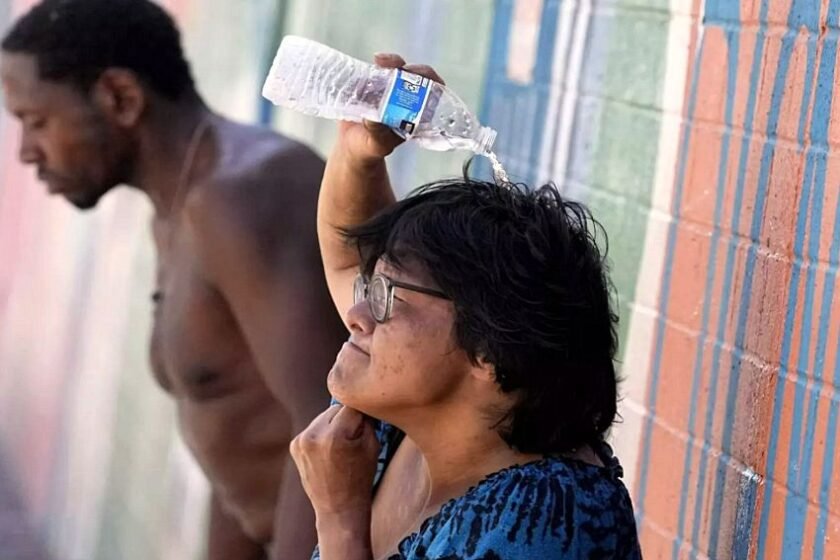

Californians are preparing for the year’s first major heatwave, a relentless multiday event bringing triple-digit temperatures, wildfire risks, and dangerous thunderstorms. The heat is expected to break records across the Southwest, with Los Angeles, Arizona, and Nevada among the hardest hit. Health officials are warning of “dangerous levels of heat” that could threaten lives, particularly among vulnerable groups and unhoused populations.
Record-Breaking Temperatures Ahead
The National Weather Service (NWS) has issued heat advisories, red-flag warnings, and emergency alerts across California and the broader Southwest. Desert regions could surpass 110°F (43 °C), while southern California cities may cross 100°F. Overnight temperatures will remain unusually high, offering little relief. Climate scientist Daniel Swain noted, “This heatwave may be most notable for sustained overnight warmth with minimum temperatures not dropping below 70-80°F.”
Public Health in Danger
“This dangerous level of heat will pose a threat to anyone without effective cooling and adequate hydration,” NWS forecasters warned. Children, the elderly, outdoor workers, and unhoused residents are expected to face the greatest risks. Experts emphasize that extreme heat is already the deadliest weather-related disaster in the U.S., often intensified by urban heat islands where concrete traps scorching air.
Wildfire Threats Intensify
The heatwave comes as Southern California sits on tinderbox conditions, with parched hillsides in Los Angeles and Ventura counties primed to ignite. NWS officials warn that extreme heat will further dry vegetation, accelerating the spread of fires. Swain added, “California wildfire risk will likely reach its peak during this event between Thursday and Saturday.” While strong winds are not predicted, thunderstorms may bring erratic gusts and lightning strikes that could spark new blazes.
Thunderstorms Add Complications
Forecasters say thunderstorms are expected alongside the heat, raising additional hazards. While they may provide limited rainfall, the storms also bring unpredictable breezes and lightning, both of which could worsen fire conditions. These combined risks create what experts call a “trio of compounding dangers”: extreme heat, fire potential, and storm threats.
Governor Deploys Emergency Resources
Governor Gavin Newsom has ordered state resources into high-risk areas ahead of the peak danger window. The deployment includes 32 fire engines, nine bulldozers, five helicopters, and multiple management teams. California officials say the early action is intended to prevent the heatwave from escalating into a large-scale disaster.
A Year of Escalating Fires
The United States has already recorded more than 44,400 wildfires this year, around 16% higher than the ten-year average. With months of fire season still ahead, officials warn that California’s most dangerous period may come in autumn, when the Santa Ana winds sweep across the state, fanning flames at extreme speeds.
Heatwaves Fueled by Climate Crisis
Scientists stress that climate change is making heatwaves longer, more frequent, and more intense. The sudden temperature spike follows a cooler-than-usual summer in California. Experts warn that the climate crisis, combined with dried landscapes and dense city environments, is worsening the dangers of heat-related illness, death, and fire spread.