
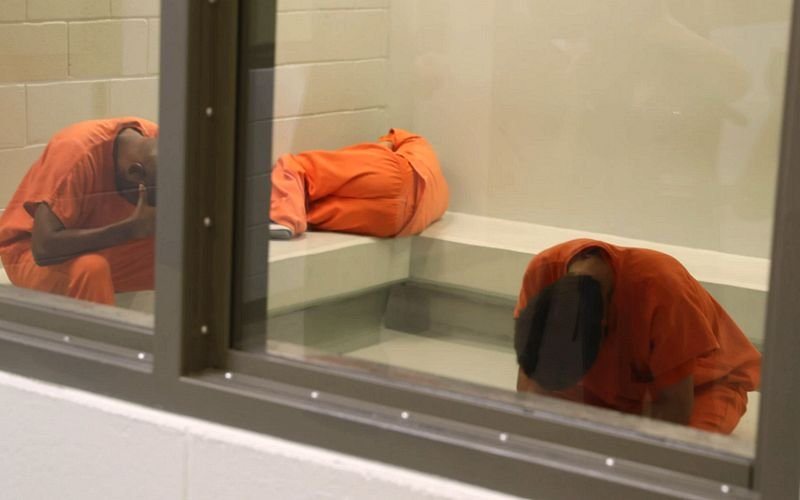
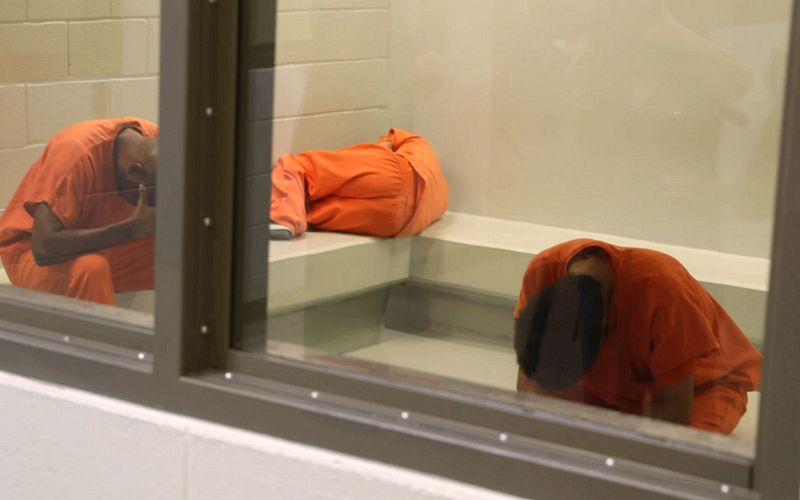
A Guardian investigation has uncovered a shadow network of U.S. Immigration and Customs Enforcement (ICE) holding facilities where immigrants are being secretly detained for days or even weeks — in violation of federal policy. The facilities, hidden in ICE offices and federal buildings nationwide, were designed for short-term use but have become overcrowded and prolonged detention sites amid Donald Trump’s renewed deportation campaign. Advocates and former officials warn that these secretive lockups are operating with little to no oversight, raising alarming concerns about safety, abuse, and human rights violations.
Secret Facilities Nationwide
The Guardian’s data analysis revealed that ICE operates at least 170 holding facilities across the U.S., including 25 within ICE field offices. These small, concrete rooms, often lacking beds, were intended for brief detentions of a few hours, but have increasingly become long-term confinement sites. After Trump’s inauguration, the average detention time rose in 127 holding facilities. Despite a June memo allowing detentions of up to three days, ICE has routinely exceeded even that limit, holding detainees for weeks or more in violation of its own rules.
The June Policy Shift
Until mid-2025, ICE’s internal policy limited holding room detentions to 12 hours. However, a June memo quietly waived that rule, authorizing detentions for up to three days. ICE claimed the change was necessary to “avoid violation of holding facility standards,” citing a surge in arrests. Critics argue the memo merely legalized ongoing violations. “This is ICE trying to give themselves a buffer to keep holding people in conditions they know are unsafe,” said Amelia Dagen, a senior attorney with the Amica Center for Immigrant Rights.
Trump’s Immigration Crackdown
Under Donald Trump’s intensified deportation agenda, ICE arrests have soared, leading to overcrowded detention centers and legal bottlenecks. With courts backlogged and detention facilities at capacity, officials increasingly rely on temporary holding rooms to store detainees awaiting transfer. In some locations, detention times spiked by nearly 600% after the June rule change. One shocking case documented a 62-year-old man detained inside a Manhattan federal building for two and a half months. “People were not supposed to spend more than 12 hours in there,” said a former ICE official. “I actually think it’s wildly, wildly fucked up.”
Unsafe and Overcrowded Conditions
Reports and leaked videos paint a grim picture inside these holding facilities. Detainees describe sleepless nights under constant bright lights, limited access to food, and no contact with attorneys or family. A video from the New York City holding facility, recorded secretly by a detainee, showed more than 20 people crammed into a brightly lit concrete room, lying on the floor under foil blankets with only two partially walled toilets. “We spoke with multiple people who had been in there for more than a week, more than 10 days, in the same clothes, not having bathed, and no access to toothbrushes,” said Paige Austin of Make the Road New York.
No Oversight, No Accountability
Holding facilities exist in a legal gray zone. Unlike formal detention centers, they are not subject to audits or inspections. Attorneys are barred from entry, and congressional oversight efforts have been repeatedly blocked. The DHS and ICE declined to comment on the Guardian’s findings despite multiple requests. “There is a total lack of oversight,” Austin said. “The lack of communication and lack of access to counsel for people in these sites is a way of preventing oversight, transparency, and accountability.” Even homeland security officials have argued that these rooms are not “detention centers,” exempting them from scrutiny.
Court Battles and Federal Orders
In September, a federal judge ordered the Trump administration to improve conditions at the New York City facility after mounting evidence of neglect. ICE was compelled to provide sleeping mats, three meals a day, and access to attorneys. Similar lawsuits have surfaced in Baltimore, where a federal case revealed overcrowding, poor hygiene, and no licensed medical personnel on-site. “There is no one who is a licensed medical practitioner, in any way, shape, or form,” Dagen said. Despite ICE’s claims of providing “ready-to-eat meals,” court documents exposed that officers were actually buying supermarket sandwiches for detainees.
Congress Denied Entry Amid Shutdown
As outrage grows, lawmakers have attempted to inspect these hidden holding facilities, only to be denied entry. Members of Congress have been blocked from visiting ICE field offices in New York, Los Angeles, Santa Ana, and Washington, D.C. A government shutdown has further crippled oversight efforts, with the Trump administration suspending congressional inspection rules. Dagen called the crisis “a problem of ICE’s own making.” She added, “They are imposing their own arrest quotas on themselves that are unrealistic and absolutely arbitrary, while fully knowing they don’t have the ability to hold people in conditions that are safe.”