

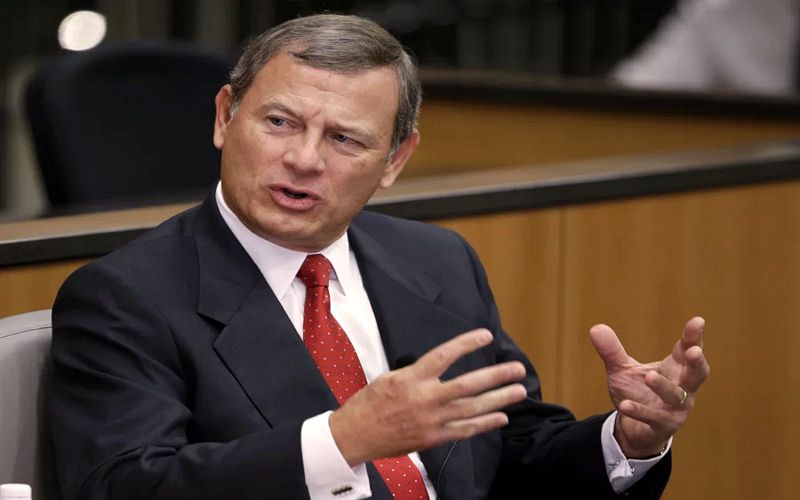
Chief Justice John Roberts is facing intensifying scrutiny as the Supreme Court reconvenes, with critics accusing him of enabling President Donald Trump’s unchecked use of executive power. Legal experts warn that Roberts’ rulings, particularly on presidential immunity, have emboldened Trump’s sweeping actions and deepened fears of a judiciary unwilling to challenge the president. As the court enters a new term, questions loom over Roberts’ control and his legacy amid rising political and constitutional tension.
Read: Trump’s National Guard Move Crushed Again as His Own Appointee Blocks Deployment to Portland
Mounting Criticism Over Trump’s Power
As the Supreme Court returns from its summer recess, Chief Justice John Roberts finds himself at the center of a growing storm. Critics, including former judges and constitutional scholars, claim that Roberts’ leadership has failed to restrain President Donald Trump’s increasingly aggressive executive agenda. Politico’s Josh Gerstein noted that while Trump enters his second term with renewed confidence, Roberts now faces mounting pressure to assert judicial oversight over a president accused of weaponizing his authority.
Also read: ICE Faces Backlash After Posting Mocking Video of Protester Being Dragged Away
Claims of Judicial Acquiescence
Former 4th Circuit Court of Appeals Judge J. Michael Luttig, a conservative appointee of President George H.W. Bush, expressed sharp criticism of the court’s stance. “The Supreme Court and the chief justice have given Americans zero reason to believe that they will slow this president in any way whatsoever,” Luttig said. He accused the court of effectively endorsing “the president’s lawlessness” by failing to act decisively. Legal observers say Roberts’s reluctance to confront Trump has weakened the court’s institutional authority.
Also read: Chicago Leaders Fire Back After Kristi Noem Calls City a ‘War Zone’
Immunity Ruling Sparks Backlash
Much of the criticism traces back to Roberts’ July 2024 majority opinion that expanded presidential immunity. The ruling, initially tied to Trump’s prosecution over efforts to overturn the 2020 election, declared that presidents, even after leaving office, enjoy broad immunity for official acts. Roberts’ defenders argued the decision was intended to safeguard presidential independence and possibly shield Joe Biden from future retaliatory prosecutions. However, the ruling has since emboldened Trump, who now proclaims himself “immune from all of the stuff that they charged me with.”
Also read: White House Breaks Silence After SNL Mocks Trump in Season 51 Premiere
Unintended Consequences of the Decision
Following the immunity ruling, Trump’s interpretation of the court’s decision has raised alarm among legal experts. One federal judge, speaking anonymously to Politico, cautioned that Trump’s understanding of the decision could be dangerously absolute. “I don’t think he … meant [it] to be for all time,” the judge said, warning that many believe the immunity ruling extends indefinitely, a notion the court never intended to support. The fallout has placed Roberts in a difficult position as he faces the consequences of his own judicial reasoning.
Also read: ‘Totally Absurd!’ Mike Johnson Loses Cool as Epstein Question Triggers Heated TV Clash
‘Shadow Docket’ and Roberts’ Waning Influence
Trump’s enthusiasm over his Supreme Court victories, many secured through the court’s so-called “shadow docket,” has further highlighted Roberts’ diminishing control. The term refers to decisions made without full briefing or oral arguments, often benefiting Trump’s administration. Analysts argue that this trend signals the erosion of Roberts’ moderating influence, suggesting that his once-powerful position atop the court has been compromised by the justices’ shifting ideological balance.
Also read: Trump Says He Warned America About Bin Laden Before 9/11
Rare Rebuke From Roberts
Despite his reputation for judicial restraint, Roberts has occasionally pushed back against Trump’s rhetoric. In March, he issued a rare public statement after Trump called for the impeachment of judges who disagreed with him, asserting, “Impeachment is not an appropriate response to disagreement concerning a judicial decision.” Weeks before Trump’s second inauguration, Roberts also warned against “dangerous talk” of defying court orders, emphasizing that “every administration suffers defeats in the court system” and must respect judicial authority.
Also read: Billionaire Wealth Soars While Ordinary Americans Face Rising Costs Under Trump
Legacy on the Line
As Roberts marks two decades on the Supreme Court, his legacy faces its most significant test yet. Once hailed as a stabilizing figure, he is now accused of presiding over a court that has allowed executive power to expand unchecked. Critics say his decisions have emboldened a president willing to stretch the limits of the law, while allies argue he is preserving judicial impartiality amid political chaos. Either way, Roberts’ next moves may determine whether history views him as a guardian of balance or an enabler of excess.