
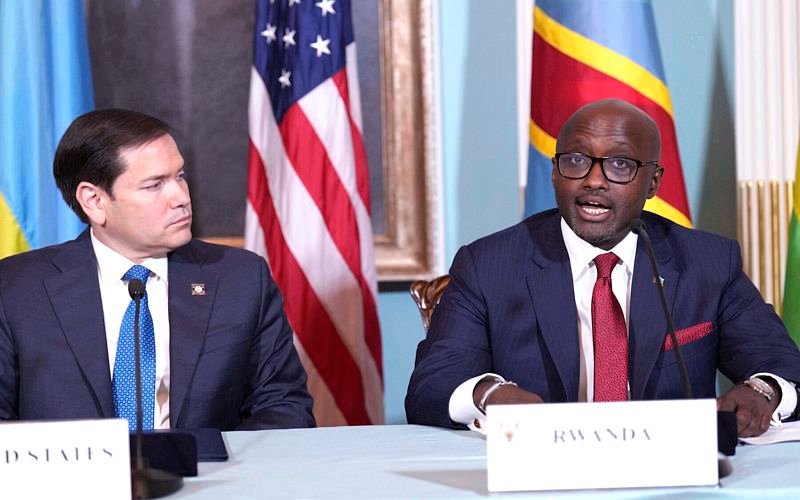

Rwanda has confirmed the arrival of seven people deported from the United States under a new relocation agreement, deepening concerns over Washington’s push to send migrants to countries far from their homelands. The Trump administration is expanding its third-country deportation strategy, with talks also underway with South Sudan and Eswatini. While Rwandan officials insist arrivals will be supported, rights experts warn the policy risks breaching international law and placing vulnerable people in danger.
Read: Illinois Governor Fires Back After Trump’s Weight Jibe Amid Chicago Troop Clash
First Arrivals in Rwanda
Government spokesperson Yolande Makolo announced on Thursday that the first group of seven vetted migrants landed in Rwanda in mid-August. Of them, three expressed interest in returning to their home countries, while four indicated they planned to remain in Rwanda and start new lives. No information was provided about their nationalities.
Also read: ICE Arrests at Newington Car Wash Spark Outcry Over Immigrant Rights
Rwanda’s Commitment to US
On 5 August, Rwanda confirmed it would accept up to 250 people from the United States under the arrangement. The government stressed it would retain the right to approve each case individually. According to Makolo, the new arrivals would be accommodated by an international organisation and monitored by the International Organization for Migration (IOM) along with Rwandan social services.
Also read: Woman Begs Elon Musk to Remove Her Child Abuse Images From X
Role of International Organizations
An IOM spokesperson confirmed that staff had visited the deportees to assess their immediate needs, though further details were not disclosed. Rwandan authorities said the migrants would receive access to healthcare, accommodation, and skills training as part of their integration into the country.
Also read: Florida Overtakes Texas in Death Sentences After New Controversial Law
Rwanda’s Track Record on Migration
In 2022, Rwanda signed a high-profile deal with Britain to take in asylum seekers, but the plan collapsed when the Labour Party came to power in London last year. Despite the failure of that agreement, Kigali has maintained that its history of displacement makes it more willing to host deportees. “Nearly every Rwandan family has experienced the hardships of displacement,” Makolo said earlier this month.
Also read: ICE Detains Kilmar Abrego ‘Again’ Amid Deportation Push
Political and Financial Motives
Critics inside Rwanda argue the new US deal is more about political and financial leverage than humanitarian principles. One activist, speaking anonymously, said: “Accepting these deportees also gives Rwanda an advantage in the ongoing peace negotiations regarding the conflict in DRC.” The Democratic Republic of the Congo has been battling a sweeping offensive by the Rwanda-backed M23 militia, which seized significant territory earlier this year.
Also read: Nigel Farage Unveils Reform UK Plan to Deport 600,000 Migrants in Five Years
US Deportation Strategy
The Trump administration has defended third-country deportations as necessary, citing cases where home nations refuse to take back their citizens. Washington is in discussions with South Sudan and Eswatini to expand similar arrangements. However, rights experts caution that sending deportees to nations where they risk torture, kidnapping, or other abuses may constitute a violation of international law.
Also read: ICE Agents Burnt Out Amid Trump’s Immigration Crackdown, Officials Reveal
Human Rights Concerns in Rwanda
Rwanda, a nation of 14 million, has been praised internationally for its infrastructure and relative stability, but President Paul Kagame’s government faces longstanding accusations of crushing dissent and restricting press freedoms. The failed UK deal drew sustained criticism from rights groups, and the US arrangement is now attracting similar scrutiny. Observers warn that deportees could face precarious conditions in a country where political opposition is tightly controlled.