
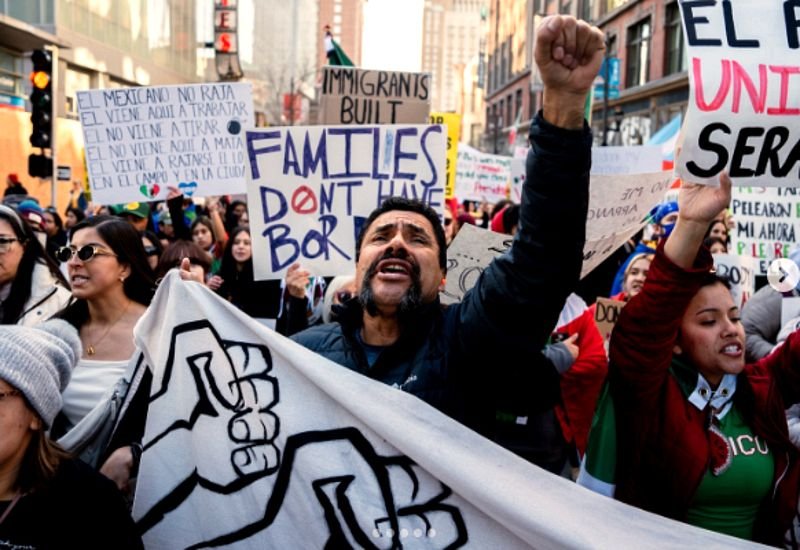

A lawsuit has been filed against Tennessee’s new law, SB 392, which criminalizes the act of sheltering undocumented immigrants for financial gain. The plaintiffs argue the law violates constitutional rights, particularly by infringing upon religious freedoms and the federal government’s jurisdiction over immigration. The law is set to take effect on July 1, 2025, but the suit seeks to block its enforcement.
Read: LA Communities Struggle to Pay Rent Amid ICE Immigration Crackdown
Law Sparks Legal Battle

Tennessee’s SB 392, signed into law in May 2025, prohibits the act of concealing or providing shelter to undocumented immigrants for financial gain, categorizing it as human trafficking, a felony. As the law nears its implementation, a lawsuit is challenging its constitutionality.
Also read: Pontiac Plan Aims to Prevent Hidden Rental Fees, Strengthen Eviction Protections
Plaintiffs’ Constitutional Claim

The lawsuit, filed by the Southeastern Synod of the Evangelical Lutheran Church and other parties, claims the law violates the U.S. Constitution. The plaintiffs argue that immigration enforcement is a federal responsibility, and state regulation of immigration oversteps constitutional boundaries.
Also read: U.S. Home Prices Hit Record High, Fewer Sales Signal Market Shift
Religious Rights at Risk

A central issue raised in the lawsuit is the infringement on First Amendment rights. The Synod and other churches in Tennessee offer shelter services to individuals, regardless of their immigration status, as part of their religious ministry. The plaintiffs argue that the law’s broad language could criminalize such actions, undermining their religious freedom.
Also read: Connecticut Bill Sparks Backlash Over Zoning Regulations, Commercial Conversions
Vague and Overbroad Language

The plaintiffs argue that SB 392’s language is too vague. For instance, the law defines “harboring” as “providing shelter,” but does not specify what constitutes shelter. This ambiguity, they argue, leaves churches and landlords vulnerable to prosecution for offering services like day shelters, soup kitchens, or even educational programs.
Also read: HB 914 May Drive Out Small Landlords, Shrinking Pennsylvania Rental
Exemptions Cause Confusion

While the law exempts certain professionals, such as lawyers and healthcare providers, who assist immigrants, it still threatens religious and community groups. Critics contend that the law’s failure to define “shelter” creates uncertainty about the kinds of activities that might be criminalized, such as receiving donations or grants for providing shelter.
Also read: Illinois Woman Tries to Burn House with 4 People Inside, Arrested at Scene
Impact on Landlords and Families

The lawsuit also highlights the potential consequences for landlords and families living with mixed immigration statuses. They claim the law could lead to prosecutions for simply providing shelter to immigrants, even if they are not doing so for financial gain, or if the aid is a part of everyday life.
Also read: Repeated Floods in Michigan Mobile Parks Spark Health Fears
State Officials Defend Law

State Sen. Brent Taylor and Rep. Chris Todd, the law’s sponsors, have responded by clarifying that the intent is not to target religious groups or landlords. Instead, they argue the law is aimed at stopping human trafficking by criminalizing financial gain from harboring undocumented immigrants. “This law is about human trafficking,” Todd emphasized.
Next up:
Safety Fears Grow as Westwood Mobile Home Tenants Protest Fence Removal
Bellingham City Votes to Eliminate ‘Junk Fees’ for Tenants
Chatham County Proposes 50% Property Tax Hike to Fund Fire Services
States Are Fighting America’s Housing Crisis. Will Cities Join or Resist?