
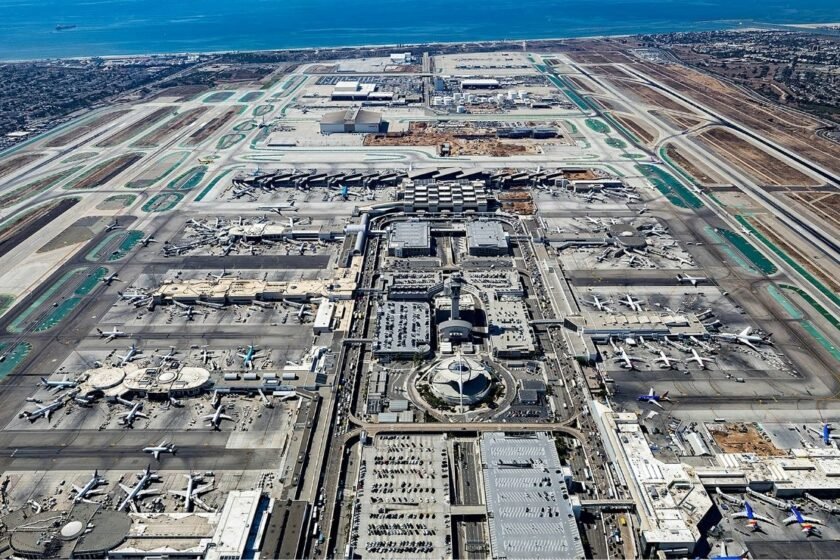
Overview of the LAX Master Plan and its trajectory
In the early 2000s, Los Angeles International Airport embarked on a far-reaching redesign that extended beyond simple terminal tweaks. The LAX Master Plan Improvements coupled new concourse space with airfield geometry adjustments and a transit-link concept, all intended to operate in concert. The FAA’s 2005 Record of Decision outlined the program’s aims: enhance access for larger wide-body aircraft, cut ground delays, and reduce the risk of runway incursions through taxiway construction. It noted that incursions had been recorded in the southern runway area where tight spacing and routing increased workload. This safety framing became the plan’s most persuasive federal justification.
That blueprint is easy to overlook today because it never progressed as a single package. The FAA granted approval in June 2005, yet lawsuits from neighboring cities and community coalitions pressed for firm limits on growth, noise, and traffic. A court approved a stipulated settlement in early 2006 that ended the cases and imposed binding conditions. One key term required ending passenger operations at ten narrow-body gates, with a phase-down of two gates per year starting in 2010 and continuing until 2020 unless passenger totals fell below 75 million or gate totals were reduced. LAWA subsequently shifted to piecemeal delivery, and the original integrated sequence largely fell by the wayside.
Midfield Gates Plan
The plan’s most notable feature was a midfield gate complex connected to the Tom Bradley International Terminal rather than appended to the crowded horseshoe. LAWA later described the Midfield Satellite Concourse program as a multi-level concourse linked to existing facilities by underground passageways, offering contact gates for large international aircraft and reducing reliance on remote bus boarding. By concentrating growth inward, passenger transfers could occur airside with shorter walks and fewer choke points at the central terminal curb.
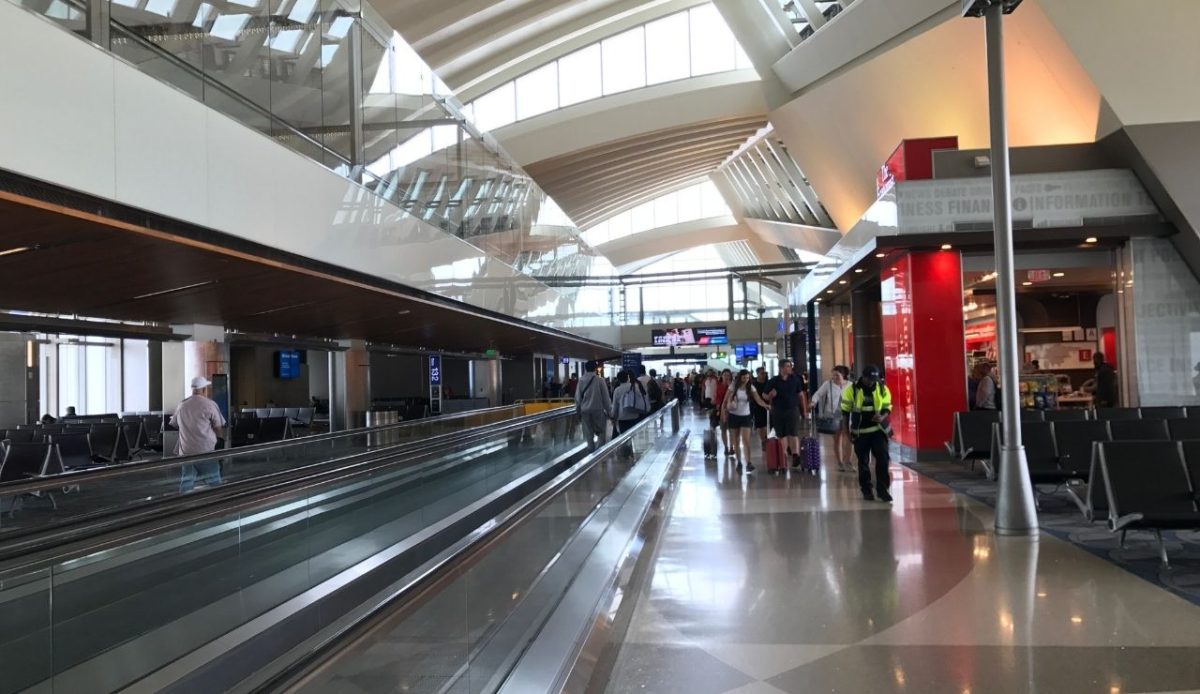
Project papers discussed roughly forty gates and aircraft-group sizing for very large jets. A midfield pier also reshapes how airlines schedule connections. With more wide-body capable gates near the international hub, carriers can stage arrivals and departures with less towing and fewer last-minute gate swaps. That reduces missed connections during peak periods and helps crews turn aircraft on time. The concept also supports shared holdrooms and centralized services, so security queues and concessions can be scaled once rather than duplicated at each small terminal. Those efficiencies were a quiet objective within the master plan diagrams. For travelers, the main gain would have been fewer bus rides and more predictable walking times.
Runway and Taxiway Fixes
Airfield work, not terminal cosmetics, drove the federal safety case. The FAA decision explained that the primary purpose of altering the airfield was a physical solution—new taxiways and improvements—to lessen the chance of runway incursions. It linked the problem to legacy geometry and noted that separation standards had evolved over time. The preferred program included shifting Runway 7R 25L and adding parallel taxiways so aircraft could taxi without frequent crossings of active runways during heavy departure pushes. The ROD also cited that most incursions reviewed from 1997 to 2004 occurred on the south complex.
Capacity was tied to fleet changes as well. The same FAA record stated that only one of LAX’s four runways was long enough to serve the largest aircraft fully loaded under adverse conditions, referencing Design Group VI aircraft such as the Airbus A380. By refining runway placement and taxi spacing, heavy long-haul departures could be planned with less buffer time, reducing gate holds and missed slots. Ground controllers would gain clearer routes, cutting back on stop-and-go queues at key intersections. That could translate into fewer late pushes when a wide-body must wait for a long taxi gap on the south side.

All Nippon Airways (ANA) 787 Departing Los Angeles Los Angeles International Airport (LAX), World Way, Los Angeles, CA, USA
Train Link and People Mover
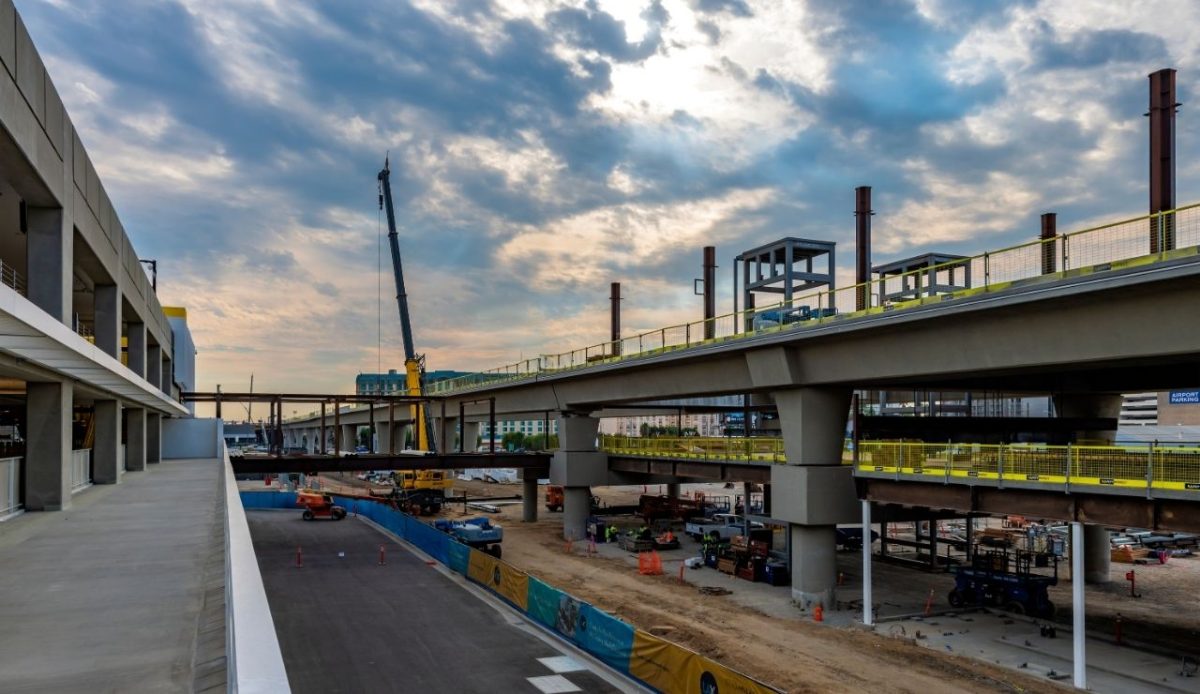
Ground access was treated as a core airport function. Master plan visuals depicted an automated people mover connecting terminals with an intermodal transportation center, off-site parking, consolidated rental cars, and a rail connection corridor rather than scattered shuttles. The aim was to remove thousands of curbside vehicle trips and curb the number of buses circulating inside the horseshoe. By shifting transfers to a dedicated guideway, the terminal roadway could handle less private car traffic and more through traffic, boosting reliability for pickups and drop-offs. It also created room for employee parking and off-terminal deliveries beyond the loop.
Timing mattered because comparable airport connectors were appearing elsewhere. Had LAX opened its APM link in the mid-2000s, rail and bus transfers would have become standard long before today’s build cycle. That could have influenced traveler choices for regional trips, with some passengers opting for transit instead of short feeder flights or long drives to reach a gate. It would have aided airlines by reducing missed flights caused by freeway delays that spill into security lines and boarding windows. The plan treated access as predictable, with clocked vehicles rather than a curb lottery during peak hours.
The 2006 Settlement Limits

Local opposition did not focus on a single runway drawing or a single concourse sketch. The dispute centered on whether LAX would keep growing without a clear regional balance. LAWA’s settlement summary states the deal required ending passenger use at ten gates serving narrow-body operations, phased down by two gates each year. The phase-down began in 2010 and was to continue through 2020 unless annual passengers stayed under 75 million or later approvals reduced the airport to 153 gates or fewer. That clause shifted the politics of the new gate work, with nearby jurisdictions backing enforceable limits as the price of peace.
The settlement did more than cap gates. LAWA laid out commitments for noise and traffic mitigation, air quality and environmental justice programs, and job and education funding tied to affected communities. It also pointed to redirecting part of regional demand toward other airports, reducing the need to justify large gate growth at LAX. With those terms in place, it became easier to approve safety projects like the South Airfield Improvements while postponing the most visible expansion pieces that would be interpreted as growth. In practice, the master plan became a menu, with each item judged on impacts rather than on an overarching design.
How It Could Have Changed Travel
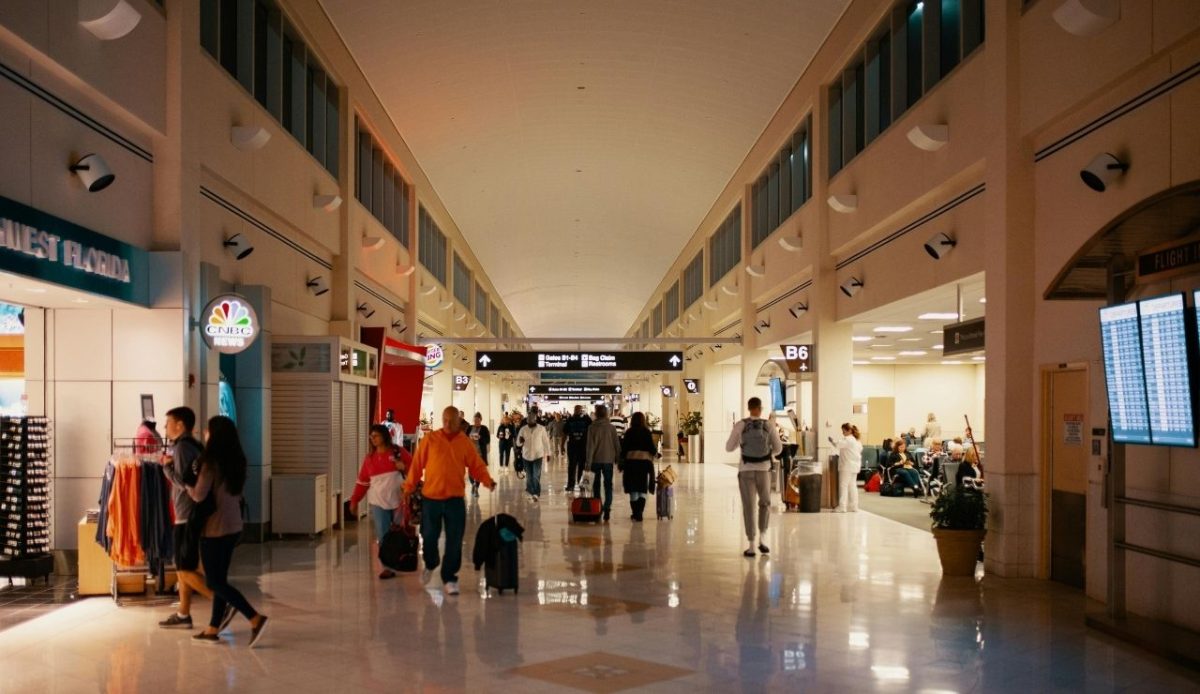
If the integrated version had been implemented, LAX might have stood as an earlier model for transfer-oriented travel in the United States. A midfield gate cluster connected to the main international terminal would support shorter domestic-to-international transfers and reduce re-screening for through passengers. That would make the coastal gateway more competitive for long-haul itineraries, influencing where alliances place wide-body aircraft and concentrate schedules. The plan also targeted cutting ground delay, improving on-time performance, and protecting tight connection windows for travelers. It would have reduced the need for buses during peak periods around gate operations.
The access side could have shaped airport planning beyond Los Angeles. An early people mover and intermodal center would have demonstrated that rail-style arrivals can work at a car-centric U.S. hub, easing curb congestion and diminishing the need for constant roadway widening. When such connections arrive late, airlines and passengers adapt to traffic and parking patterns, cementing habits that are hard to reverse. In that sense, the once-forgotten master plan was less about extra square footage and more about changing how travelers reach the gate, with lessons other airports could have adopted sooner. It could have alleviated transfer stress for families and seniors.
References
- FAA approval document explaining runway safety issues, taxiway changes, and the chosen alternative for the LAX Master Plan Improvements – faa.gov
https://www.faa.gov/sites/faa.gov/files/airports/environmental/environmental_documents/lax/rod_los_angeles.pdf? - Federal Register notice confirming the FAA issued the Record of Decision for the LAX Master Plan in June 2005 – federalregister.gov
https://www.federalregister.gov/documents/2005/06/08/05-11330/availability-of-record-of-decision-for-the-environmental-impact-statement-los-angeles-international? - Official summary of the 2006 LAX Stipulated Settlement Agreement outlining gate limits and growth restrictions – lawa.org
https://www.lawa.org/lawa-our-lax/settlement-agreements/lax-stipulated-settlement-agreement?