
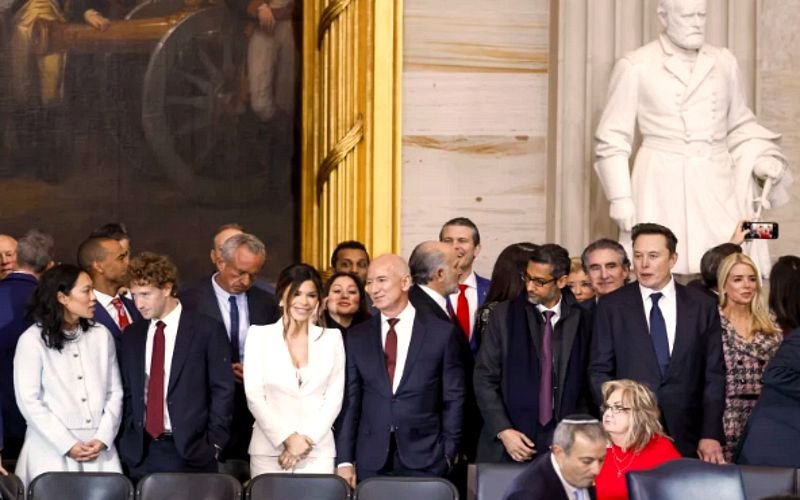
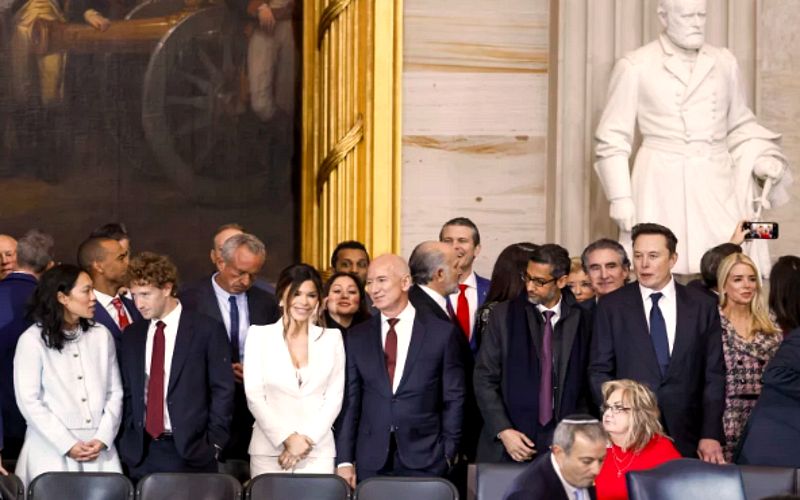
A new report by Oxfam America reveals that the combined wealth of the top 10 U.S. billionaires surged by $698 billion over the past year, underscoring the country’s widening economic divide. The report warns that Trump-era policies, alongside decades of bipartisan economic decisions, have driven inequality to unprecedented levels.
America’s Growing Wealth Divide
Using Federal Reserve data from 1989 to 2022, Oxfam researchers found that the top 1% of households gained 101 times more wealth than the median household — an average of $8.35 million per household compared to $83,000. The richest also accumulated 987 times more wealth than those in the bottom 20% of earners.
Poverty and Inequality Across the U.S.
More than 40% of Americans, including nearly half of all children, are now classified as low-income, with family earnings below 200% of the national poverty line. When compared to 38 other advanced nations in the OECD, the U.S. ranks worst in relative poverty, second in child poverty and infant mortality, and near the bottom in life expectancy.
“Inequality Is a Policy Choice”
Rebecca Riddell, Oxfam America’s senior policy lead for economic justice, said inequality results from deliberate political choices. “These comparisons show us that we can make very different choices when it comes to poverty and inequality in our society,” she stated, adding that the erosion of worker protections and a skewed tax system have turned wealth into power.
Trump’s Tax Cuts Deepened Inequality
The report highlights Donald Trump’s 2025 tax overhaul, described as “one big, beautiful bill,” as one of the largest upward transfers of wealth in decades. The legislation slashed taxes for corporations and the wealthy, widening the wealth gap.
Bipartisan Responsibility
While Trump’s policies intensified inequality, Oxfam stresses that both parties share the blame. “Policymakers have been choosing inequality, and those choices have had bipartisan support,” Riddell said, pointing to decades of reforms that cut social safety nets and weakened labor rights.
Proposed Policy Reforms
Oxfam’s recommendations center on four priorities: campaign finance reform and stronger antitrust enforcement; fairer taxation of corporations and the wealthy; revitalizing the social safety net; and protecting labor unions. However, the report notes that political stigma — such as the “welfare queen” narrative from the Reagan era — continues to hinder these reforms.
Call for a New Political Vision
“What’s really needed is a different kind of politics,” Riddell argued. She called for leadership focused on ordinary Americans and bold action to “rapidly reduce inequality.” The report includes stories of local leaders and union representatives who are pushing for fairer economic systems despite national gridlock.
A Moment of Opportunity
Union representatives from United Workers Maryland told Oxfam that more Americans now recognize that the current system benefits only the wealthy few. Riddell praised this shift in awareness, saying, “I love thinking about this moment as an opportunity to look around us and realize our broader power.”