

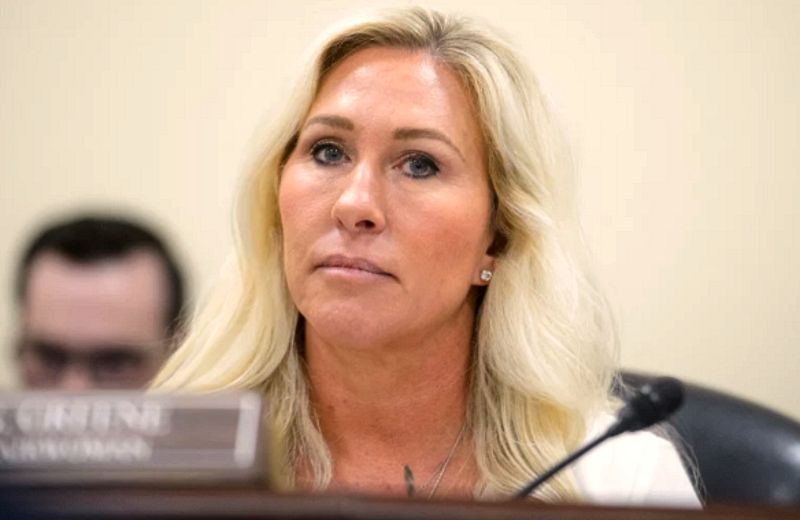
U.S. President Donald Trump intensified his attacks on Republican congresswoman Marjorie Taylor Greene, brushing aside her warnings that his criticism has triggered threats against her. The president insisted he does not believe her safety is at risk, even as she publicly described the remarks as deeply hurtful. Their public clash marks a dramatic turn in a once-solid political alliance. The dispute is now fueling broader concerns about fractures inside Trump’s Republican base.
Greene’s Safety Concerns
Marjorie Taylor Greene said on Saturday that Trump’s online attacks had unleashed a wave of new threats against her. She described the president calling her a “traitor” as the “most hurtful” part of his remarks, telling CNN that the backlash had sharply escalated. Greene added that private security firms had contacted her to warn about her safety, noting she had faced death threats after similar political attacks in the past.
Trump’s Dismissive Response
Trump rejected Greene’s claims outright, saying he did not believe her life was in danger. Referring to her as “Marjorie ‘Traitor’ Greene,” he told reporters, “I don’t think her life is in danger…I don’t think anybody cares about her,” before boarding Air Force One on Sunday night. The president continued criticizing her across the weekend, repeating his stance that no one was targeting her despite her assertions.
Rift Over Epstein Files
Greene attributed the break with Trump to her support for releasing Justice Department records tied to the late financier and convicted sex offender Jeffrey Epstein. Trump, who has dismissed the attention on the case as a Democratic “hoax,” opposed the push. Yet Greene was one of just four House Republicans who joined Democrats in signing a petition on Wednesday to force a vote on releasing the full set of Epstein files.
Rising Republican Tensions
The political rupture between Trump and Greene highlights growing tension inside the GOP. Long considered a Trump loyalist, Greene’s divergence on the Epstein issue and other recent positions signal a deeper ideological divide. The fallout raises questions about Trump’s standing among the far-right bloc and whether his support base is showing cracks ahead of next year’s election cycle.
Trump’s Escalating Attacks
Trump launched a new wave of insults on Friday night, calling Greene “Wacky” and a “ranting lunatic” who complained he would not take her calls. Throughout the weekend, he kept up the barrage on social media, describing her as a “Lightweight Congresswoman,” “Traitor,” and a “disgrace” to the Republican Party. He also suggested that conservative voters in her district should consider a primary challenger and said he would back an alternative candidate.
Support for Epstein File Release
Despite his attacks on Greene, Trump wrote on Sunday night that “House Republicans should vote to release the Epstein files, because we have nothing to hide …” The comment marked a shift in tone, as he had spent much of the weekend brushing off reporters’ questions about the documents. His stance added another layer of uncertainty to the political fight unfolding within the Republican ranks.
Clash With Reporters
Trump’s strained relationship with the press resurfaced during the weekend’s exchanges. When asked again about the Epstein documents, he snapped at a female reporter, saying, “Quiet, quiet piggy.” The remark reflected his ongoing confrontational approach toward journalists, even as questions about transparency and party unity intensified around him.