
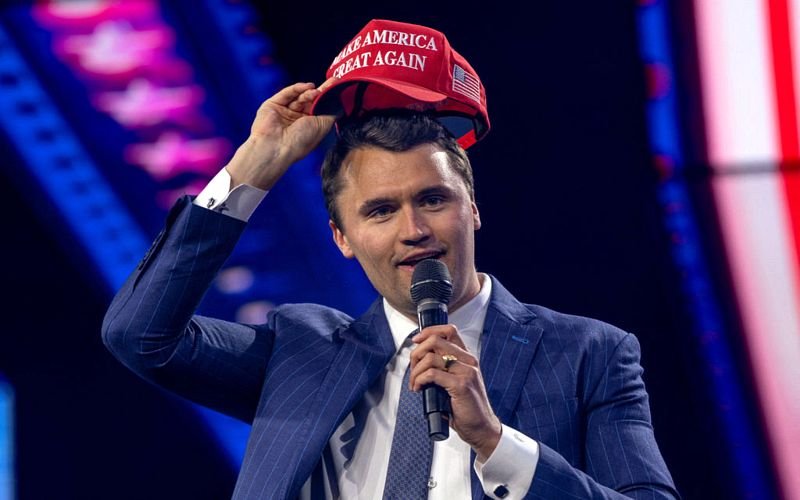
In the wake of Charlie Kirk’s tragic killing, the Trump administration has escalated its rhetoric, framing the tragedy as a pretext to unleash a broader political crackdown, as reported by The Guardian. Critics warn that the president is exploiting the grief surrounding the death of the right-wing activist to target political opponents, curtail free speech, and suppress dissent, despite a lack of evidence linking left-wing groups to the killing.
Read: Resolution to Honor Charlie Kirk Divides U.S. House Amid Political Backlash
Trump’s Memorial and Political Motive
Charlie Kirk, a close ally of Donald Trump and a prominent figure in the MAGA movement, will be memorialized in a large public service on Sunday in Arizona. However, some critics fear that the event will be used by Trump to further his political agenda, leveraging the collective mourning over Kirk’s death to fuel a campaign of vengeance against perceived enemies on the left.
Also read: Chicago Launches Secret Text Alert System to Warn Immigrants Against ICE Raids
Escalating Threats Against the “Radical Left”
Since the shooting of Kirk on a university campus in Utah, Trump and his allies have been ramping up their rhetoric against what they describe as the “radical left.” Despite the lack of evidence linking any groups to the killing, administration officials have suggested broad investigations into left-wing organizations, with some even hinting at designating certain groups as domestic terrorists.
Also read: Millions More Women Are Childless as Women are Skipping Motherhood
Attacks on Free Speech and Civil Liberties
Trump’s response to Kirk’s death has drawn comparisons to authoritarian tactics, with experts warning that the administration is using political violence as an excuse to restrict free speech and civil liberties. “This is page one of the autocrats’ playbook,” said Steven Levitsky, a Harvard political scientist, pointing to the erosion of democratic norms in response to political violence.
Also read: U.S. to Deny Visas to Those Celebrating Charlie Kirk’s Death, Says Rubio
The White House’s Unfounded Allegations
Officials within the Trump administration, such as Stephen Miller, have made sweeping claims about an “organized campaign” behind Kirk’s death, despite there being no evidence to support these allegations. Miller and others have vowed to use every resource at their disposal to dismantle what they describe as “terrorist networks,” a term that some believe could be used to target political opponents and critics of the administration.
Also read: Gavin Newsom Surges in 2028 Polls Despite Homelessness Crisis in California
Expanding the Definition of “Hate Speech”
Attorney General Pam Bondi’s recent remarks about targeting “leftwing radicals” have sparked controversy, as they appeared to blur the lines between protected speech and incitement to violence. Bondi suggested that hate speech, even if protected under the First Amendment, would be pursued if it “crosses the line into threats of violence,” a position that many believe could be used to stifle political dissent.
Also read: Trump Slams Newsom for Pushing Housing Project in Wealthy Los Angeles Neighborhood
Attacks on Nonprofits and Political Organizations
The Trump administration has also set its sights on nonprofit organizations, especially those that support immigrant rights or advocate for police reform. Groups such as the Ford Foundation and the Open Society Foundations are reportedly under scrutiny, with some fearing that the White House will use Kirk’s killing to target these organizations as part of a broader effort to curtail political opposition.
Also read: White House Denies Trump’s Involvement in Epstein Letter Amid Scrutiny
Trump’s Selective Focus on Political Violence
While Trump has condemned Kirk’s killing, his focus has been narrow, often disregarding political violence from right-wing extremists. Critics point out that right-wing groups have been responsible for significantly more deaths than left-wing groups, but Trump continues to frame the incident as part of a larger left-wing threat, ignoring the broader context of political violence in the U.S.