
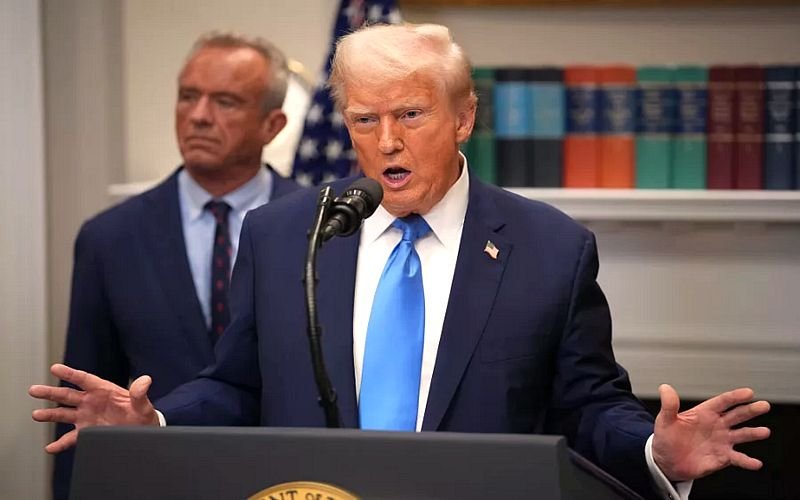
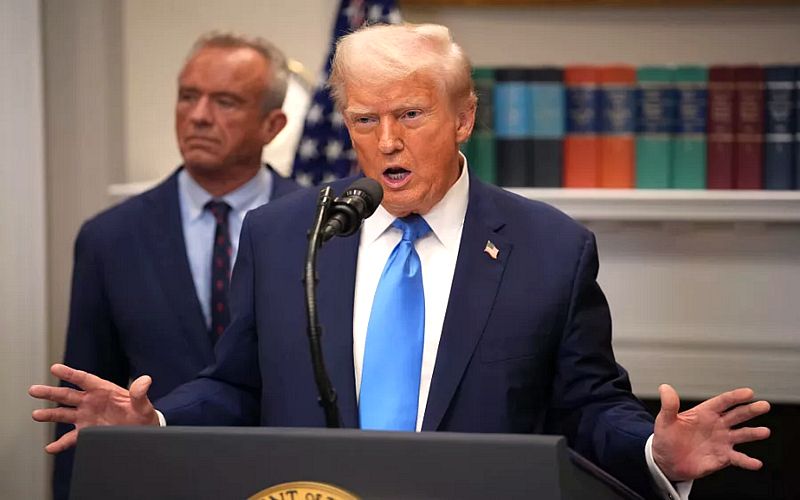
Donald Trump has once again ignited controversy over the U.S. Constitution’s two-term limit by refusing to rule out a third presidential run. Speaking to reporters aboard Air Force One during a trip to Asia, the 79-year-old former president hinted at the possibility of extending his time in office, saying his popularity is at an all-time high. His remarks have reignited concerns among Democrats and critics who accuse him of flirting with authoritarian ideas. The latest comments also shed light on some MAGA loyalists’ theories about bypassing the constitutional restriction.
Read: Trump Teases 2028 Election Move, Sparks Uproar Over Third-Term Ambitions
Background of Trump’s Remark
Donald Trump’s comments came during a conversation with reporters while traveling on Air Force One. When asked if he was ruling out running for a third term, Trump dodged a definitive answer. “I would love to do it: I have my best numbers ever,” he said. Pressed again, he replied, “Am I not ruling it out? I mean, you’ll have to tell me.” The statement immediately sparked reactions from political circles, reviving debates about Trump’s long-running interest in breaking the two-term presidential limit set by the 22nd Amendment.
Also read: Gavin Newsom Blasts Trump Over LAX Chaos, Says “You’re Endangering American Lives”
Constitutional Two-Term Limit
The U.S. Constitution’s 22nd Amendment, ratified in 1951, restricts any individual from serving more than two terms as president. Trump’s refusal to disavow the idea of a third term stands in stark contrast to this law. Critics warn that even entertaining such thoughts erodes democratic norms. Legal experts have often emphasized that no loophole legally permits a third term, yet Trump’s casual tone continues to blur the line between ambition and constitutional defiance.
Also read: Trump Reveals MRI Scan Amid Heightened Health Speculation
MAGA Theories on Circumventing Rules
Among some of Trump’s fervent supporters, speculative ideas have emerged about how he could legally return to power. One widely discussed theory involves Trump running as vice president in 2028 and then resuming the presidency if the sitting president resigns. Such scenarios, however, have been dismissed by constitutional scholars as legally impossible. Trump himself brushed off the idea, calling it “too cute” and “too unpopular.” “I think the people wouldn’t like that,” he told reporters. “It wouldn’t be right.”
Also read: Gavin Newsom Hints at 2028 White House Bid After Midterms
Political Reaction from Democrats
Trump’s vague response to the third-term question drew immediate backlash from Democrats. Michigan Representative Rashida Tlaib reacted sharply on X, accusing Trump and his allies of undermining democracy. “Despite what the Constitution says, [Steve] Bannon vows Trump will be president for a third term,” she wrote. “But they all start crying when we call them fascists. No way in hell we’re going to let that happen.” Her statement reflects a broader concern among Democrats about Trump’s ongoing rhetoric around staying in power.
Also read: US and China Seal Final TikTok Deal, Bessent Confirms Ahead of Trump-Xi Meeting
Trump’s History of Similar Remarks
This is not the first time Donald Trump has hinted at extending his presidency beyond legal limits. Throughout his political career, he has occasionally floated the idea in jest, or at least in ways that blur humor and intent. Past rallies and interviews have featured similar remarks, often met with cheers from supporters and alarm from opponents. His repeated allusions to overstaying his term fuel ongoing debates about his respect for democratic principles and institutional norms.
Also read: ICE Arrests 16-Year-Old With Protected Status, DHS Shifts Blame to Biden Administration
Public and Media Response
The comments have reignited a familiar media storm surrounding Trump’s political ambitions. Pundits and constitutional experts flooded airwaves and social media with discussions about the risks of normalizing such rhetoric. Supporters, on the other hand, argue that Trump’s remarks reflect his confidence and popularity rather than any real intention to defy the Constitution. Still, the incident underscores how deeply polarized American politics remain as Trump continues to dominate headlines ahead of the 2028 election cycle.