
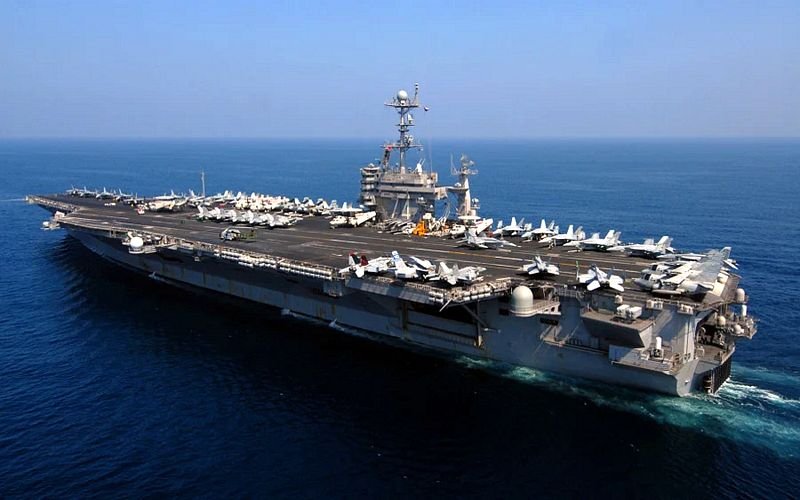
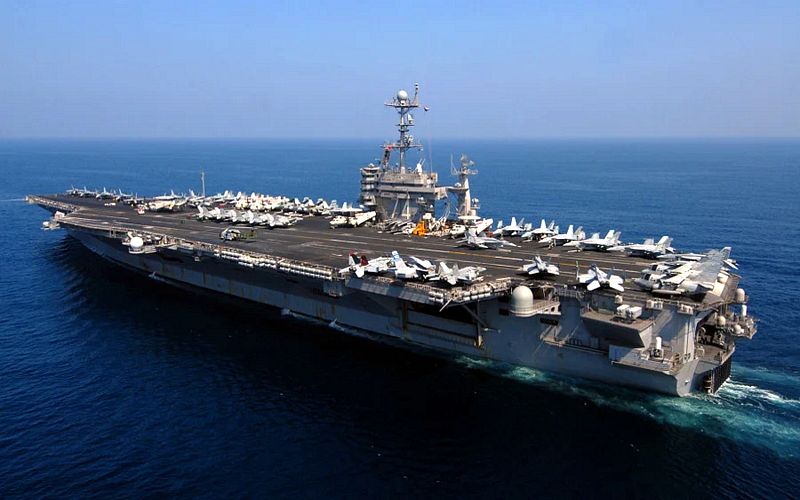
The Pentagon has deployed America’s most advanced aircraft carrier, the USS Gerald Ford, to the Caribbean, marking a dramatic escalation in President Donald Trump’s militarized campaign against drug cartels. The move, signaling preparations for possible land strikes, positions the supercarrier near Venezuela, intensifying regional tensions and drawing sharp criticism from President Nicolás Maduro.
Read: Trump’s ‘Unqualified’ Cabinet Chaos Exposed in Explosive New Book
US Expands Military Reach
The deployment of the USS Gerald Ford represents a major shift in the Trump administration’s anti-narcotics strategy. The supercarrier, equipped with stealth fighter jets and surveillance aircraft, will operate near Venezuela as it completes its Mediterranean mission. The Pentagon said the expanded presence aims to enhance the United States’ ability “to detect, monitor, and disrupt illicit actors” threatening the nation’s security across the Western Hemisphere.
Also read: JD Vance Slams Israel’s West Bank Vote as ‘Stupid Political Stunt’
From Sea Strikes to Land Targets
This escalation comes after weeks of speculation about Trump’s plans to expand operations from the sea to land. Previously, US forces targeted small boats allegedly smuggling drugs, but officials now indicate the campaign will extend to ground-based targets in South America. Trump confirmed this shift at the White House, saying, “The land is going to be next. The land drugs are much more dangerous for them. You’ll be seeing that soon.”
Also read: Senate Rejects Bill to Pay Federal Workers as Shutdown Crisis Deepens
Venezuela Reacts with Fury
Venezuelan President Nicolás Maduro condemned the move, accusing Washington of fabricating a pretext for war. “They promised they would never again get involved in a war, and they are fabricating a war,” he said during a televised address. Caracas sees the deployment as part of a broader US strategy to destabilize Maduro’s government under the guise of counter-narcotics operations.
Also read: Trump Pardons Binance Founder, Declares “War on Crypto Is Over”
Trump’s Hardline Approach
President Trump has taken an openly aggressive tone, framing the campaign as a direct assault on drug traffickers. Asked if he would declare war on cartels, Trump replied, “I think we’re just going to kill people that are bringing drugs into our country, OK? We’re going to kill them, you know, they’re going to be, like, dead.” His remarks underscore a policy of lethal force without broader congressional approval or international consensus.
Also read: Alabama Executes Anthony Boyd Using Nitrogen Gas After Supreme Court Denies Appeal
Legal and Ethical Questions
Critics have raised concerns about the administration’s legal justification for the strikes. Officials claim the targets belong to “designated terrorist organisations” (DTOs) and that the US is in a “non-international armed conflict” with them. However, the government has provided no concrete evidence linking those killed to drug trafficking. Congressional briefings reportedly revealed that the legitimacy of the targets rests largely on Trump’s unilateral designation of them as cartel assets.
Also read: Trump Says Tech Billionaires Pleaded With Him to Cancel Troop Deployment in San Francisco
CIA’s Expanding Role
The Central Intelligence Agency has been quietly drawn deeper into the campaign. On 15 October, Trump confirmed he had authorized “covert action” by the CIA in Venezuela. Intelligence provided by the agency has reportedly guided much of the recent airstrike activity. This blending of military and intelligence operations further complicates oversight and accountability, fueling concerns among lawmakers and human rights observers.
Also read: Trump Calls Off Troop Deployment in San Francisco Amid Growing Protests
Growing Regional Tensions
The presence of the USS Gerald Ford near Venezuelan waters heightens fears of regional instability. The carrier’s F-18 Super Hornets give the US the capacity to destroy air defenses, paving the way for potential ground or drone strikes. For Washington, this marks a step toward projecting dominance in the Caribbean; for Latin America, it signals a possible new front in US interventionism.