
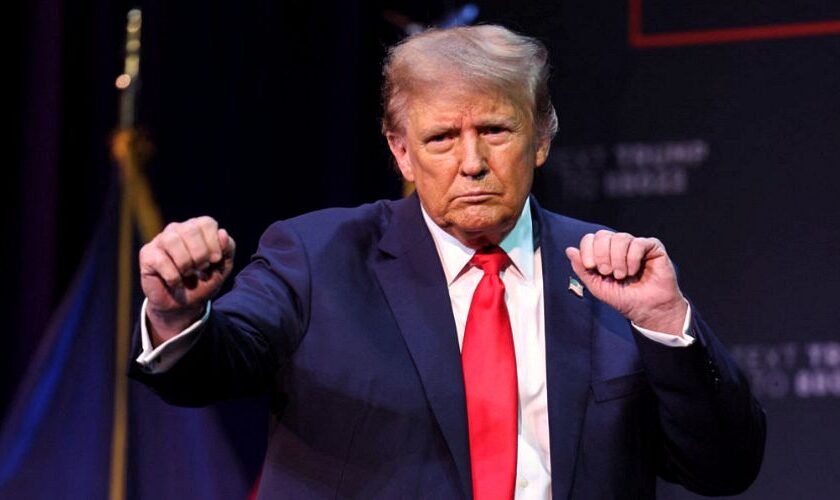

In a bold move, President Donald Trump announced that chipmaker Nvidia will hand over 15% of its revenue from sales of the H20 microchip to China. This payment arrangement follows a shift in export controls, allowing Nvidia to sell its H20 chips in China after Trump relaxed restrictions. The deal marks a significant turn in U.S.-China trade tensions and raises questions about its legality and future implications.
Read: Trump Moves Obama, Bush Portraits to Hidden Stairwell Amid Tensions
The Deal with Nvidia
On August 11, 2025, President Trump revealed that Nvidia’s CEO, Jensen Huang, had requested eased export restrictions to sell the H20 chips in China. In exchange, Trump negotiated a 15% revenue share from Nvidia’s sales of the chips to China. Initially, Trump proposed a 20% cut, but after negotiations with Huang, the percentage was settled at 15%. This move signals a reversal of previous U.S. restrictions on chip sales to China.
Also read: Trump Moves Obama, Bush Portraits to Hidden Stairwell Amid Tensions
H20 Chip and Its Significance
The H20 microchip, designed to comply with U.S. export controls, is used for artificial intelligence development. Trump described it as “obsolete,” claiming that China already had access to similar technology. Despite its lower power compared to Nvidia’s top-tier chips, the H20 plays a key role in the AI industry, making it highly sought after by both the U.S. and Chinese markets.
Also read: Archaeologists Find 300-Year-Old Pirate Shipwreck Off Madagascar’s Coast
Nvidia’s Position on the Deal
In a statement, Nvidia emphasized its compliance with U.S. government regulations for global market participation. However, the company did not confirm the specifics of the 15% revenue cut. Nvidia’s spokesperson reiterated that the H20 chip, though not yet shipped to China, would potentially be part of the U.S. strategy to remain competitive in the Chinese market.
Also read: Chinese Nationals Sue Texas Over Land Ownership Ban
AMD Joins the Agreement
Reports suggest that Advanced Micro Devices (AMD), another major chipmaker, has also agreed to the 15% revenue-sharing arrangement for its MI308 chip sales to China. Trump did not mention AMD directly during the announcement, but sources indicated the company’s involvement in similar negotiations with the U.S. government. AMD has yet to comment publicly on the deal.
Also read: Texas Rep. Gene Wu Rejects Governor Abbott’s Push to Oust Him as ‘Meaningless’
U.S.-China Tech War Background
The U.S. has long imposed stringent export controls on China, particularly concerning high-end chips used in artificial intelligence and military applications. These restrictions were initially introduced during Trump’s first administration and were further tightened under President Biden. The easing of these controls marks a shift in U.S. policy, with China being allowed access to certain technologies under the agreement.
Also read: Gunfight in Times Square Leaves Three Injured, Teen Arrested
Legal and Constitutional Concerns
The 15% revenue share arrangement has sparked concern among analysts and legal experts, questioning whether such a deal could violate constitutional provisions. Some argue that export payments to the U.S. government could be considered a form of “export tax,” which is prohibited under U.S. law. Additionally, concerns are raised about the impact on the credibility of U.S. export controls, especially among international allies like the EU and East Asia.
Also read: Trump Announces Swift Homeless Relocation in D.C., Likens It to ICE Raids
Impact on U.S.-China Relations
This agreement appears to be part of a broader effort by the U.S. to ease trade tensions with China while securing a financial return on tech sales. The move has been viewed as a strategic step in reducing the friction in the ongoing trade war, but it has also raised questions about the future direction of U.S.-China relations and the role of tech companies in these geopolitical struggles.
Next up:
- ICE Arrests Owner of ‘Trump Burger’ Chain, Faces Deportation Over Illegal Status
- Trump Removes IRS Commissioner Billy Long After Clash Over Immigration Data
- Zohran Mamdani’s Grassroots Campaign Signals Progressive Shift in Democratic Politics
- CDC Shooter Blames COVID Vaccine for Violent Attack in Atlanta, Claims Father