
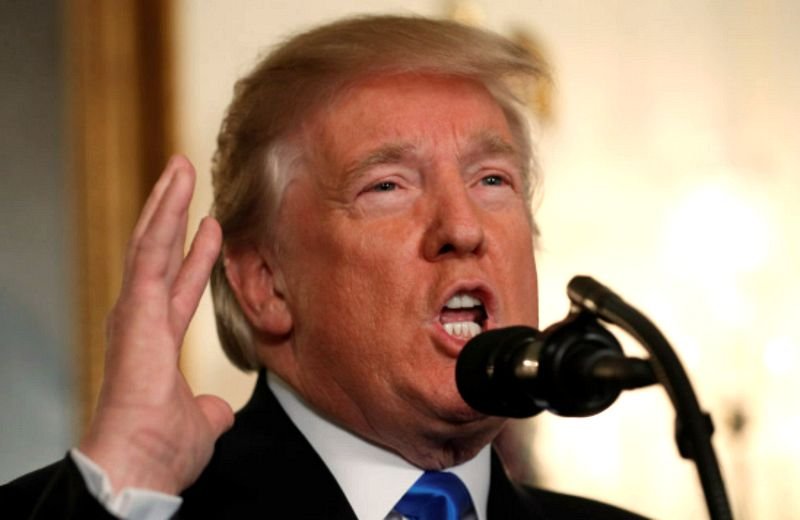
President Donald Trump escalates his feud with late-night TV hosts, calling for government action against TV networks that criticize him, particularly following ABC’s suspension of Jimmy Kimmel’s late-night show. His remarks, made during a press briefing aboard Air Force One, sparked outrage and raised concerns over potential threats to free speech. The growing controversy has led to protests, celebrity criticism, and political backlash.
Trump Targets TV Networks
During his flight back from the UK, President Trump claimed that most U.S. networks offer “97% negative” coverage of him, citing an unverified statistic. He suggested that these networks, which he claimed were biased, should face consequences, even proposing that their licenses could be revoked. His statement, however, ignores the fact that the FCC does not license national TV networks like CBS, NBC, ABC, or Fox, as confirmed by the FCC’s official guidelines.
Kimmel Suspension Fuels Controversy
Trump’s comments followed the suspension of Jimmy Kimmel’s show on ABC. The late-night host was criticized by conservatives after making remarks about Charlie Kirk, a political commentator. Trump, who supported the suspension, described Kimmel as a “not talented person” with “bad ratings.” Despite this, Kimmel’s show had been leading in the crucial 18-49 demographic, making his suspension a point of contention within the media.
ABC Faces Backlash
The indefinite suspension of Kimmel’s show has led to a wave of public protest, including a demonstration outside Disney Studios in Los Angeles. Protesters, including union members and Hollywood professionals, condemned the move as a threat to free speech. The Writers Guild of America expressed concerns about the suppression of dissent, highlighting the importance of free expression in a democratic society.
Critics Accuse Trump of Censorship
Barack Obama weighed in, calling the Trump administration’s actions “dangerous” and an escalation of what he termed the “cancel culture” narrative. Obama criticized the administration for using regulatory power to silence media voices it disagreed with, highlighting the broader implications for press freedom. The former president’s statement echoed fears that the government could target journalists and media outlets for their political views.
Hollywood Responds to Suspension
The suspension of Kimmel’s show has triggered strong reactions from prominent figures in the entertainment industry. Veteran talk show host David Letterman denounced ABC’s decision, calling it an attempt to placate an “authoritarian” administration. Hollywood showrunner Damon Lindelof, known for “Lost,” has vowed to boycott Disney unless Kimmel is reinstated. The suspension is now a flashpoint for Hollywood’s ongoing struggle with corporate and political influence.
Calls for FCC Investigation Intensify
FCC Chairman Brendan Carr, a key figure in the controversy, has raised further concerns about government overreach. Speaking on a conservative podcast, Carr suggested that other ABC programs, including “The View,” could face scrutiny under the FCC’s regulations. His comments have fueled fears of increased government control over media content, with some lawmakers and journalists fearing that political pressure could undermine journalistic independence.
Protests and Legal Challenges
In the wake of Kimmel’s suspension, protests have continued across the country, with union members and activists demanding the comedian’s reinstatement. In response, Democratic leaders in Congress have called for the resignation of FCC Chairman Brendan Carr, accusing him of abusing his power to punish media companies that do not align with the administration’s political views. Meanwhile, lawmakers are pushing for new legislation to protect anti-government speech from censorship.